


Improvement of biochemical methods of polyP quantification
- PMID: 28357384
- PMCID: PMC5354550
- DOI: 10.15698/mic2017.01.551
Improvement of biochemical methods of polyP quantification
Abstract
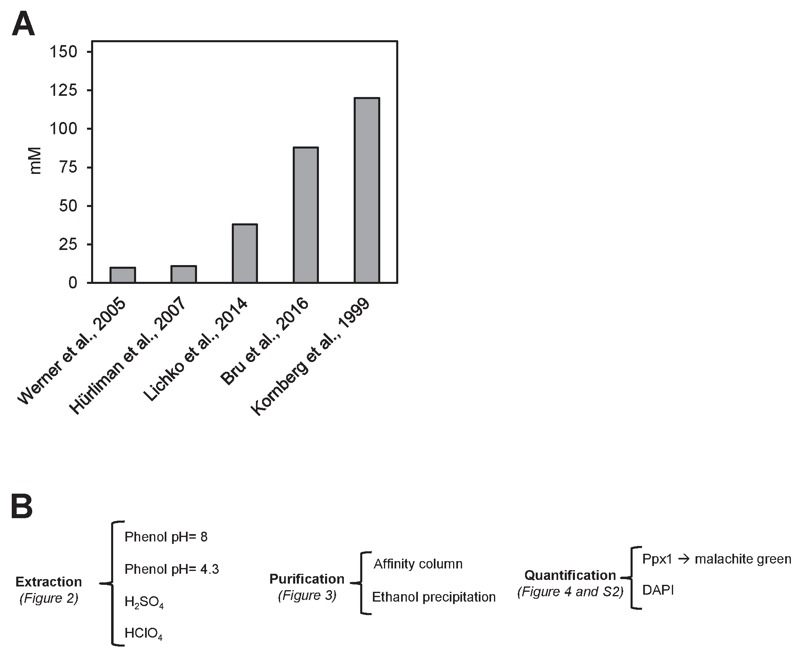
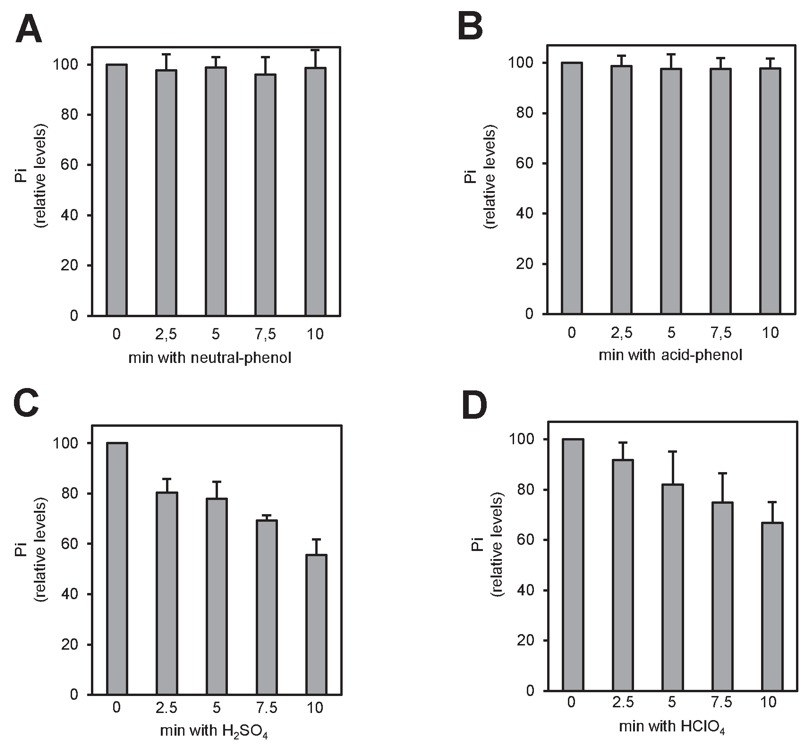
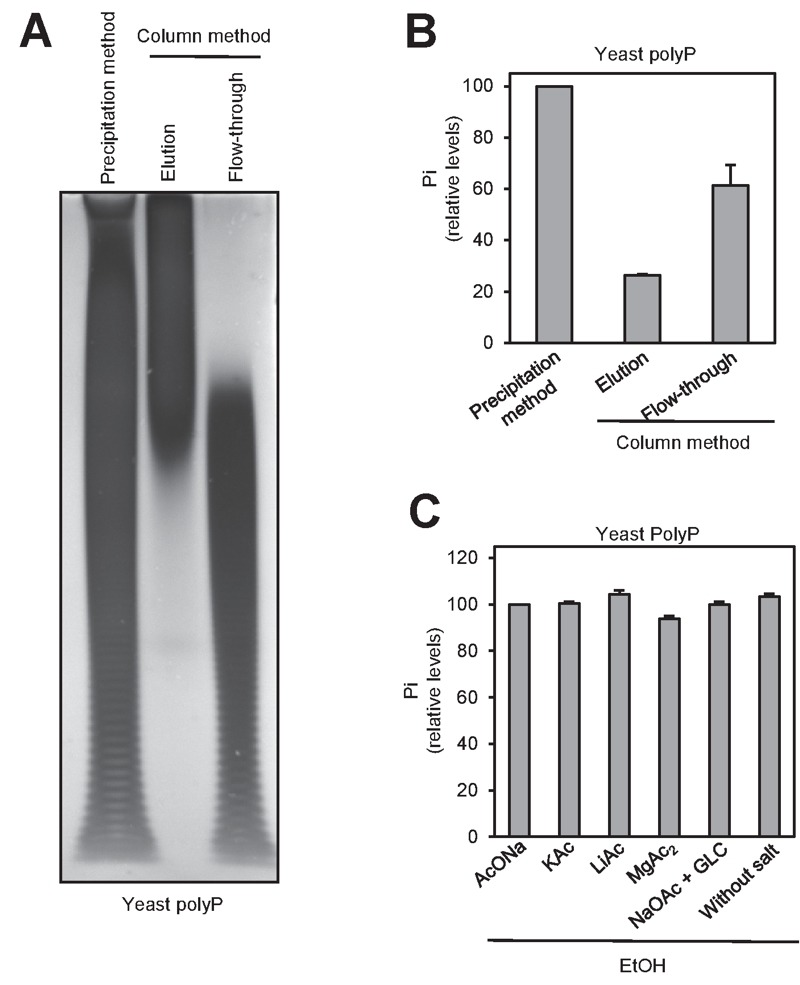
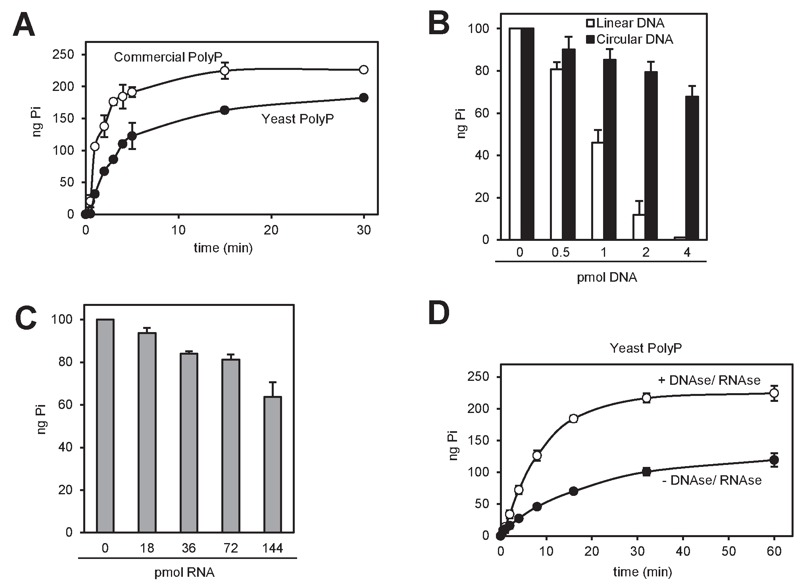
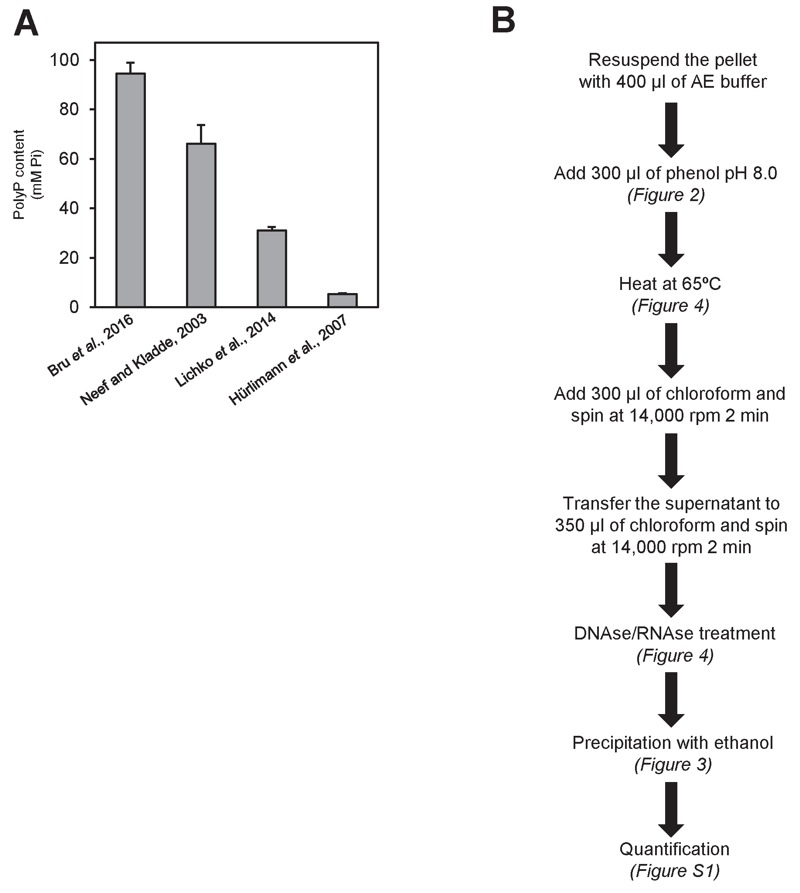
Polyphosphate (polyP) is an abundant and physiologically important biomolecule for virtually any living cell. Therefore, determination of changes in cellular content of polyP is crucial for its functional characterization. Determination of cellular polyP has been performed by many different methods, and the lack of a standardized procedure is possibly responsible for the large dispersion of results found in the relevant literature. For a relatively simple organism, such as the yeast Saccharomyces cerevisiae, this variation can be up to 12-fold. polyP extraction and determination of free phosphate released by enzymatic degradation of the polymer is a method quite common and relatively straightforward for polyP determination. By using the yeast S. cerevisiae as model, we have experimentally evaluated the different steps in this procedure in order to identify critical issues that might explain the disparate reported results. As the main output of this evaluation we propose a straightforward and robust procedure that can be used as gold standard protocol for cellular polyP purification and determination from unicellular organisms, thus providing consistency to measurements and facilitating inter-laboratory comparisons and biological interpretation of the results.
Keywords: Saccharomyces cerevisiae; neutral-phenol; polyphosphate; yeast.
Conflict of interest statement
Conflict of interest: The authors declare no conflict of interest.
Figures
References
-
- Kulakovskaya T, Vagabov V, Kulaev I. Inorganic Polyphosphate in Industry, Agriculture and Medicine: Modern State and Outlook. Process Biochemistry. 2012;47(10):471–10. doi: 10.1016/j.procbio.2011.10.028. - DOI
-
- Beauvoit B, Rigoulet M, Guerin P, Canioni P. Polyphosphates as a source of high energy phosphates in yeast mitochondria: a 31P NMR study. FEBS Lett. 1989;252(1(2)):17–21. doi: 10.1016/0014-5793(89)80882-8. - DOI
LinkOut - more resources
Full Text Sources
Other Literature Sources
Research Materials