


Laparoendoscopic single-site surgery versus conventional laparoscopy for hysterectomy: a systematic review and meta-analysis
- PMID: 28357561
- PMCID: PMC5388711
- DOI: 10.1007/s00404-017-4323-y
Laparoendoscopic single-site surgery versus conventional laparoscopy for hysterectomy: a systematic review and meta-analysis
Abstract
Purpose: To assess the safety and effectiveness of LESS compared to conventional hysterectomy.
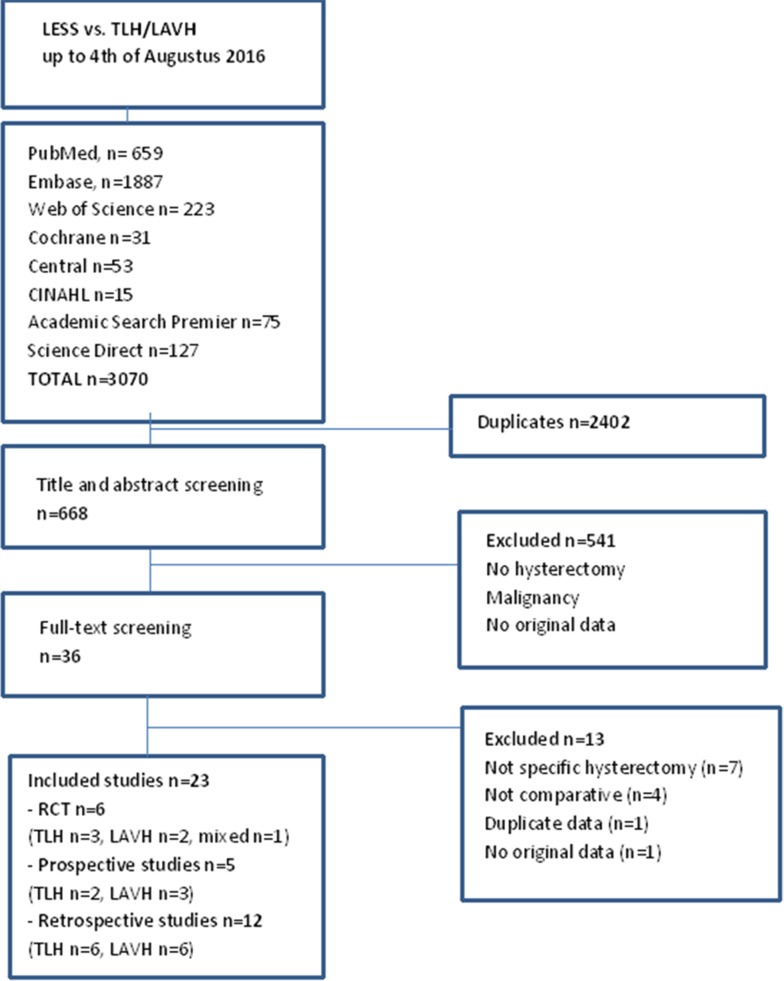
Methods: The systematic review and meta-analysis was performed according to the MOOSE guideline, and quality of evidence was assessed using GRADE. Different databases were searched up to 4th of August 2016. Randomized controlled trials and cohort studies comparing LESS to the conventional laparoscopic hysterectomy were considered for inclusion.
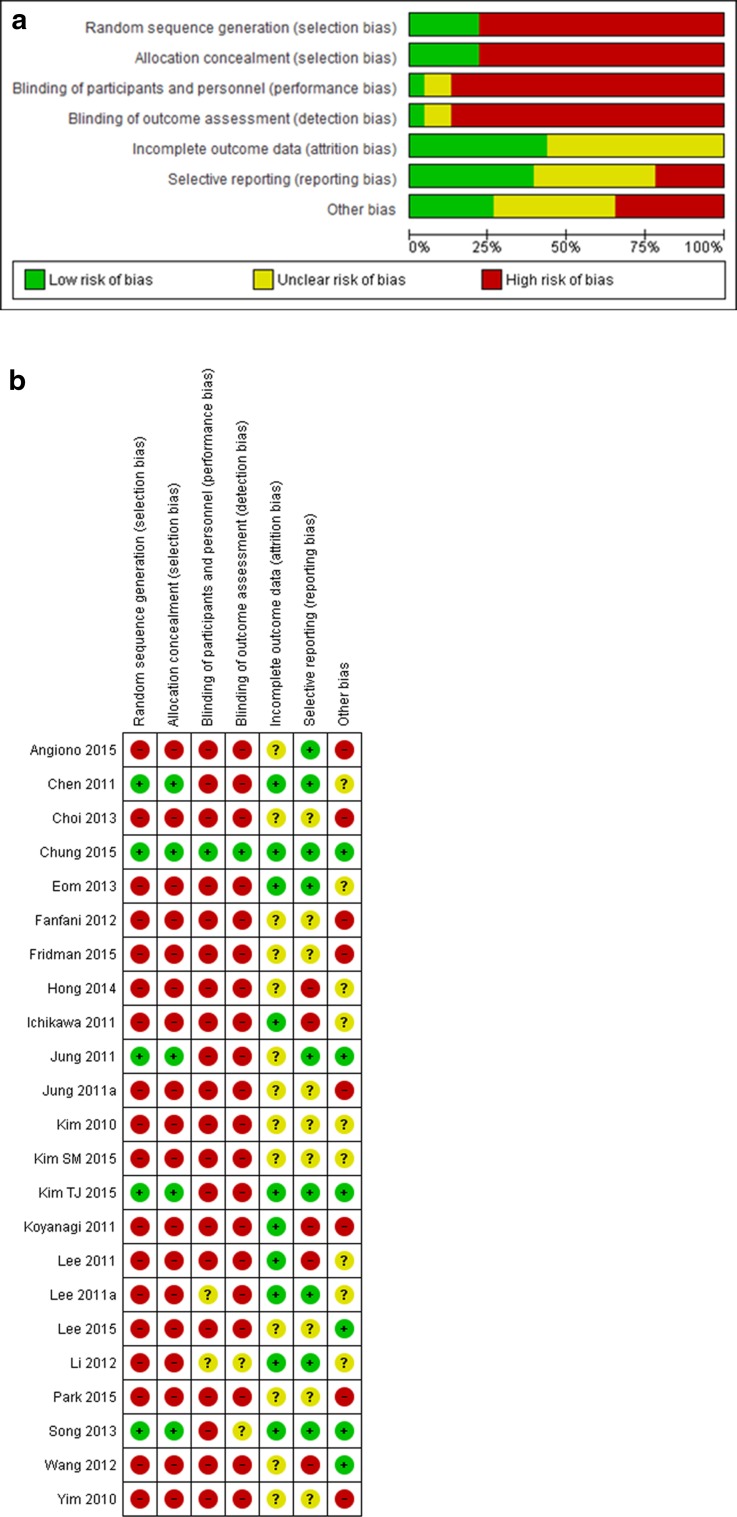
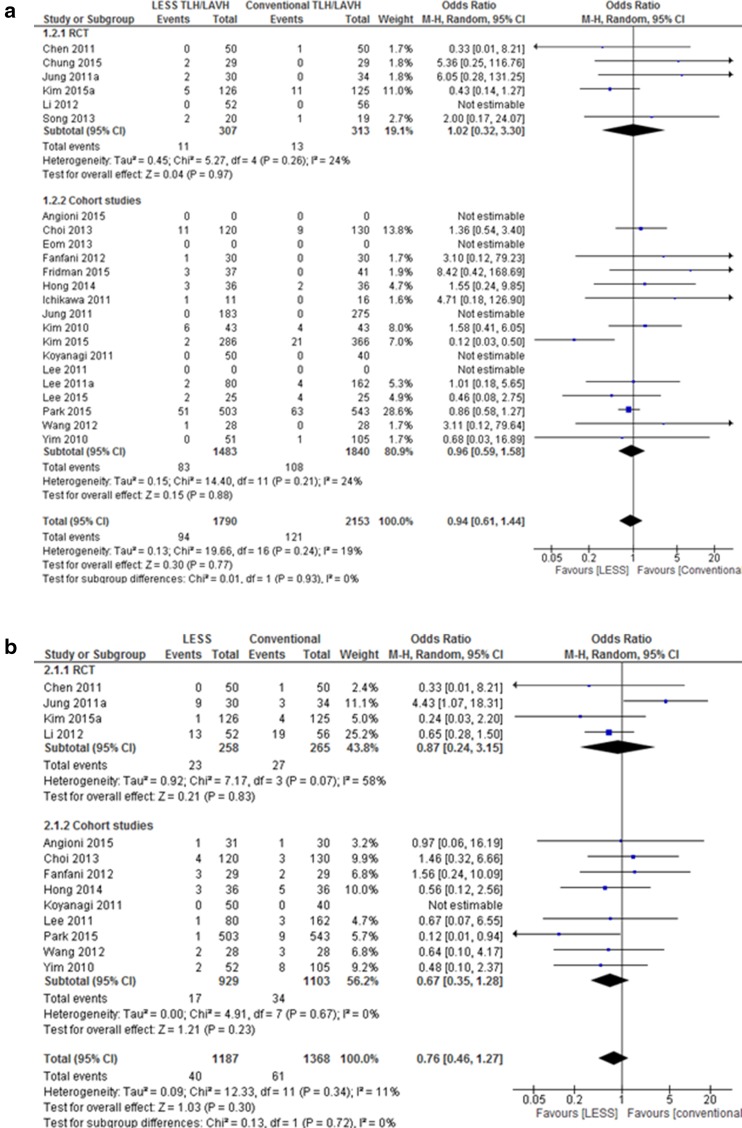
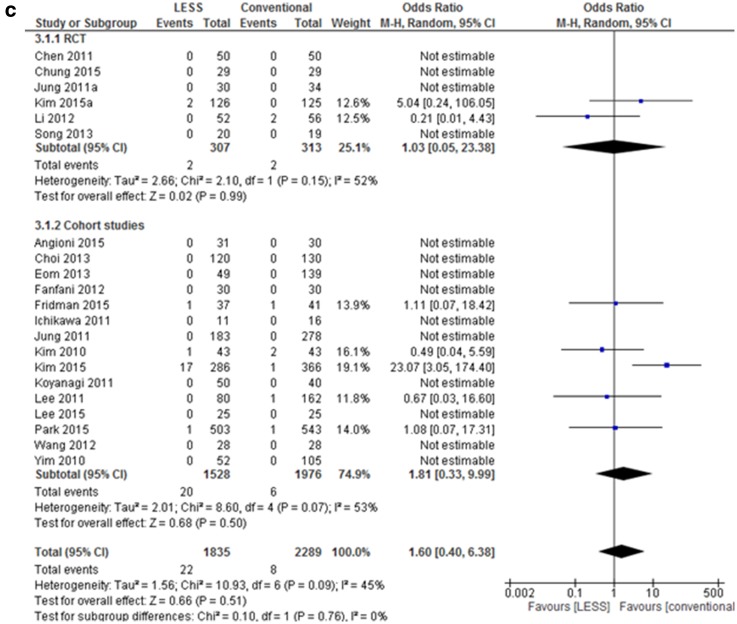
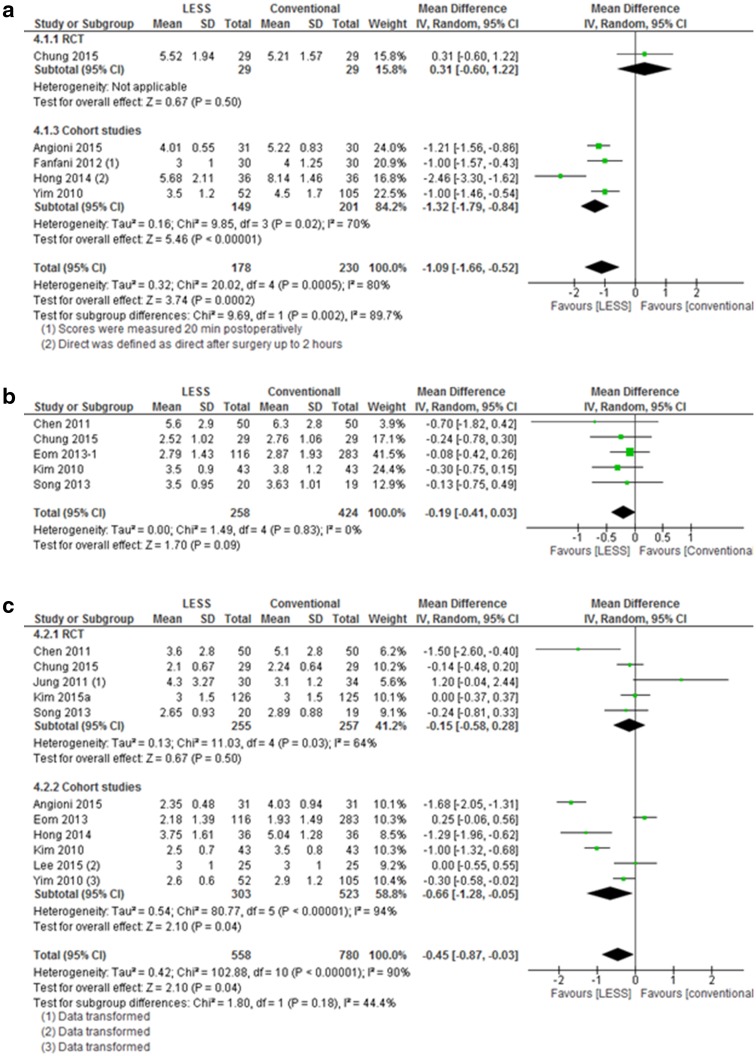
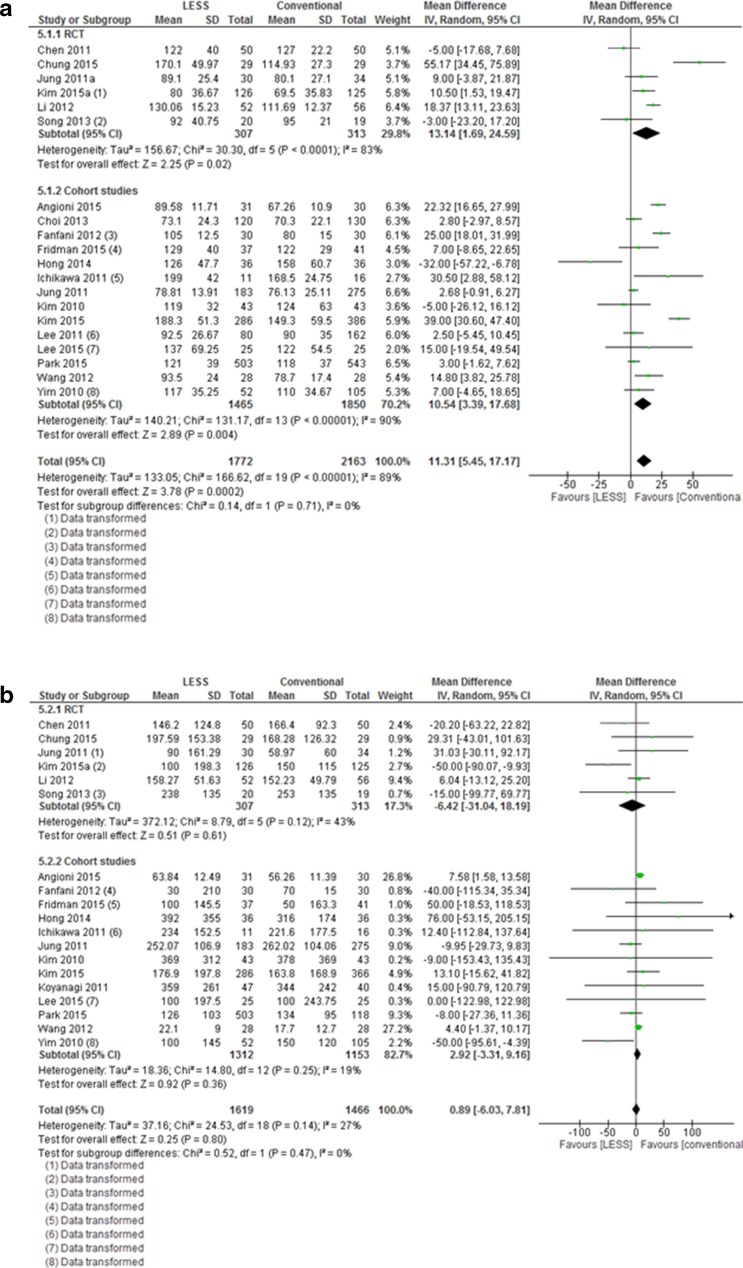
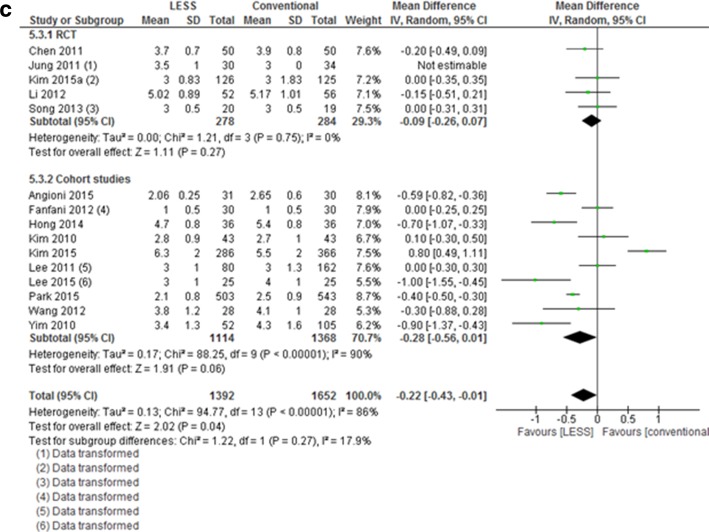
Results: Of the 668 unique articles, 23 were found relevant. We investigated safety by analyzing the complication rate and found no significant differences between both groups [OR 0.94 (0.61, 1.44), I 2 = 19%]. We assessed effectiveness by analyzing conversion risk, postoperative pain, and patient satisfaction. For conversion rates to laparotomy, no differences were identified [OR 1.60 (0.40, 6.38), I 2 = 45%]. In 3.5% of the cases in the LESS group, an additional port was needed during LESS. For postoperative pain scores and patient satisfaction, some of the included studies reported favorable results for LESS, but the clinical relevance was non-significant. Concerning secondary outcomes, only a difference in operative time was found in favor of the conventional group [MD 11.3 min (5.45-17.17), I 2 = 89%]. The quality of evidence for our primary outcomes was low or very low due to the study designs and lack of power for the specified outcomes. Therefore, caution is urged when interpreting the results.
Conclusion: The single-port technique for benign hysterectomy is feasible, safe, and equally effective compared to the conventional technique. No clinically relevant advantages were identified, and as no data on cost effectiveness are available, there are currently not enough valid arguments to broadly implement LESS for hysterectomy.
Keywords: Conventional laparoscopy; Hysterectomy; LESS; Single-port surgery.
Conflict of interest statement
Funding
This study was not funded.
Conflict of interest
Evelien Sandberg has received a grant from the Bronovo Research Fund (Bronovo Hospital, The Hague, The Netherlands). The other authors declare that they have no conflict of interest.
Ethical approval
This article does not contain any studies with human participants or animals performed by any of the authors.
Figures
References
Publication types
MeSH terms
LinkOut - more resources
Full Text Sources
Other Literature Sources
Medical
