


Clinically Isolated Syndromes: Clinical Characteristics, Differential Diagnosis, and Management
- PMID: 28360754
- PMCID: PMC5353226
- DOI: 10.5152/npa.2015.12608
Clinically Isolated Syndromes: Clinical Characteristics, Differential Diagnosis, and Management
Abstract
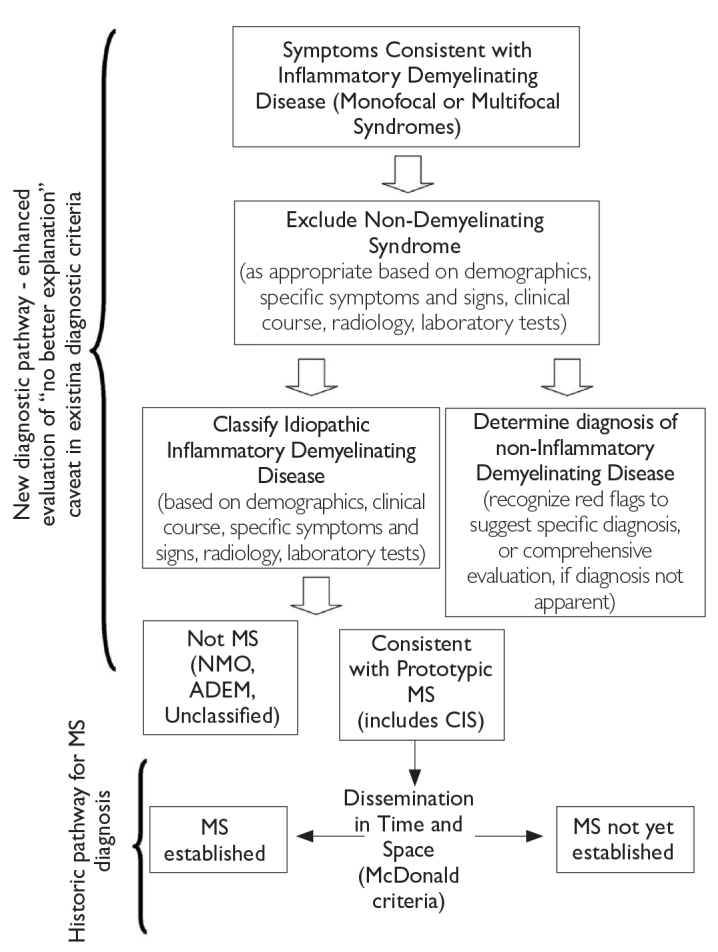
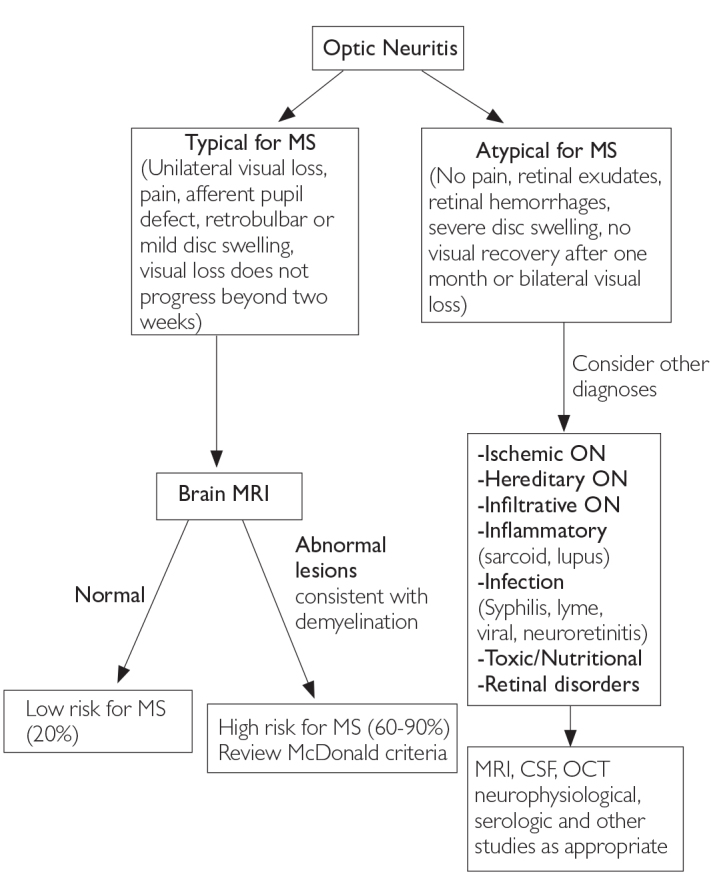
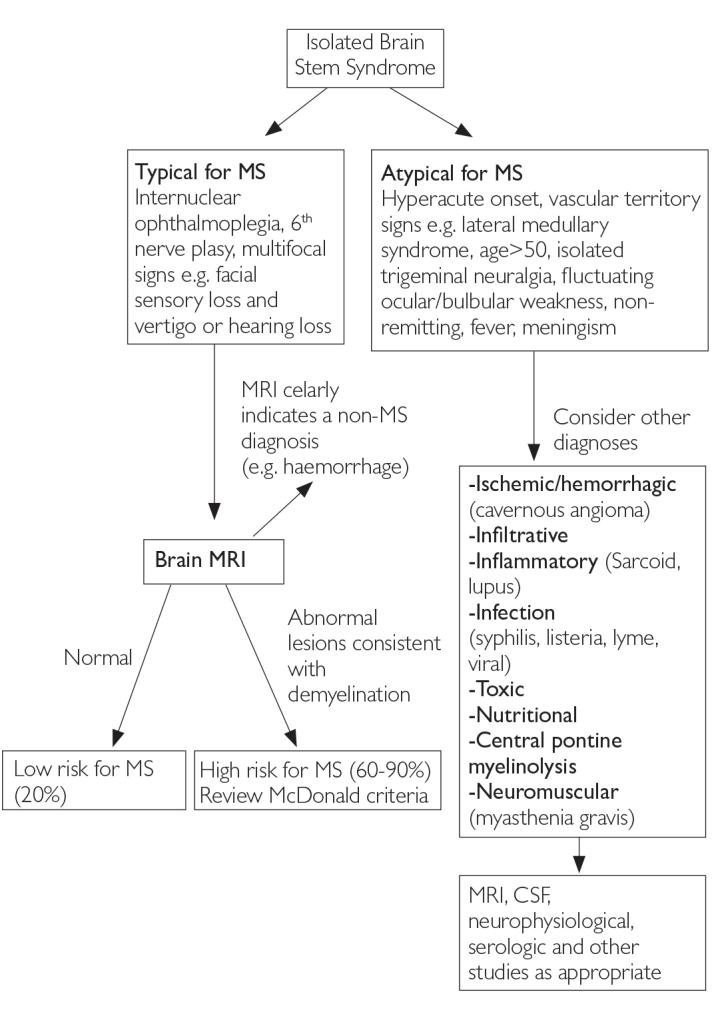
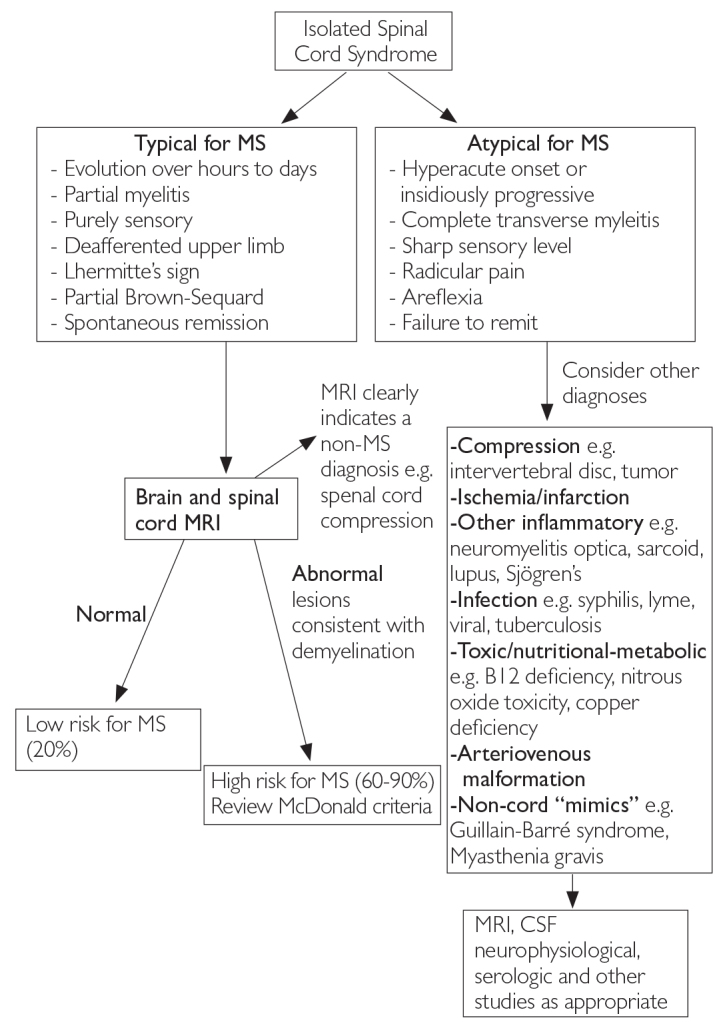
Clinically isolated syndrome (CIS) is a term that describes the first clinical onset of potential multiple sclerosis (MS). The term CIS is typically applied to young adults with episodes of acute or subacute onset, which reaches a peak quite rapidly within 2-3 weeks. In 85% of young adults who develop MS, onset occurs with an acute, CIS of the optic nerves, brainstem, or spinal cord. When clinically silent brain lesions are seen on MRI, the likelihood of developing MS is high. Because no single clinical feature or diagnostic test is sufficient for the diagnosis of CIS, diagnostic criteria have included a combination of both clinical and paraclinical studies. Diagnostic criteria from the International Panel of McDonald and colleagues incorporate MRI evidence of dissemination in time and space to allow a diagnosis of definite MS in patients with CIS. As CIS is typically the earliest clinical expression of MS, research on patients with CIS may provide new insights into early pathological changes and pathogenetic mechanisms that might affect the course of the disorder. With recent improvements in diagnosis and the advent of disease-modifying treatments for MS, there has been growing interest and research in patients with CIS.
Keywords: Clinically isolated syndrome; diagnostic criteria; multiple sclerosis.
Conflict of interest statement
Conflict of Interest: No conflict of interest was declared by the authors.
Figures
References
-
- Miller DH, Chard DT, Ciccarelli O. Clinically isolated syndromes. Lancet Neurol. 2012;11:157–169. http://dx.doi.org/10.1016/S1474-4422(11)70274-5. - DOI - PubMed
-
- Dalton CM, Brex PA, Miszkiel KA, Hickman SJ, MacManus DG, Plant GT, Thompson AJ, Miller DH. Application of the New McDonald criteria to patients with clinically isolated syndromes suggestive of multiple sclerosis. Ann Neurol. 2002;52:47–53. http://dx.doi.org/10.1002/ana.10240. - DOI - PubMed
-
- Platten M, Lanz T, Bendszus M, Diem R. Clinically isolated syndrome. Der Nervenarzt. 2013;84:1247–1259. http://dx.doi.org/10.1007/s00115-013-3845-1. - DOI - PubMed
-
- Miller D, Barkhof F, Montalban X, Thompson A, Filippi M. Clinically isolated syndromes suggestive of multiple sclerosis, part I: natural history, pathogenesis, diagnosis, and prognosis. Lancet Neurol. 2005;4:281–288. http://dx.doi.org/10.1016/S1474-4422(05)70071-5. - DOI - PubMed
-
- Miller D, Barkhof F, Montalban X, Thompson A, Filippi M. Clinically isolated syndromes suggestive of multiple sclerosis, part 2: non-conventional MRI, recovery processes, and management. Lancet Neurol. 2005;4:341–348. http://dx.doi.org/10.1016/S1474-4422(05)70071-5. - DOI - PubMed
Publication types
LinkOut - more resources
Full Text Sources
Other Literature Sources
Medical
Research Materials