


Multiaxial Polarity Determines Individual Cellular and Nuclear Chirality
- PMID: 28360944
- PMCID: PMC5367857
- DOI: 10.1007/s12195-016-0467-2
Multiaxial Polarity Determines Individual Cellular and Nuclear Chirality
Abstract
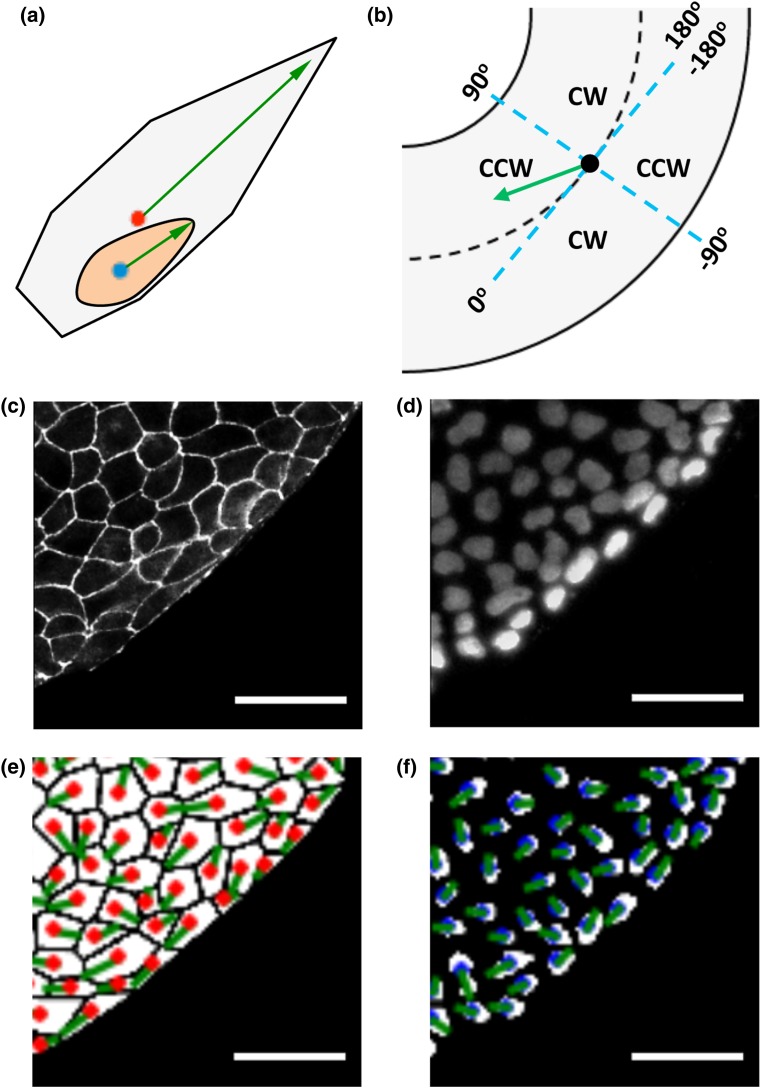
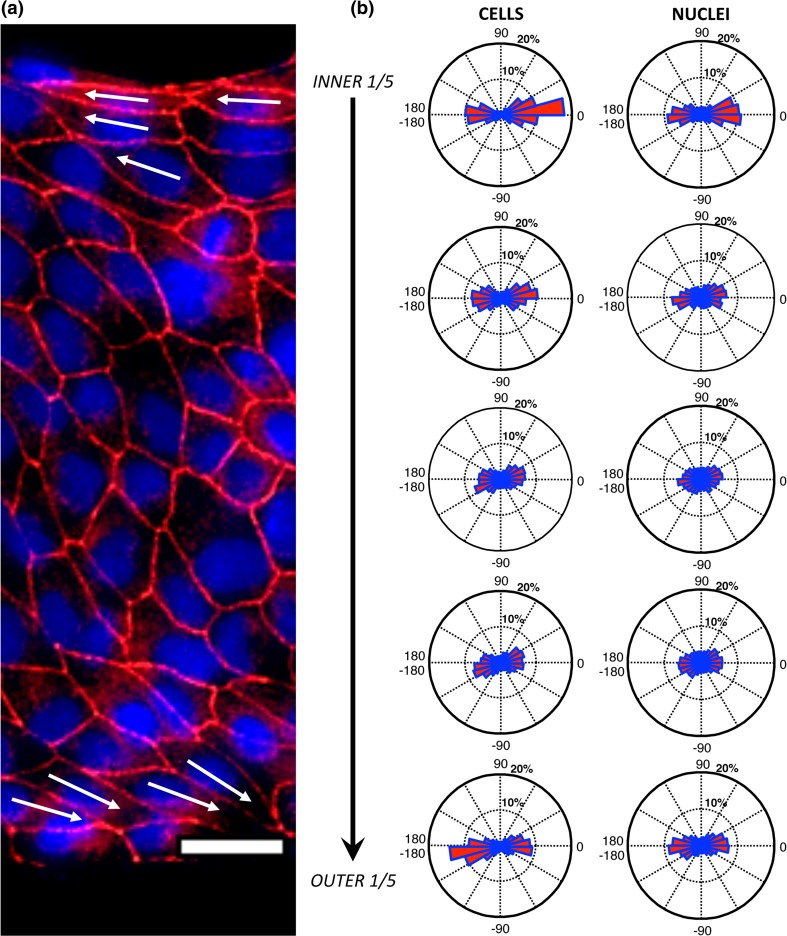
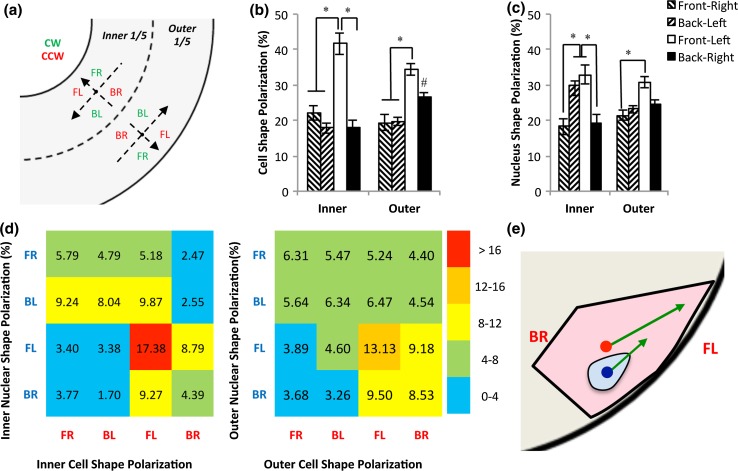
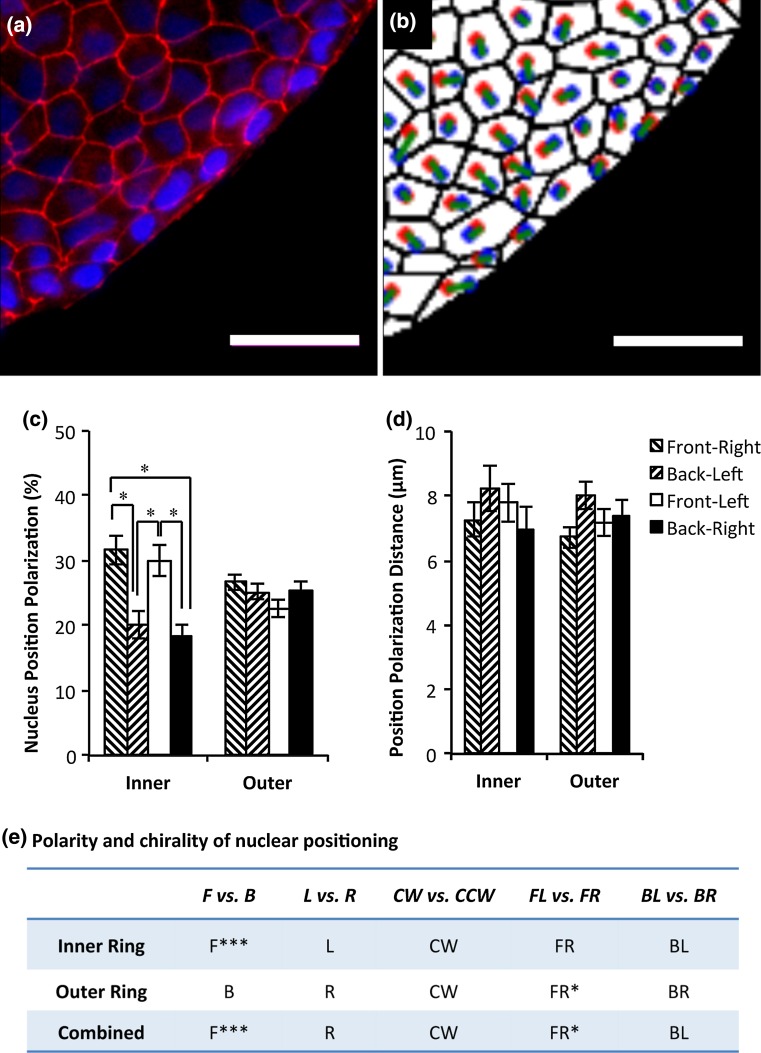
Intrinsic cell chirality has been implicated in the left-right (LR) asymmetry of embryonic development. Impaired cell chirality could lead to severe birth defects in laterality. Previously, we detected cell chirality with an in vitro micropatterning system. Here, we demonstrate for the first time that chirality can be quantified as the coordination of multiaxial polarization of individual cells and nuclei. Using an object labeling, connected component based method, we characterized cell chirality based on cell and nuclear shape polarization and nuclear positioning of each cell in multicellular patterns of epithelial cells. We found that the cells adopted a LR bias the boundaries by positioning the sharp end towards the leading edge and leaving the nucleus at the rear. This behavior is consistent with the directional migration observed previously on the boundary of micropatterns. Although the nucleus is chirally aligned, it is not strongly biased towards or away from the boundary. As the result of the rear positioning of nuclei, the nuclear positioning has an opposite chirality to that of cell alignment. Overall, our results have revealed deep insights of chiral morphogenesis as the coordination of multiaxial polarization at the cellular and subcellular levels.
Keywords: Cell Chirality; Cell Morphology; Cell Polarity; Nuclear Morphology.
Conflict of interest statement
CONFLICT OF INTEREST All authors, Michael J. Raymond, Poulomi Ray, Gurleen Kaur, Michael Fredericks, Ajay V. Singh, and Leo Q. Wan, declare that they have no conflict of interest.
Figures
References
Grants and funding
LinkOut - more resources
Full Text Sources
Other Literature Sources
Research Materials
