


Comparison of laser in situ ketatomileusis and photorefractive keratectomy for myopia using a mixed-effects model
- PMID: 28362808
- PMCID: PMC5375153
- DOI: 10.1371/journal.pone.0174810
Comparison of laser in situ ketatomileusis and photorefractive keratectomy for myopia using a mixed-effects model
Abstract
Purpose: To compare the results of laser in situ keratomileusis (LASIK) and photorefractive keratectomy (PRK) for myopia using a mixed-effects model.
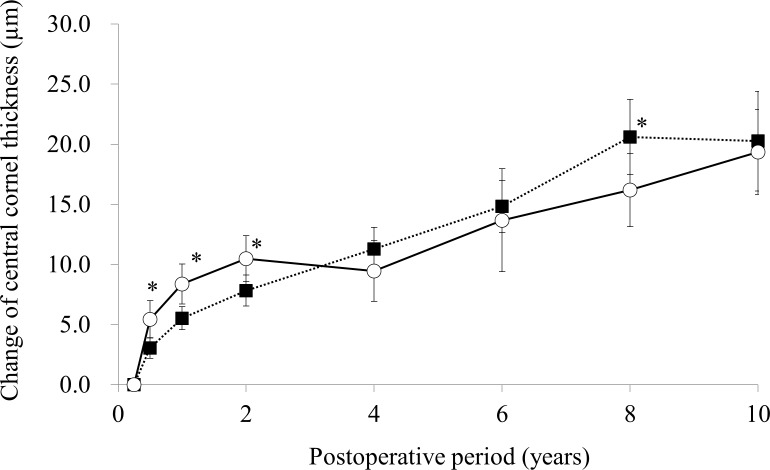
Methods: This comparative retrospective study was conducted in 1,127 eyes of 579 patients after LASIK and 270 eyes of 144 patients after PRK who had two or more postoperative follow-ups after 3 months. Uncorrected visual acuity (UCVA), best spectacle-corrected visual acuity (BSCVA), manifest refractive spherical equivalent (MRSE), percentage of eyes within ± 0.5 diopters (D) and ± 1.0 D of targeted refraction, and central corneal thickness were compared between PRK and LASIK groups using a mixed-effects model.
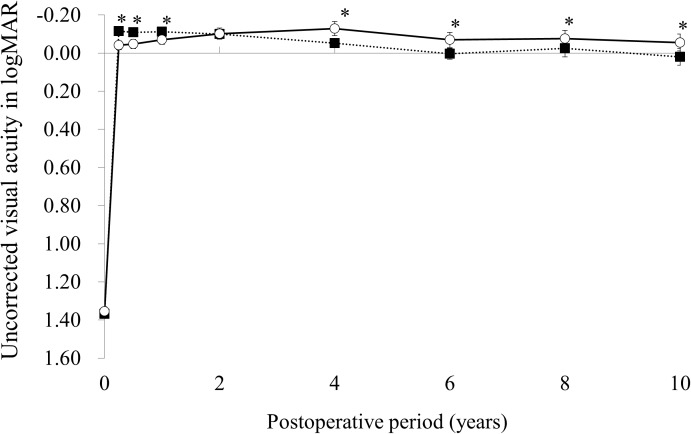
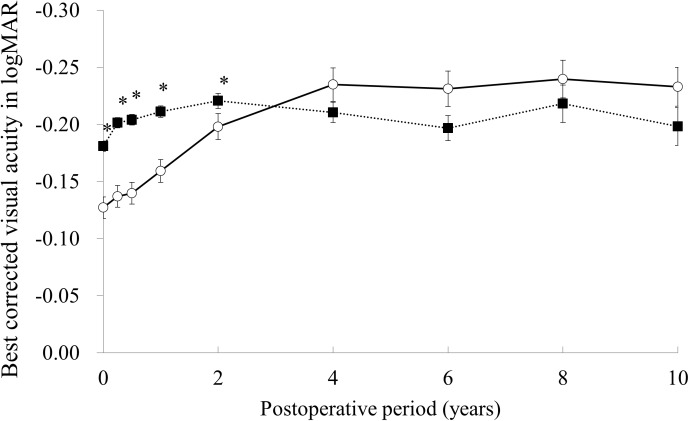
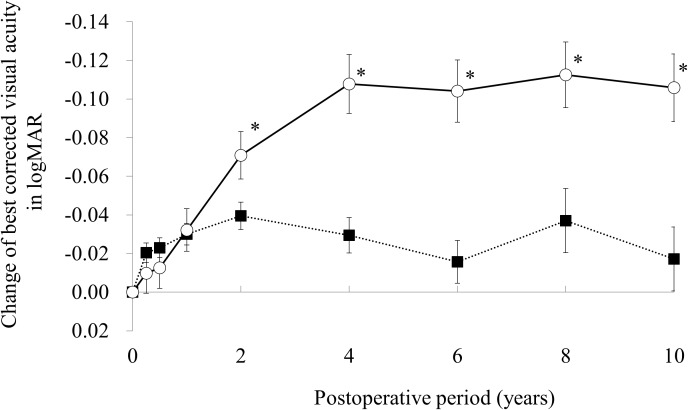
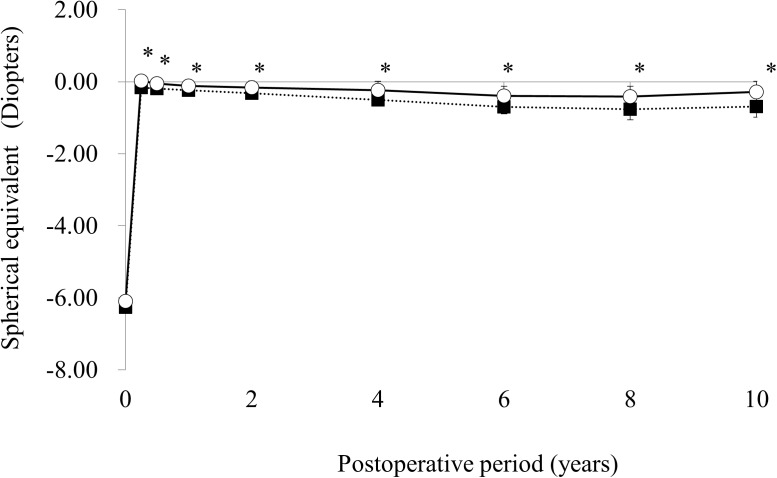
Results: Compared with the LASIK group, UCVA in the PRK group was significantly worse in the initial year but was significantly better after 4 years. The average BSCVA was not significantly different between the LASIK and PRK groups after 4 years. The average gain of BSCVA in the PRK group was significantly larger than that of the LASIK group after 2 years. MRSE in the LASIK and PRK groups showed a gradual myopic shift until 6 years after surgery. After 6 years, MRSE in the PRK group remained stable whereas MRSE in the LASIK group continued a myopic shift. The percentages of eyes within ± 0.5 D or ± 1.0 D in the LASIK group were significantly higher than those in the PRK group at 3 months but were significantly lower than those in the PRK group at 10 years.
Conclusions: PRK for myopia shows better efficacy than LASIK for myopia after 4 years.
Conflict of interest statement
Figures
References
MeSH terms
LinkOut - more resources
Full Text Sources
Other Literature Sources
