


Spatial Analysis of the Human Immunodeficiency Virus Epidemic among Men Who Have Sex with Men in China, 2006-2015
- PMID: 28362948
- PMCID: PMC5439342
- DOI: 10.1093/cid/cix031
Spatial Analysis of the Human Immunodeficiency Virus Epidemic among Men Who Have Sex with Men in China, 2006-2015
Abstract
Background: Studies have shown a recent upsurge in human immunodeficiency virus (HIV) burden among men who have sex with men (MSM) in China, especially in urban areas. For intervention planning and resource allocation, spatial analyses of HIV/AIDS case-clusters were required to identify epidemic foci and trends among MSM in China.
Methods: Information regarding MSM recorded as HIV/AIDS cases during 2006-2015 were extracted from the National Case Reporting System. Demographic trends were determined through Cochran-Armitage trend tests. Distribution of case-clusters was examined using spatial autocorrelation. Spatial-temporal scan was used to detect disease clustering. Spatial correlations between cases and socioenvironmental factors were determined by spatial regression.
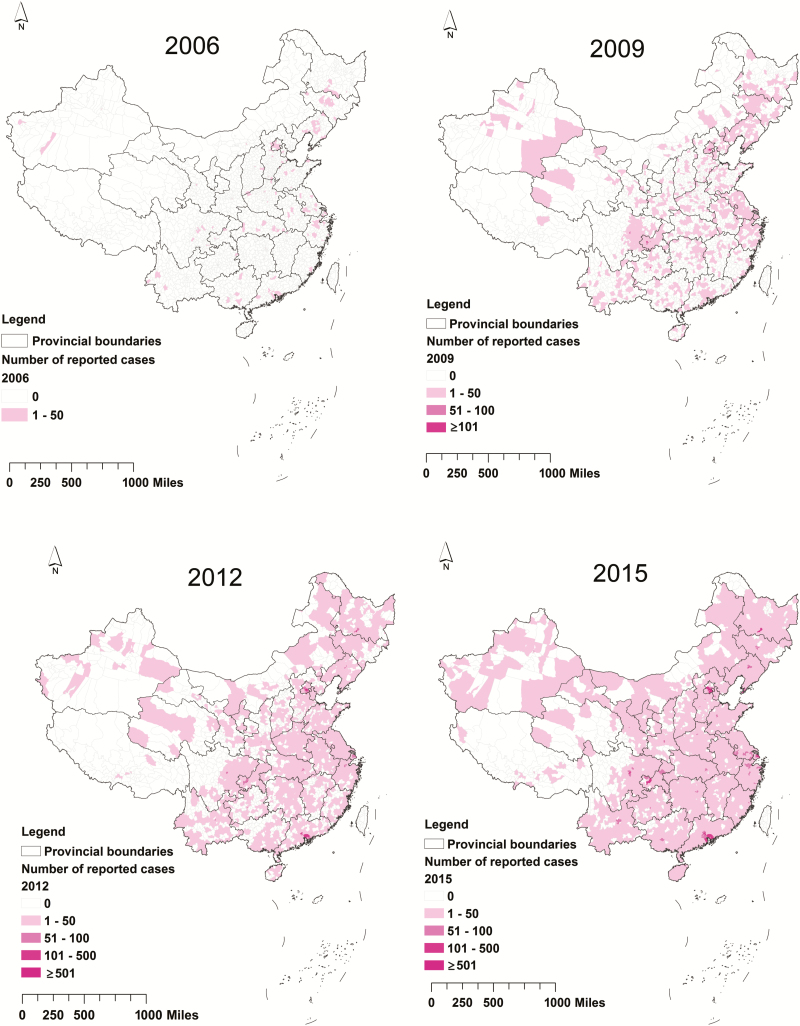
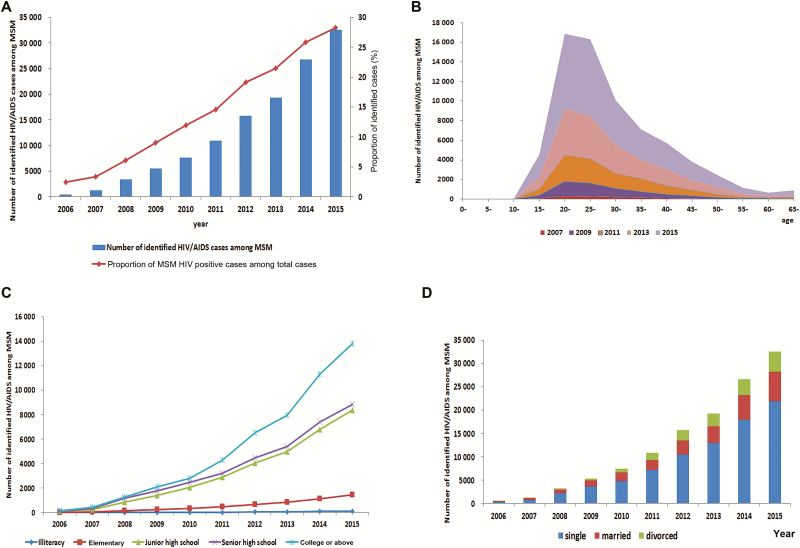
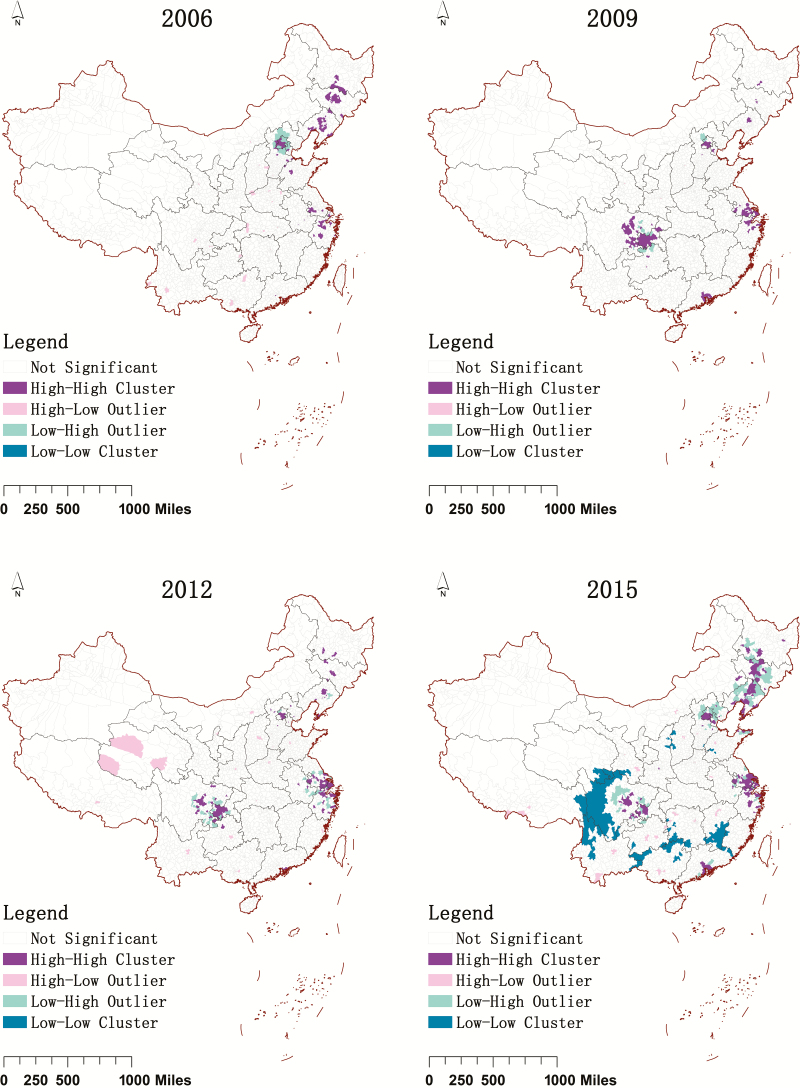
Results: Between 2006 and 2015, in China, 120 371 HIV/AIDS cases were identified among MSM. Newly identified HIV/AIDS cases among self-reported MSM increased from 487 cases in 2006 to >30 000 cases in 2015. Among those HIV/AIDS cases recorded during 2006-2015, 47.0% were 20-29 years old and 24.9% were aged 30-39 years. Based on clusters of HIV/AIDS cases identified through spatial analysis, the epidemic was concentrated among MSM in large cities. Spatial-temporal clusters contained municipalities, provincial capitals, and main cities such as Beijing, Shanghai, Chongqing, Chengdu, and Guangzhou. Spatial regression analysis showed that sociodemographic indicators such as population density, per capita gross domestic product, and number of county-level medical institutions had statistically significant positive correlations with HIV/AIDS among MSM.
Conclusions: Assorted spatial analyses revealed an increasingly concentrated HIV epidemic among young MSM in Chinese cities, calling for targeted health education and intensive interventions at an early age.
Keywords: China.; HIV/AIDS; men who have sex with men; spatial analysis; trend.
© The Author 2017. Published by Oxford University Press for the Infectious Diseases Society of America. All rights reserved. For permissions, e-mail: journals.permissions@oup.com.
Figures
References
-
- Piot P, Plummer FA, Mhalu FS, Lamboray JL, Chin J, Mann JM. AIDS: an international perspective. Science 1988; 239:573–9. - PubMed
-
- Beyrer C, Sullivan P, Sanchez J, et al. The increase in global HIV epidemics in MSM. AIDS 2013; 27:2665–78. - PubMed
-
- Zheng W, Zhou X, Zhou C, Liu W, Li L, Hesketh T. Detraditionalisation and attitudes to sex outside marriage in China. Cult Health Sex 2011; 13:497–511. - PubMed
-
- Wang L, Wang N, Wang L, et al. The 2007 estimates for people at risk for and living with HIV in China: progress and challenges. J Acquir Immune Defic Syndr 2009; 50:414–8. - PubMed
Publication types
MeSH terms
Grants and funding
LinkOut - more resources
Full Text Sources
Other Literature Sources
Medical
