


Prevalence and Predictors of Chronic Postsurgical Pain in Children: A Systematic Review and Meta-Analysis
- PMID: 28363861
- PMCID: PMC5457338
- DOI: 10.1016/j.jpain.2017.03.007
Prevalence and Predictors of Chronic Postsurgical Pain in Children: A Systematic Review and Meta-Analysis
Abstract
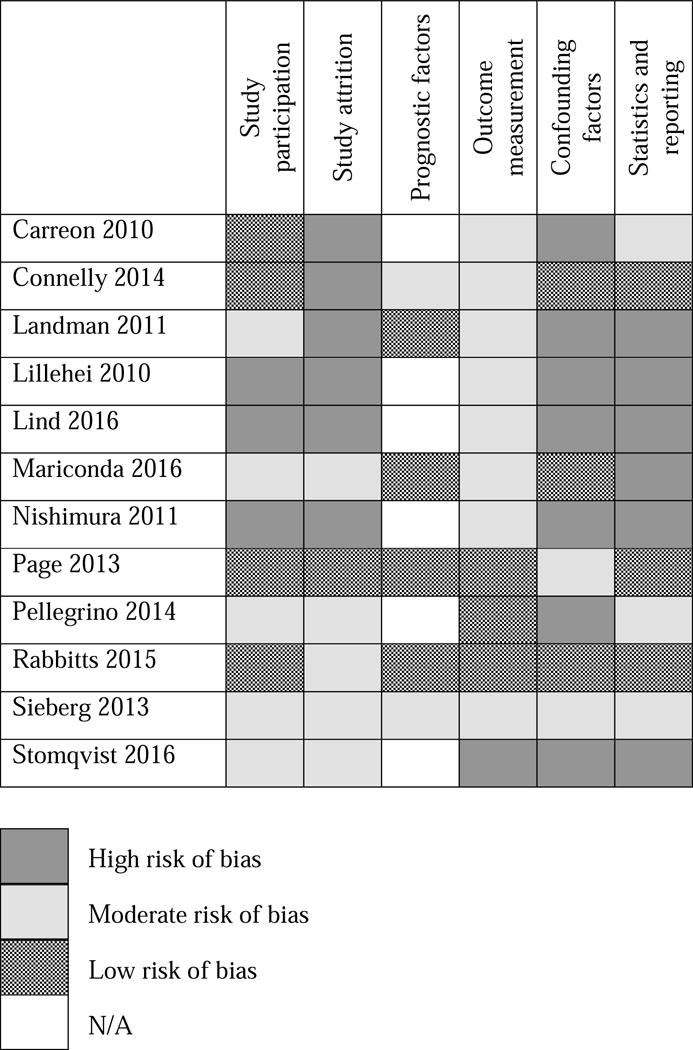
Emerging research suggests that pain may persist longer-term for many children after major surgery, with significant effects on their health outcomes. This systematic review identified the prevalence of chronic postsurgical pain (CPSP) in children after surgery, and determined presurgical biomedical and psychosocial risk factors associated with CPSP prevalence or severity. Prospective studies assessing CPSP 3 to 12 months after surgery in children 6 to 18 years of age published in English in MedLine, EMBASE, PsycINFO, and Cochrane Database of Systematic Reviews since 1996 were eligible for inclusion. Of 16,084 abstracts yielded by the search, 123 full articles were assessed for eligibility, and 12 studies were included in the review. Overall quality of included studies assessed using the Quality in Prognostic Studies tool was low. On the basis of 4 studies with a total of 628 participants across all surgery types, median prevalence of CPSP across studies was 20% (25th percentile = 14.5%, 75th percentile = 38%) at 12 months after surgery. Presurgical pain intensity, child anxiety, child pain coping efficacy, and parental pain catastrophizing were the only presurgical factors identified as predictive of CPSP. Biological and medical factors assessed were not associated with CPSP in any study. Well designed studies examining prevalence and predictors of CPSP are critically needed in children.
Perspective: In this systematic review, the median prevalence of CPSP in children was 20% across studies. Presurgical pain intensity, and child and parent psychosocial factors predicted CPSP. Additional resources and interventions are needed for youth who report persistent pain after surgery.
Keywords: Postoperative pain; child; chronic pain; operative; pediatric; persistent pain.
Copyright © 2017 American Pain Society. Published by Elsevier Inc. All rights reserved.
Conflict of interest statement
Figures

References
-
- Asher M, Min Lai S, Burton D, Manna B. Scoliosis research society-22 patient questionnaire: responsiveness to change associated with surgical treatment. Spine (Phila Pa 1976) 2003;28:70–3. - PubMed
-
- Carreon LY, Sanders JO, Diab M, Sucato DJ, Sturm PF, Glassman SD, Spinal Deformity Study G The minimum clinically important difference in Scoliosis Research Society-22 Appearance, Activity, And Pain domains after surgical correction of adolescent idiopathic scoliosis. Spine (Phila Pa 1976) 2010;35:2079–83. - PubMed
-
- Castarlenas E, Jensen MP, von Baeyer CL, Miro J. Psychometric Properties of the Numerical Rating Scale to Assess Self-Reported Pain Intensity in Children and Adolescents: A Systematic Review. Clin J Pain. 2016 - PubMed
-
- Connelly M, Fulmer RD, Prohaska J, Anson L, Dryer L, Thomas V, Ariagno JE, Price N, Schwend R. Predictors of postoperative pain trajectories in adolescent idiopathic scoliosis. Spine. 2014;39:E174–81. - PubMed
-
- Groenewald CB, Rabbitts JA, Schroeder DR, Harrison TE. Prevalence of moderate-severe pain in hospitalized children. Paediatr Anaesth. 2012;22:661–8. - PubMed
Publication types
MeSH terms
Grants and funding
LinkOut - more resources
Full Text Sources
Other Literature Sources
Medical
