


Varied Role of Ubiquitylation in Generating MHC Class I Peptide Ligands
- PMID: 28363906
- PMCID: PMC5426817
- DOI: 10.4049/jimmunol.1602122
Varied Role of Ubiquitylation in Generating MHC Class I Peptide Ligands
Abstract
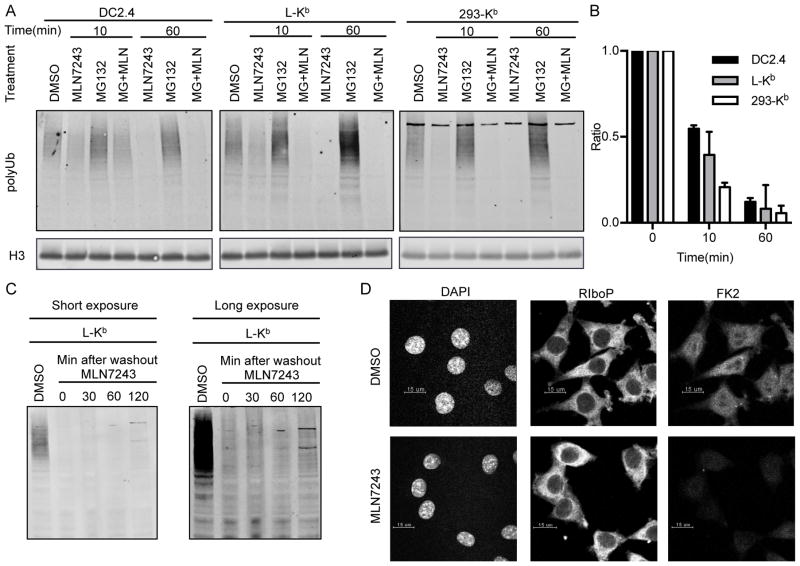
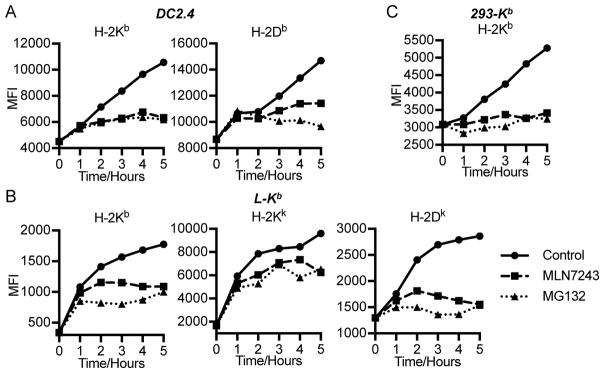
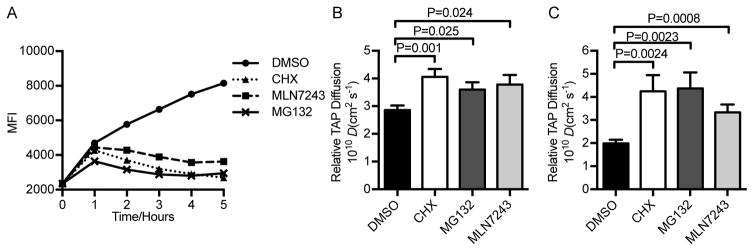
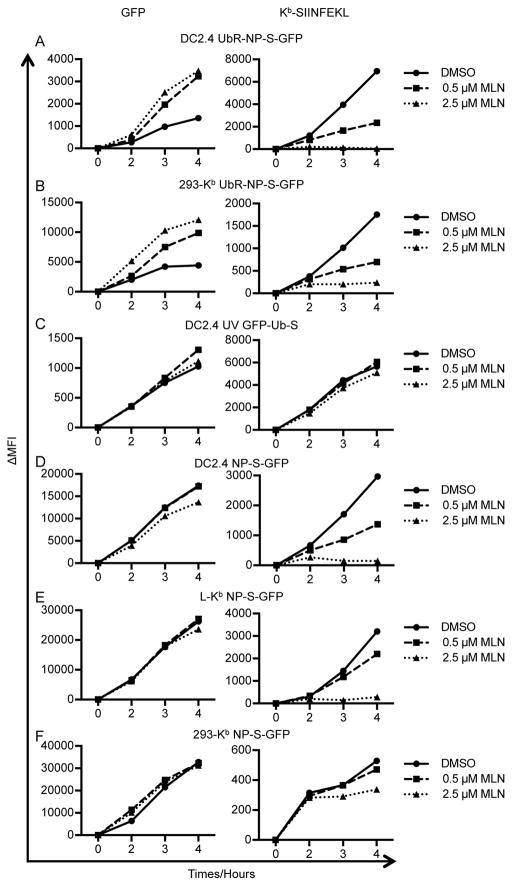
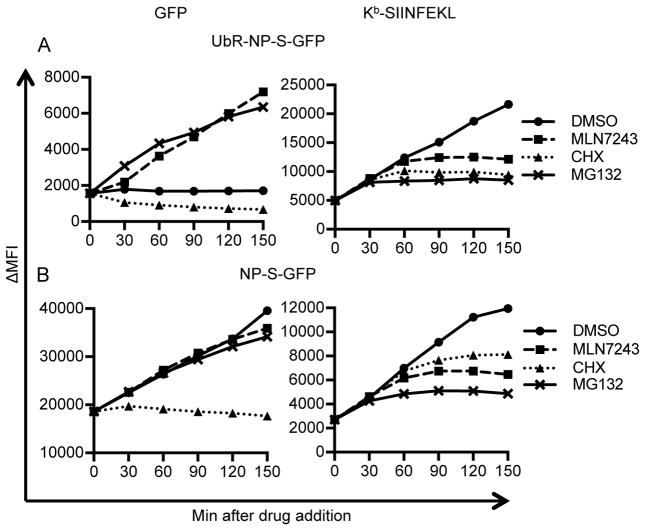
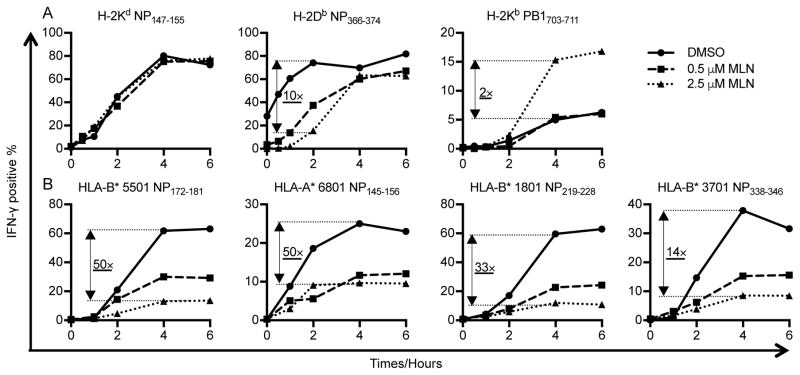
CD8+ T cell immunosurveillance is based on recognizing oligopeptides presented by MHC class I molecules. Despite decades of study, the importance of protein ubiquitylation to peptide generation remains uncertain. In this study, we examined the ability of MLN7243, a recently described ubiquitin-activating enzyme E1 inhibitor, to block overall cytosolic peptide generation and generation of specific peptides from vaccinia- and influenza A virus-encoded proteins. We show that MLN7243 rapidly inhibits ubiquitylation in a variety of cell lines and can profoundly reduce the generation of cytosolic peptides. Kinetic analysis of specific peptide generation reveals that ubiquitylation of defective ribosomal products is rate limiting in generating class I peptide complexes. More generally, our findings demonstrate that the requirement for ubiquitylation in MHC class I-restricted Ag processing varies with class I allomorph, cell type, source protein, and peptide context. Thus, ubiquitin-dependent and -independent pathways robustly contribute to MHC class I-based immunosurveillance.
Copyright © 2017 by The American Association of Immunologists, Inc.
Figures
References
-
- Purcell AW, Croft NP, Tscharke DC. Immunology by numbers: quantitation of antigen presentation completes the quantitative milieu of systems immunology! Curr Opin Immunol. 2016;40:88–95. - PubMed
MeSH terms
Substances
Grants and funding
LinkOut - more resources
Full Text Sources
Other Literature Sources
Research Materials
