


Nasopharyngeal microbiome in premature infants and stability during rhinovirus infection
- PMID: 28363939
- PMCID: PMC5534185
- DOI: 10.1136/jim-2017-000414
Nasopharyngeal microbiome in premature infants and stability during rhinovirus infection
Abstract
Rationale: The nasopharyngeal (NP) microbiota of newborns and infants plays a key role in modulating airway inflammation and respiratory symptoms during viral infections. Premature (PM) birth modifies the early NP environment and is a major risk factor for severe viral respiratory infections. However, it is currently unknown if the NP microbiota of PM infants is altered relative to full-term (FT) individuals.
Objectives: To characterize the NP microbiota differences in preterm and FT infants during rhinovirus (RV) infection.
Methods: We determined the NP microbiota of infants 6 months to ≤2 years of age born FT (n=6) or severely PM<32 weeks gestation (n=7). We compared microbiota composition in healthy NP samples and performed a longitudinal analysis during naturally occurring RV infections to contrast the microbiota dynamics in PM versus FT infants.
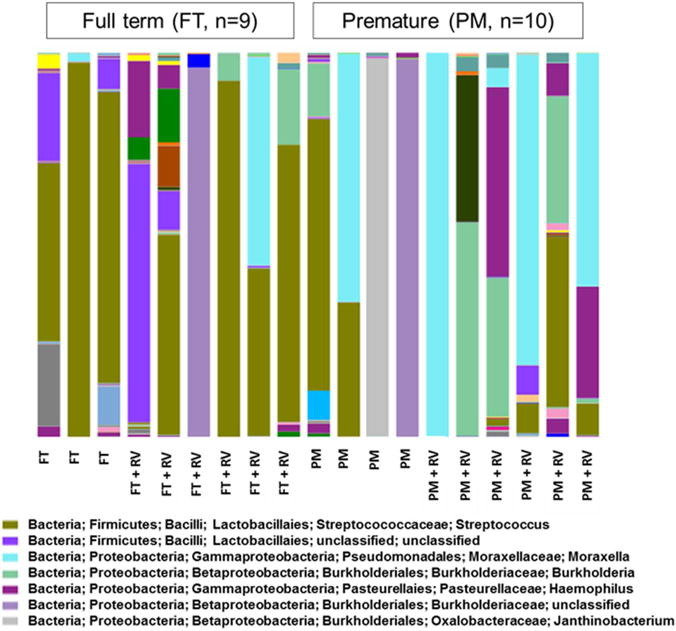
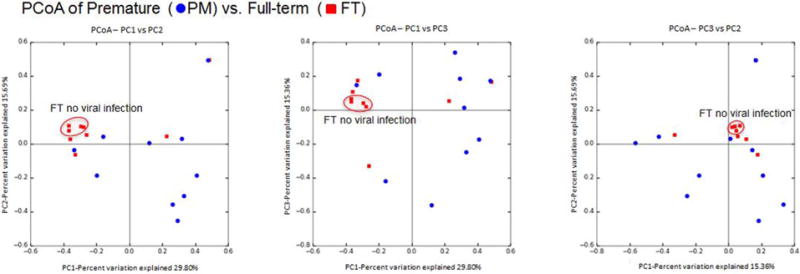
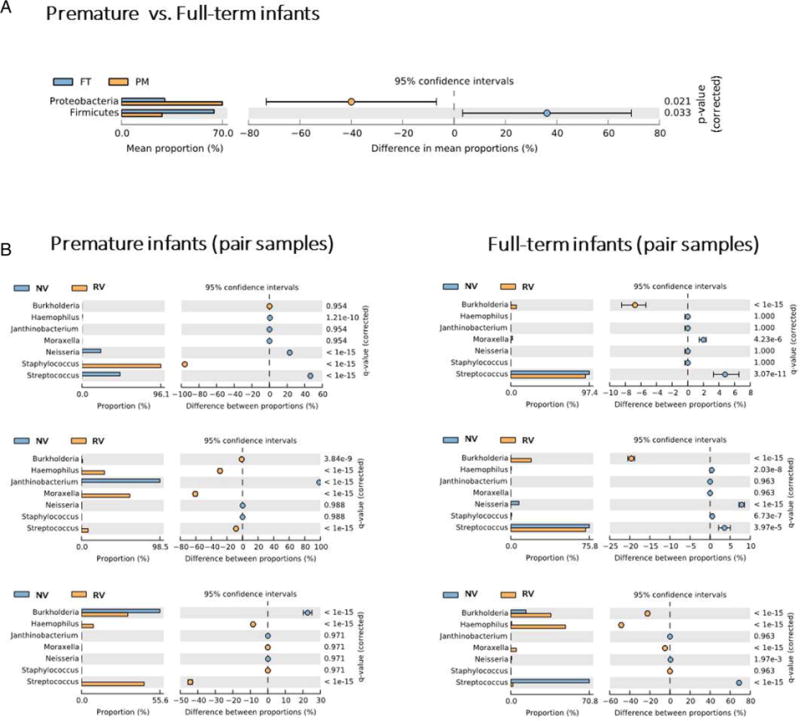
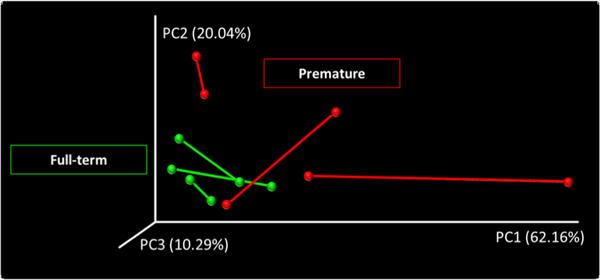
Results: We observed significant differences in the NP bacterial community of PM versus FT. NP from PM infants had higher within-group dissimilarity (heterogeneity) relative to FT infants. Bacterial composition of NP samples from PM infants showed increased Proteobacteria and decreased in Firmicutes. There were also differences in the major taxonomic groups identified, including Streptococcus, Moraxella, and Haemophilus. Longitudinal data showed that these prematurity-related microbiota features persisted during RV infection.
Conclusions: PM is associated with NP microbiota changes beyond the neonatal stage. PM infants have an NP microbiota with high heterogeneity relative to FT infants. These prematurity-related microbiota features persisted during RV infection, suggesting that the NP microbiota of PM may play an important role in modulating airway inflammatory and immune responses in this vulnerable group.
Keywords: Infant, Premature; Microbiota.
Copyright © 2017 American Federation for Medical Research.
Conflict of interest statement
Competing interests: None declared.
Figures
References
-
- Moss ML. The veloepiglottic sphincter and obligate nose breathing in the neonate. J Pediatrics. 1965;67:330–5.
-
- Stocks J. The functional growth and development of the lung during the first year of life. Early Hum Dev. 1977;1:285–309. - PubMed
-
- Følsgaard NV, Schjørring S, Chawes BL, et al. Pathogenic bacteria colonizing the airways in asymptomatic neonates stimulates topical inflammatory mediator release. Am J Respir Crit Care Med. 2013;187:589–95. - PubMed
-
- Vissing NH, Chawes BL, Bisgaard H. Increased risk of pneumonia and bronchiolitis after bacterial colonization of the airways as neonates. Am J Respir Crit Care Med. 2013;188:1246–52. - PubMed
-
- Bisgaard H, Hermansen MN, Buchvald F, et al. Childhood asthma after bacterial colonization of the airway in neonates. N Engl J Med. 2007;357:1487–95. - PubMed
Publication types
MeSH terms
Grants and funding
LinkOut - more resources
Full Text Sources
Other Literature Sources
Medical
Miscellaneous
