


Abuse-related effects of subtype-selective GABAA receptor positive allosteric modulators in an assay of intracranial self-stimulation in rats
- PMID: 28365836
- PMCID: PMC5875719
- DOI: 10.1007/s00213-017-4615-8
Abuse-related effects of subtype-selective GABAA receptor positive allosteric modulators in an assay of intracranial self-stimulation in rats
Abstract
Rationale: GABAA positive allosteric modulators (GABAA PAMs), such as diazepam and zolpidem, are used clinically for anxiety and insomnia, but abuse liability is a concern. Novel GABAA PAMS may have lower abuse liability while retaining clinical utility.
Objective: The present study compared abuse-related effects of the non-selective GABAA PAM diazepam, the α1-selective GABAA PAM zolpidem, and three novel GABAA PAMs (JY-XHe-053, XHe-II-053, and HZ-166) using intracranial self-stimulation (ICSS) in rats. These novel compounds have relatively low efficacy at α1-, α2-, and α3-containing GABAA receptors, putative in vivo selectivity at α2/α3-containing GABAA receptors, and produce anxiolytic-like effects with limited sedation in non-human primates.
Methods: Adult, male Sprague-Dawley rats (n = 17) were each implanted with a bipolar electrode in the medial forebrain bundle and trained to respond under a fixed-ratio 1 schedule of reinforcement for electrical brain stimulation. The potency and time course of effects were compared for diazepam (0.1-10 mg/kg), zolpidem (0.032-3.2 mg/kg), and the three novel compounds (JY-XHe-053, XHe-II-053, and HZ-166; all 3.2-32 mg/kg).
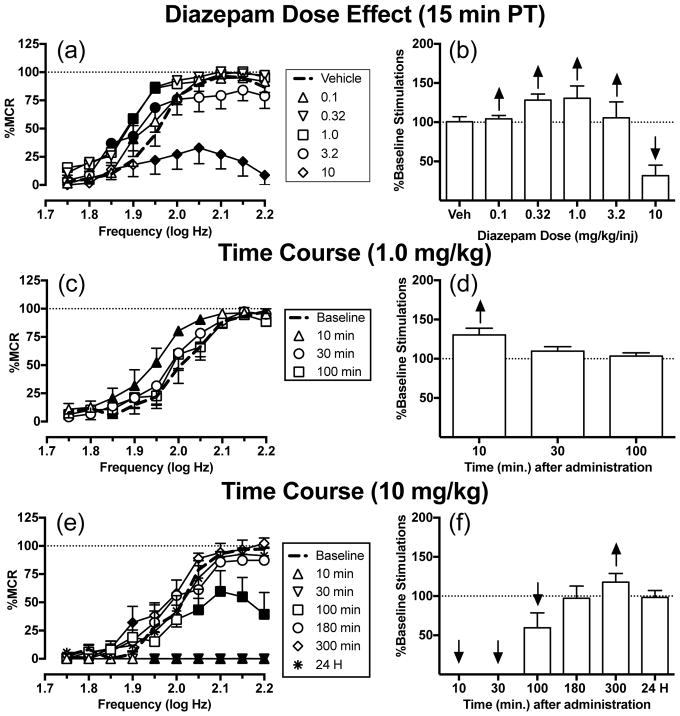
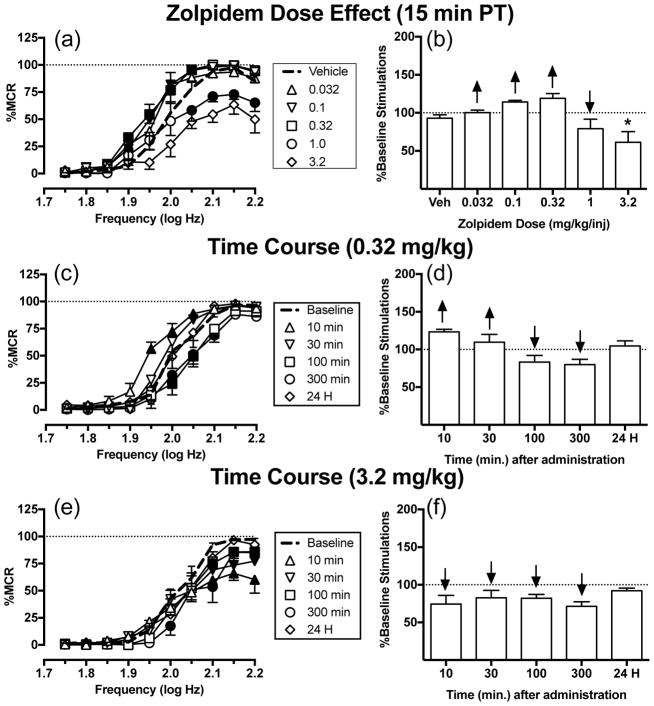
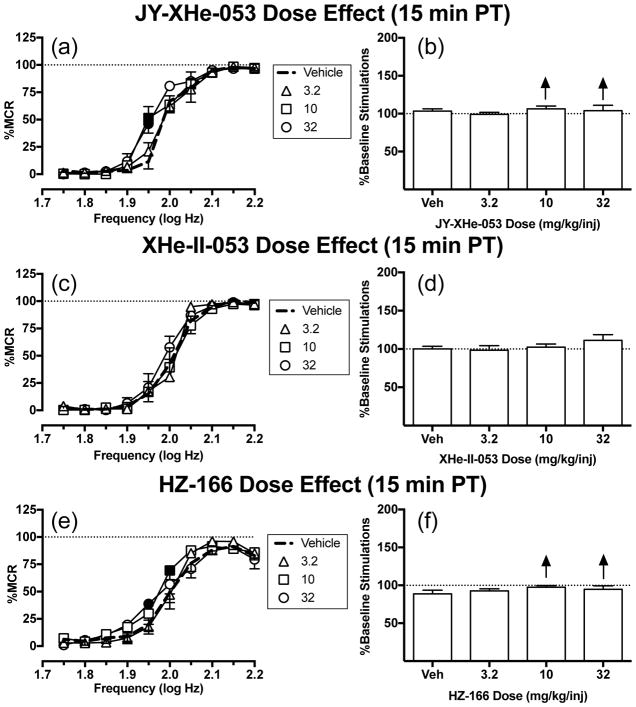
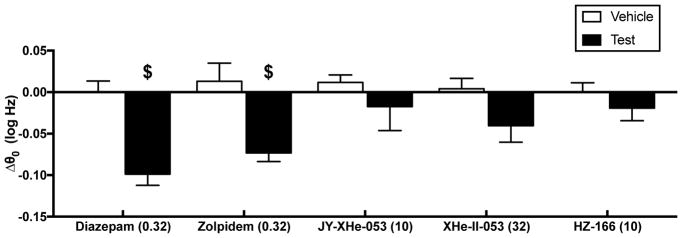
Results: Zolpidem and diazepam produced transient facilitation of ICSS at small doses and more sustained rate-decreasing effects at larger doses. JY-XHe-053 and HZ-166 produced weak and inconsistent ICSS facilitation, whereas XHe-II-053 had no effect on ICSS.
Conclusions: These results support a key role for α1-containing GABAA receptors in mediating GABAA PAM-induced ICSS facilitation. These results are concordant with drug self-administration studies in monkeys in suggesting that GABAA PAMs with low α1 efficacy and putative α2/α3 selectivity have lower abuse liability than high-efficacy non-selective or α1-selective GABAA PAMs.
Keywords: Abuse liability; Diazepam; GABAA positive allosteric modulators; ICSS; Intracranial self-stimulation; Rats; Zolpidem.
Conflict of interest statement
No potential or perceived conflicts of interest are declared for any of the authors.
Figures
References
-
- Ator NA. Relation between discriminative and reinforcing effects of midazolam, pentobarbital, chlordiazepoxide, zolpidem, and imidazenil in baboons. Psychopharmacology (Berl) 2002;163(3–4):477–487. - PubMed
-
- Ator NA. Contributions of GABA A receptor subtype selectivity to abuse liability and dependence potential of pharmacological treatments for anxiety and sleep disorders. CNS Spectr. 2005;10(1):31–39. - PubMed
-
- Bellantuono C, Reggi V, Tognoni G, Garattini S. Benzodiazepines: clinical pharmacology and therapeutic use. Drugs. 1980;19(3):195–219. - PubMed
MeSH terms
Substances
Grants and funding
LinkOut - more resources
Full Text Sources
Other Literature Sources
Miscellaneous
