Daily rhythms of behavioral and hormonal patterns in male dromedary camels housed in boxes
- PMID: 28367365
- PMCID: PMC5374969
- DOI: 10.7717/peerj.3074
Daily rhythms of behavioral and hormonal patterns in male dromedary camels housed in boxes
Abstract
Background: Daily rhythmicity has been observed for a number of hormonal and behavioral variables in mammals. It can be entrained by several external factors, such as light-dark cycle and scheduled feeding. In dromedary camels, daily rhythmicity has been documented only for melatonin secretion and body temperature. In this study, the daily rhythmicity of behavioral repertoire, cortisol and testosterone levels was investigated in captive male camels.
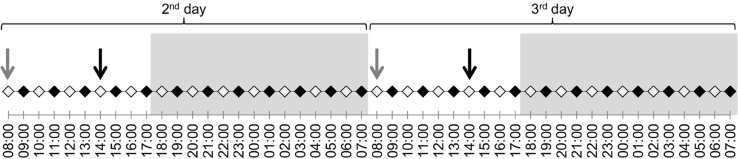
Methods: Six clinically healthy male dromedary camels (Camelus dromedarius) were used. The animals were housed in single boxes for 24 h daily and fed twice a day. Over a period of 48 h, behavioral observations were made and blood samples taken every two hours. The data were analyzed using diurnality index, conisor analysis and PROC mixed procedure.
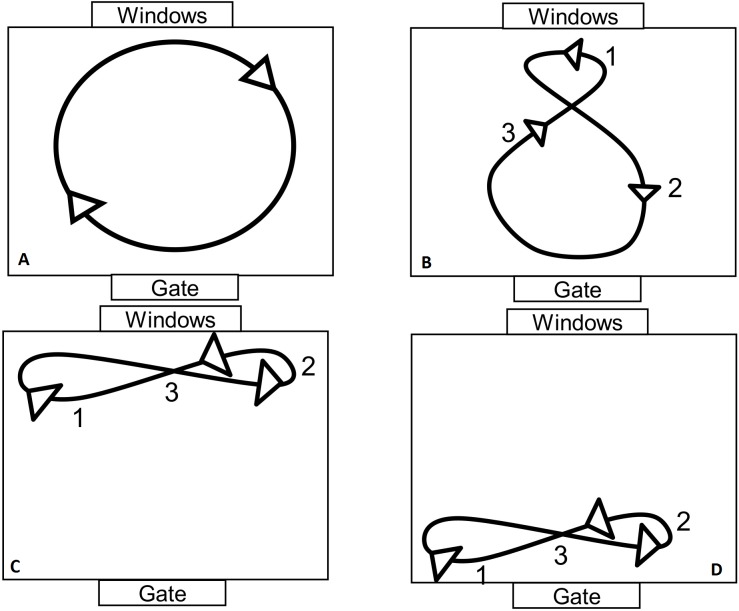
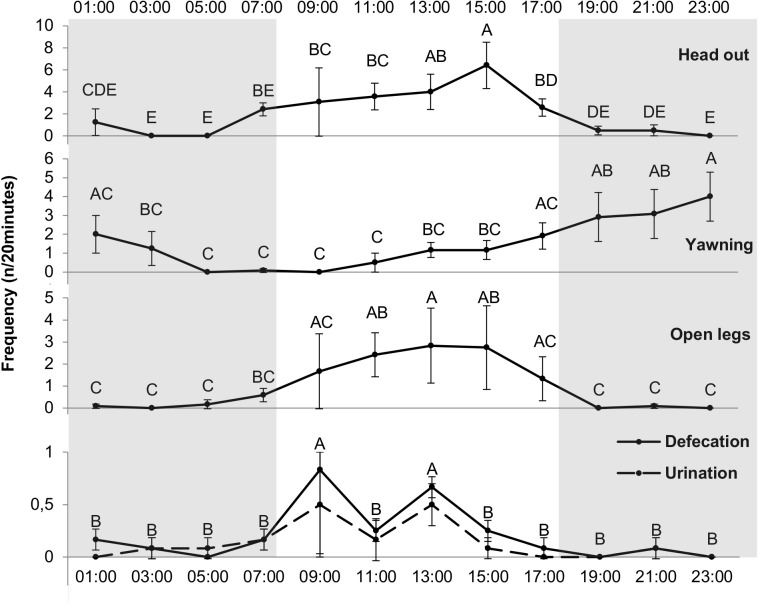
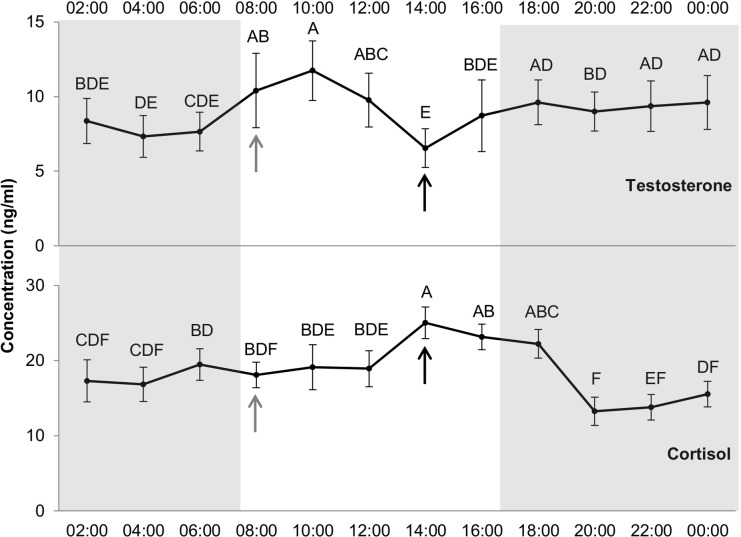
Results: The diurnality index for rumination and lying down was close to 0 (respectively, 0.09 and 0.19), while the indices for stereotypy, standing, feeding and walking were close to 1 (respectively, 0.74, 0.84, 0.92 and 0.85). Cosinor analysis revealed daily rhythmicity for all behaviors and for cortisol levels (acrophase at 12:57) but not for testosterone. Rumination and lying down (inactive behaviors) reached a peak during the scotophase, whereas feeding, walking and stereotypy (active behaviors) reached a peak during the photophase around midday. Cortisol level and expression of stereotypies peaked before and after food distribution and were negatively correlated (r = - 0.287, P = 0.005). Testosterone levels and expression of sexual behaviors were stimulated by the visual and olfactory contacts with the females and were positively correlated (r = 0.164, P = 0.040). Testosterone was also negatively correlated with cortisol (r = - 0.297; P = 0.003).
Discussion: These preliminary results provided new knowledge about the daily rhythm of behaviors in camels housed in boxes, suggesting that camels exhibit diurnal behavior pattern in the maintenance conditions outlined in the study. Daily rhythmicity seemed to be entrained not only by the light-dark cycle but also by scheduled feeding. The rise in stereotypy after food distribution could be due to the persistence of feeding motivation and frustration after the ingestion of food. Therefore, feeding practices should be improved to satisfy the foraging and feeding motivation of these camels. Behavioral and hormonal daily patterns in camels should be taken in consideration to adapt the management system, giving the animals more freedom during the light period and a diet richer in fiber, so as to improve reproductive performance, health and welfare.
Keywords: Behavior; Camel; Cortisol; Daily rhythm; Testosterone.
Conflict of interest statement
The authors declare there are no competing interests.
Figures


References
-
- Becker B, Nienaber J, DeShazer J, Hahn G. Effect of transportation on cortisol concentrations and on the circadian rhythm of cortisol in gilts. American Journal of Veterinary Research. 1985;46:1457–1459. - PubMed
LinkOut - more resources
Full Text Sources
Other Literature Sources