


Combined Deletion of the Vitamin D Receptor and Calcium-Sensing Receptor Delays Wound Re-epithelialization
- PMID: 28368538
- PMCID: PMC5460927
- DOI: 10.1210/en.2017-00061
Combined Deletion of the Vitamin D Receptor and Calcium-Sensing Receptor Delays Wound Re-epithelialization
Abstract
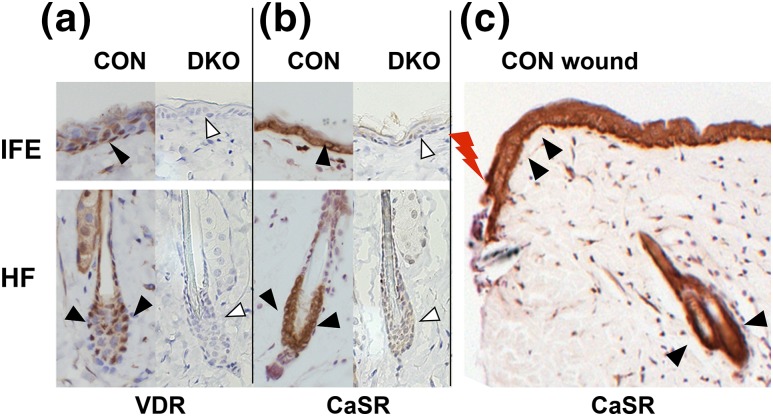
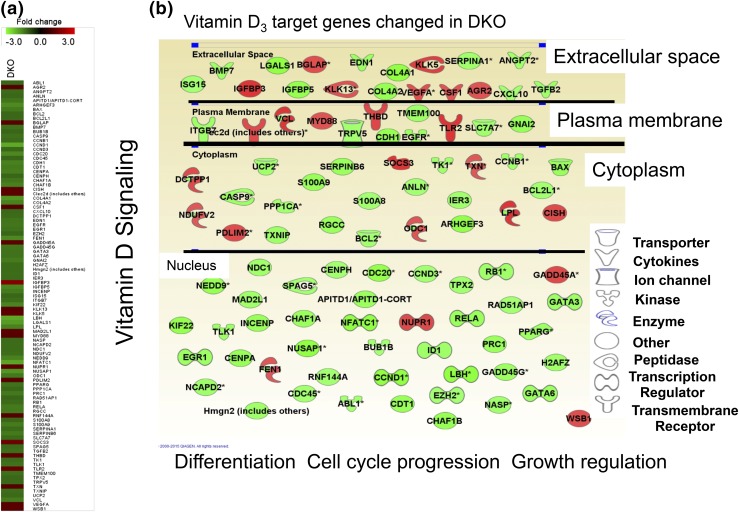
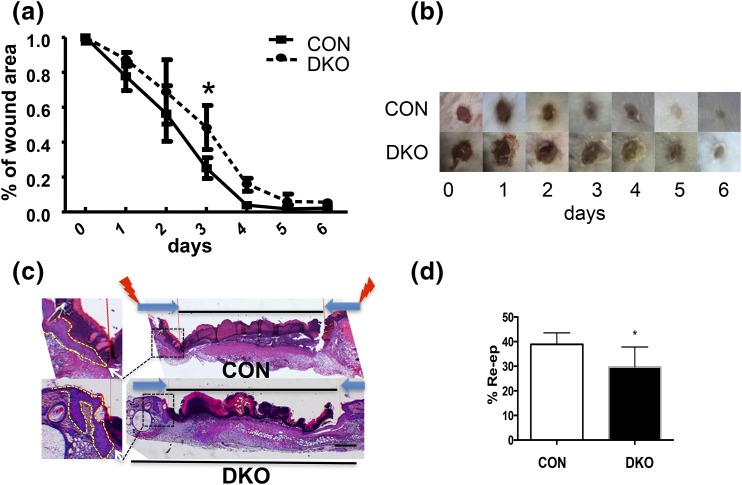
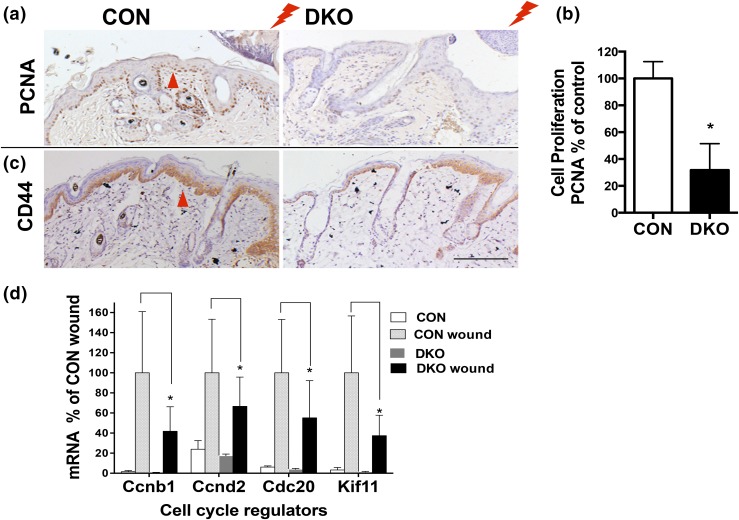
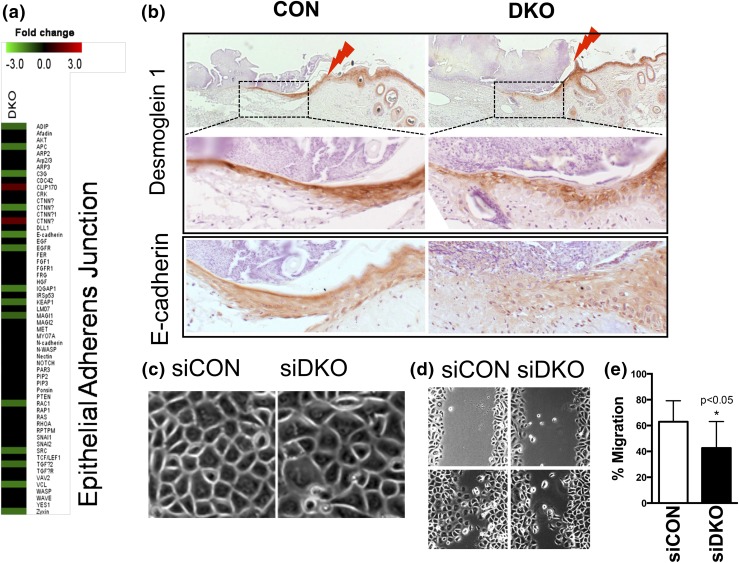
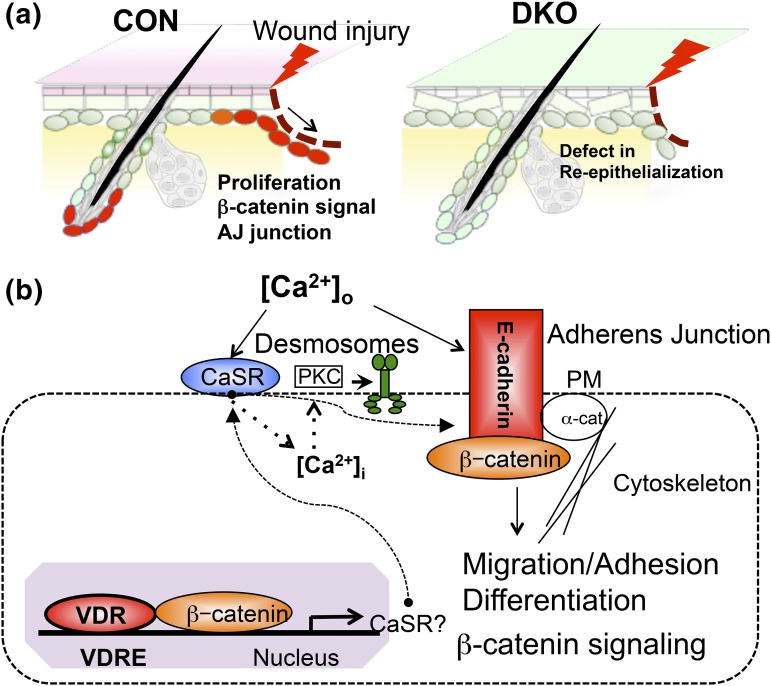
When the skin is injured, keratinocytes proliferate, migrate, and differentiate to regenerate the epidermis. We recently showed that ablation of the vitamin D receptor (Vdr) in keratinocytes delays wound re-epithelialization in mice also fed a low-calcium diet, implicating a cooperative role of Vdr and calcium signaling in this process. In this study, we examined the role of vitamin D and calcium signaling in wound healing by deleting their receptors, Vdr and the calcium-sensing receptor (Casr). Gene expression profiling of neonatal epidermis lacking both Vdr and Casr [Vdr and Casr double knockout (DKO)] specifically in keratinocytes revealed that DKO affects a number of pathways relevant to wound healing, including Vdr, β-catenin, and adherens junction (AJ) signaling. In adult skin, DKO caused a significant delay in wound closure and re-epithelialization, whereas myofibroblast numbers and matrix deposition were unaffected. The injury-induced proliferation of epidermal keratinocytes was blunted in both epidermis and hair follicles, and expression of β-catenin target genes was reduced in the DKO. Expression of E-cadherin and desmoglein 1 was reduced in the shortened leading edges of the epithelial tongues re-epithelializing the wounds, consistent with the decreased migration rate of DKO keratinocytes in vitro. These results demonstrate that Vdr and Casr are required for β-catenin-regulated cell proliferation and AJ formation essential for re-epithelialization after wounding. We conclude that vitamin D and calcium signaling in keratinocytes are required for a normal regenerative response of the skin to wounding.
Copyright © 2017 Endocrine Society.
Figures
References
-
- Burkievcz CJ, Skare TL, Malafaia O, Nassif PA, Ribas CS, Santos LR. Vitamin D deficiency in patients with chronic venous ulcers. Rev Col Bras Cir. 2012;39(1):60–63. - PubMed
-
- Zubair M, Malik A, Meerza D, Ahmad J. 25-Hydroxyvitamin D [25(OH)D] levels and diabetic foot ulcer: is there any relationship? Diabetes Metab Syndr. 2013;7(3):148–153. - PubMed
MeSH terms
Substances
Grants and funding
LinkOut - more resources
Full Text Sources
Other Literature Sources
Molecular Biology Databases
