


A Novel Numerical Scoring System for Melanoma Tumor-infiltrating Lymphocytes Has Better Prognostic Value Than Standard Scoring
- PMID: 28368925
- PMCID: PMC6171741
- DOI: 10.1097/PAS.0000000000000848
A Novel Numerical Scoring System for Melanoma Tumor-infiltrating Lymphocytes Has Better Prognostic Value Than Standard Scoring
Abstract
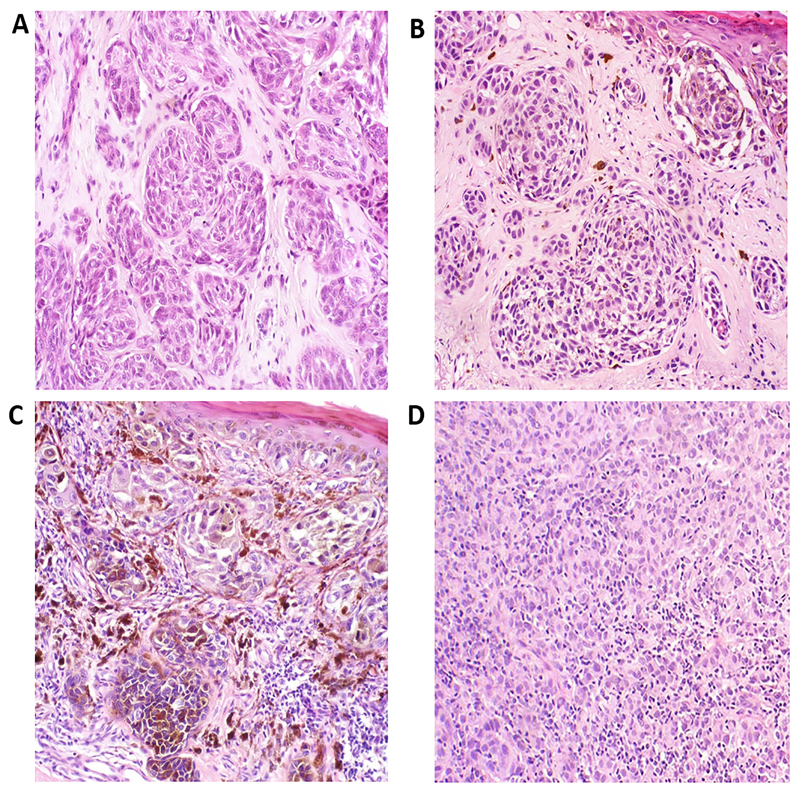
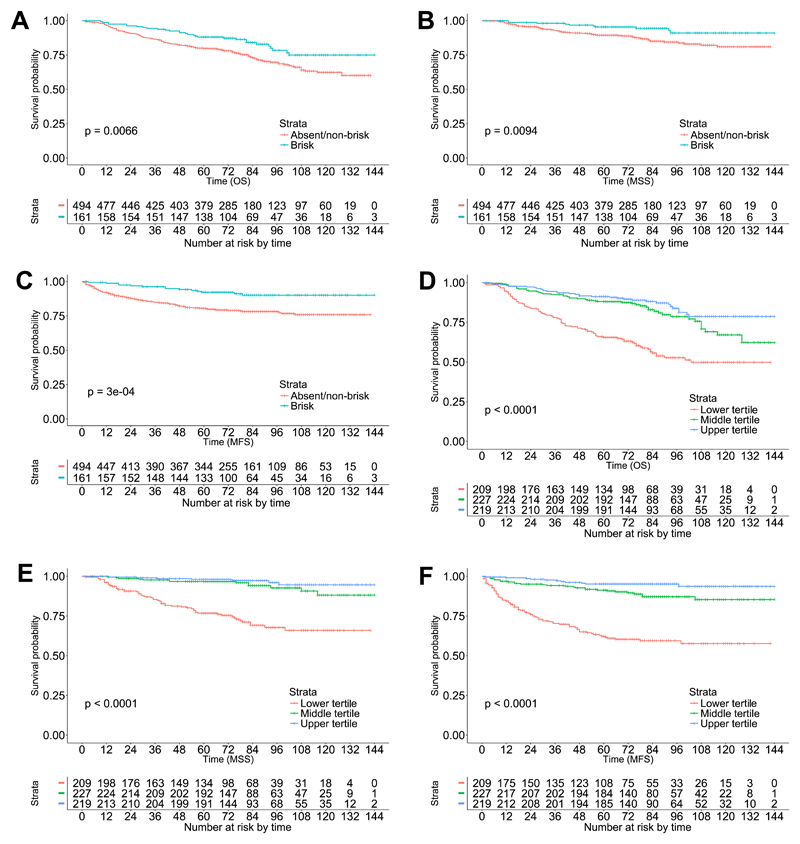
The purpose of this study was to evaluate the prognostic value of tumor-infiltrating lymphocytes (TILs) in melanoma and to determine whether a simpler numerical scoring system would be more effective. In total, 655 patients presenting to a UK teaching hospital with primary invasive melanoma were analyzed. TILs were rescored using the standard Clark's method and univariable and multivariable analyses of the effect of TILs on overall survival (OS), disease-specific survival (DSS), and metastasis-free survival (MFS) was assessed using Cox regression. In total, 30 (5%) melanomas showed absent, 464 (71%) nonbrisk, and 161 (24%) brisk TILs. There was a statistically significant relationship between TILs and Breslow thickness, age, melanoma type, mitotic rate, and histologic regression. TIL grade was a significant predictor of MFS in multivariable analysis (hazard ratio [HR], 0.44; 95% confidence interval [CI], 0.25-0.77) but was not significant for OS or DSS. By contrast, when a simple numerical TIL percentage score was used this was a strong predictor of OS (HR, 0.55; 95% CI, 0.38-0.78), DSS (HR, 0.25; 95% CI, 0.14-0.44), and MFS (HR, 0.32; 95% CI, 0.21-0.51) in multivariable analysis. The percentage TIL score was also significant when adjusted for the prognostic gold standard, American Joint Committee on Cancer stage: OS (HR, 0.66; 95% CI, 0.46-0.95), DSS (HR, 0.33; 95% CI, 0.19-0.60), and MFS (HR, 0.41; 95% CI, 0.26-0.65). The TIL percentage score was subsequently validated in new cases. In summary, this study strongly confirms that higher amounts of TILs are associated with better prognosis and in addition demonstrates the value of a simplified numerical TIL scoring system.
Figures
References
-
- Edge SB, Compton CC. The American Joint Committee on Cancer: The 7th edition of the AJCC cancer staging manual and the future of TNM. Annals of Surgical Oncology. 2010;17:1471–1474. - PubMed
-
- Clark WH, Jr, From L, Bernardino EA, et al. The histogenesis and biologic behavior of primary human malignant melanomas of the skin. Cancer Res. 1969;29:705–27. - PubMed
-
- Clark WH, Jr, Elder DE, Guerry D, 4th, et al. Model predicting survival in stage I melanoma based on tumor progression. J Natl Cancer Inst. 1989;81:1893–904. - PubMed
-
- Clemente CG, Mihm MC, Jr, Bufalino R, et al. Prognostic value of tumor infiltrating lymphocytes in the vertical growth phase of primary cutaneous melanoma. Cancer. 1996;77:1303–10. - PubMed
Publication types
MeSH terms
Grants and funding
LinkOut - more resources
Full Text Sources
Other Literature Sources
Medical
