


Inflammasome gene profile is modulated in septic patients, with a greater magnitude in non-survivors
- PMID: 28369745
- PMCID: PMC5508322
- DOI: 10.1111/cei.12971
Inflammasome gene profile is modulated in septic patients, with a greater magnitude in non-survivors
Abstract
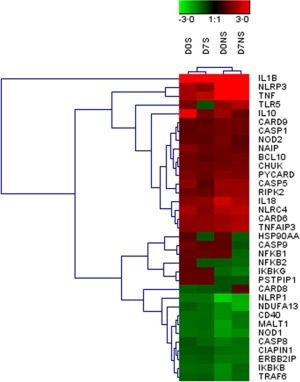
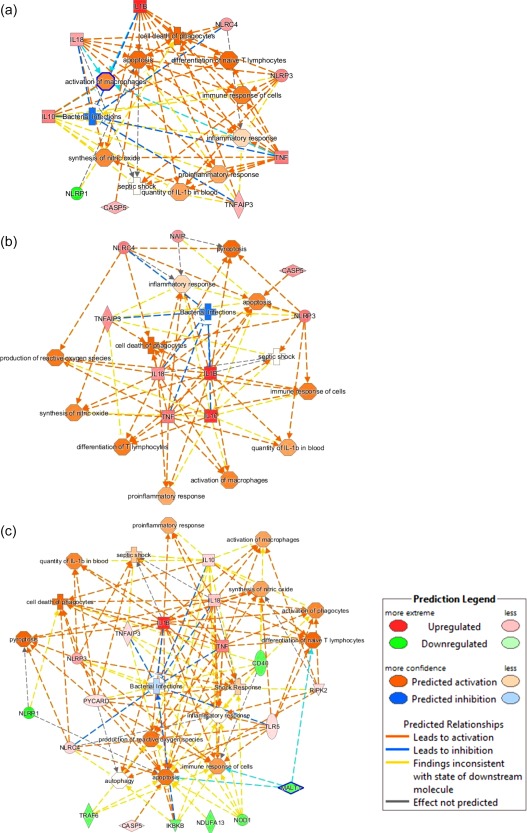
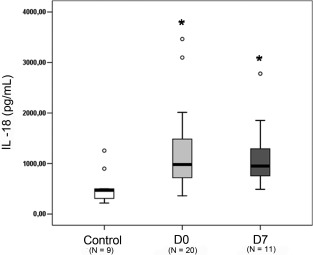
Inflammasome signalling induces the processing and secretion of interleukin (IL)-1β and IL-18 which, coupled with pyroptosis, activate further the inflammatory response. In the present study we evaluated the expression of genes involved in inflammasome signalling pathways in septic patients, their interaction networks and the predicted functions modulated in survivors and non-survivors. Twenty-seven patients with sepsis secondary to community-acquired pneumonia admitted to intensive care units from three general hospitals in São Paulo were included into the study. We performed a polymerase chain reaction (PCR) array encompassing 35 genes related to the nucleotide-binding oligomerization domain and leucine-rich repeat-containing (NLR)-inflammasome in peripheral blood mononuclear cells obtained at admission and after 7 days of follow-up. Eleven healthy volunteers were used as the reference group. Increased NLRC4 and NLRP3 and decreased nucleotide-binding oligomerization domain (NOD1), and NLRP1 expression was observed in septic patients compared to healthy individuals; the IL-1β and IL-18 expression levels were also high in the patients. The gene expression changes followed the same patterns in surviving and non-surviving patients, with higher magnitudes observed in non-survivors. Functional analyses revealed, however, that activation and inhibition intensity for representing functions were different in survivors and non-survivors, as for production of reactive oxygen species, synthesis of nitric oxide and for the control of bacterial infections. Our results showed that the genes involved in the activation of the NLR-inflammasome cascades were altered substantially in septic patients, with a higher number of altered genes and a higher intensity in the disturbance of gene expression found among patients dying of sepsis.
Keywords: NLRP3; Toll-like receptor; interleukin-18; interleukin-1beta; pyroptosis.
© 2017 British Society for Immunology.
Figures
References
-
- Bone RC, Sibbald WJ, Sprung CL. The ACCP–SCCM consensus conference on sepsis and organ failure. Chest 1992; 101:1481–3. - PubMed
-
- Salomao R, Brunialti MK, Rapozo MM, Baggio‐Zappia GL, Galanos C, Freudenberg M. Bacterial sensing, cell signaling, and modulation of the immune response during sepsis. Shock 2012; 38:227–42. - PubMed
-
- Ishii KJ, Koyama S, Nakagawa A, Coban C, Akira S. Host innate immune receptors and beyond: making sense of microbial infections. Cell Host Microbe 2008; 3:352–63. - PubMed
-
- Takeda K, Akira S. Toll‐like receptors in innate immunity. Int Immunol 2005; 17:1–14. - PubMed
Publication types
MeSH terms
Substances
LinkOut - more resources
Full Text Sources
Other Literature Sources
Medical
Miscellaneous
