


Dorsomedial prefontal cortex supports spontaneous thinking per se
- PMID: 28370735
- PMCID: PMC6866844
- DOI: 10.1002/hbm.23589
Dorsomedial prefontal cortex supports spontaneous thinking per se
Abstract
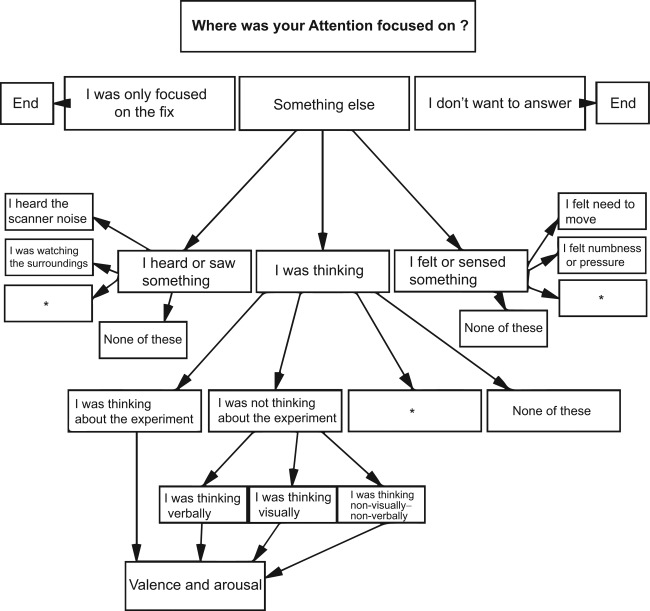
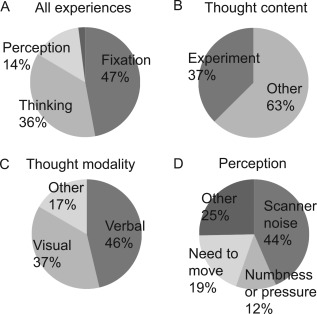
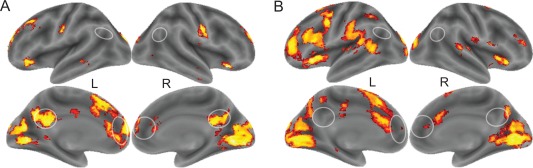
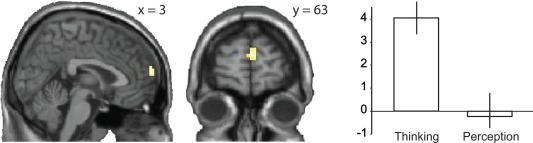
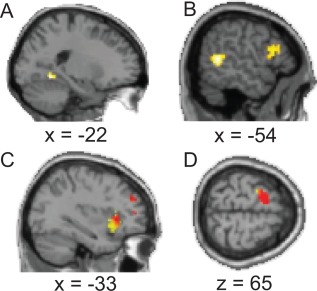
Spontaneous thinking, an action to produce, consider, integrate, and reason through mental representations, is central to our daily experience and has been suggested to serve crucial adaptive purposes. Such thinking occurs among other experiences during mind wandering that is associated with activation of the default mode network among other brain circuitries. Whether and how such brain activation is linked to the experience of spontaneous thinking per se remains poorly known. We studied 51 healthy subjects using a comprehensive experience-sampling paradigm during 3T functional magnetic resonance imaging. In comparison with fixation, the experiences of spontaneous thinking and spontaneous perception were related to activation of wide-spread brain circuitries, including the cortical midline structures, the anterior cingulate cortex and the visual cortex. In direct comparison of the spontaneous thinking versus spontaneous perception, activation was observed in the anterior dorsomedial prefrontal cortex. Modality congruence of spontaneous-experience-related brain activation was suggested by several findings, including association of the lingual gyrus with visual in comparison with non-verbal-non-visual thinking. In the context of current literature, these findings suggest that the cortical midline structures are involved in the integrative core substrate of spontaneous thinking that is coupled with other brain systems depending on the characteristics of thinking. Furthermore, involvement of the anterior dorsomedial prefrontal cortex suggests the control of high-order abstract functions to characterize spontaneous thinking per se. Hum Brain Mapp 38:3277-3288, 2017. © 2017 Wiley Periodicals, Inc.
Keywords: brain; cortical midline structures; default mode network; experience sampling; functional magnetic resonance imaging; human; thought.
© 2017 Wiley Periodicals, Inc.
Figures
References
-
- Ashburner J (2007): A fast diffeomorphic image registration algorithm. Neuroimage 38:95–113. - PubMed
-
- Binder JR, Frost JA, Hammeke TA, Bellgowan PS, Rao SM, Cox RW (1999): Conceptual processing during the conscious resting state. A functional MRI study. J Cogn Neurosci 11:80–95. - PubMed
-
- Bischof M, Bassetti CL (2004): Total dream loss: A distinct neuropsychological dysfunction after bilateral PCA stroke. Ann Neurol 56:583–586. - PubMed
Publication types
MeSH terms
Substances
LinkOut - more resources
Full Text Sources
Other Literature Sources
