


Device errors in asthma and COPD: systematic literature review and meta-analysis
- PMID: 28373682
- PMCID: PMC5434773
- DOI: 10.1038/s41533-017-0016-z
Device errors in asthma and COPD: systematic literature review and meta-analysis
Abstract
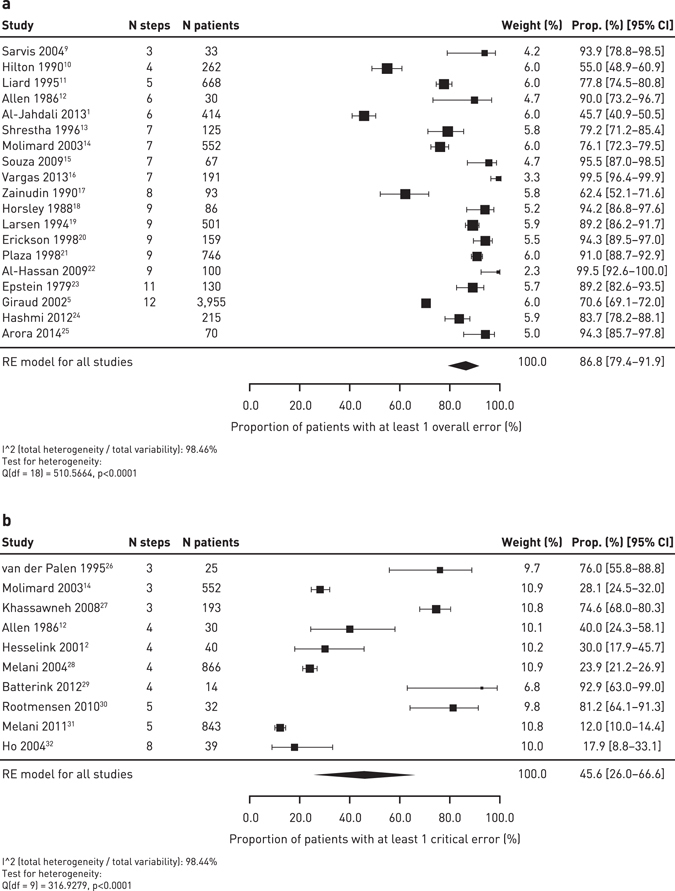
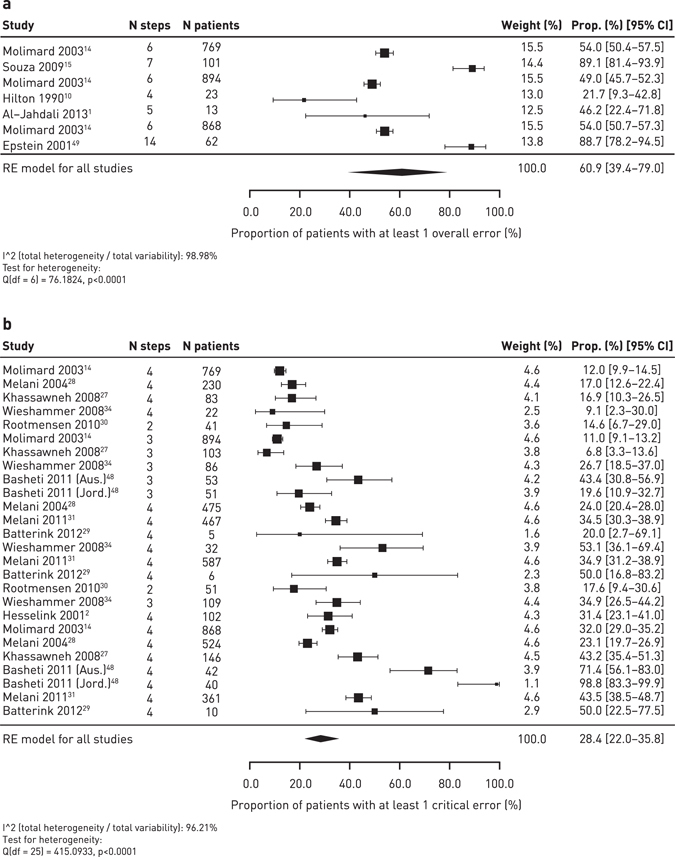
Inhaler device errors are common and may impact the effectiveness of the delivered drug. There is a paucity of up-to-date systematic reviews (SRs) or meta-analyses (MAs) of device errors in asthma and chronic obstructive pulmonary disease (COPD) patients. This SR and MA provides an estimate of overall error rates (both critical and non-critical) by device type and evaluates factors associated with inhaler misuse. The following databases from inception to July 23, 2014 (Embase®, MEDLINE®, MEDLINE® In-Process and CENTRAL) were searched, using predefined search terms. Studies in adult males and females with asthma or COPD, reporting at least one overall or critical error, using metered dose inhalers and dry powder inhalers were included. Random-effect MAs were performed to estimate device error rates and to compare pairs of devices. Overall and critical error rates were high across all devices, ranging from 50-100% and 14-92%, respectively. However, between-study heterogeneity was also generally >90% (I-squared statistic), indicating large variability between studies. A trend towards higher error rates with assessments comprising a larger number of steps was observed; however no consistent pattern was identified. This SR and MA highlights the relatively limited body of evidence assessing device errors and the lack of standardised checklists. There is currently insufficient evidence to determine differences in error rates between different inhaler devices and their impact on clinical outcomes. A key step in improving our knowledge on this topic would be the development of standardised checklists for each device.
Chronic lung diseases: CALL TO STANDARDISE RESEARCH INTO INHALER DEVICE ERRORS: Researchers should adopt a standardised approach to investigate the incorrect use of inhalers and its associated clinical implications. Henry Chrystyn at Plymouth University, together with scientists across the UK and the Netherlands, conducted a review of research related to inhaled medication errors made by patients with asthma or chronic obstructive pulmonary disease. It is widely acknowledged that many patients with lung conditions don't use their inhaler devices correctly, which affects drug effectiveness and disease control. While Chrystyn's team found high critical error rates reported across all devices, their meta-analysis and systematic review highlighted significant gaps in knowledge regarding different inhalers and associated error rates, and how these affect clinical outcomes. The researchers call for in-depth studies into device use, alongside standardised checklists and definitions for such studies to use to ensure consistency.
Conflict of interest statement
H.C. has received sponsorship to carry out studies, together with Board Membership, consultant agreements and honoraria for presentation, from Almirall, AstraZeneca, Boehringer Ingelheim, Chiesi, GSK, Innovata Biomed, Meda, Napp Pharmaceuticals, Mundipharma, NorPharma, Novartis, Orion, Sanofi, Teva, Trudell Medical International, UCB and Zentiva. He has also received research sponsorship from grant awarding bodies (EPSRC and MRC). He is also the owner of Inhalation Consultancy Ltd. J.v.d.P. has received grant and travel funding from GSK. R.S. and N.B. are employed by, and hold stock in, GSK. B.D. has received statistical consulting fees from Bridge Medical, during the conduct of the study and personal fees from Boehringer Ingelheim and from Ipsen outside the submitted work. A.M. is employed by Bridge Medical. M.T. has received personal fees from GSK, Novartis, Aerocrine, Boehringer Ingelheim, Teva, Pfizer, Roche and Sandoz. He has also received non-financial support from GSK, Novartis, AstraZeneca and Boehringer Ingelheim.
Figures
References
-
- GINA report. Global Strategy for asthma management and prevention, updated 2016. Available at: http://ginasthma.org/2016-gina-report-global-strategy-for-asthma-managem... (accessed August 15, 2016).
-
- GOLD report. Global strategy for the diagnosis, management, and prevention of chronic obstructive pulmonary disease, updated 2016. Available at: http://goldcopd.org/global-strategy-diagnosis-management-prevention-copd... (accessed August 15, 2016).
Publication types
MeSH terms
Substances
LinkOut - more resources
Full Text Sources
Other Literature Sources
Medical
Research Materials
Miscellaneous
