. 2017 Apr 3;7(1):547.
doi: 10.1038/s41598-017-00633-7.

EEG-Based Cognitive Control Behaviour Assessment: an Ecological study with Professional Air Traffic Controllers

Affiliations

EEG-Based Cognitive Control Behaviour Assessment: an Ecological study with Professional Air Traffic Controllers

Gianluca Borghini et al. Sci Rep. .

Abstract

Several models defining different types of cognitive human behaviour are available. For this work, we have selected the Skill, Rule and Knowledge (SRK) model proposed by Rasmussen in 1983. This model is currently broadly used in safety critical domains, such as the aviation. Nowadays, there are no tools able to assess at which level of cognitive control the operator is dealing with the considered task, that is if he/she is performing the task as an automated routine (skill level), as procedures-based activity (rule level), or as a problem-solving process (knowledge level). Several studies tried to model the SRK behaviours from a Human Factor perspective. Despite such studies, there are no evidences in which such behaviours have been evaluated from a neurophysiological point of view, for example, by considering brain activity variations across the different SRK levels. Therefore, the proposed study aimed to investigate the use of neurophysiological signals to assess the cognitive control behaviours accordingly to the SRK taxonomy. The results of the study, performed on 37 professional Air Traffic Controllers, demonstrated that specific brain features could characterize and discriminate the different SRK levels, therefore enabling an objective assessment of the degree of cognitive control behaviours in realistic settings.


Conflict of interest statement

The authors declare that they have no competing interests.

Figures
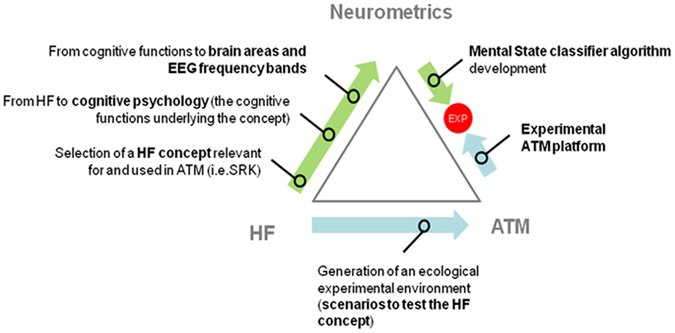
Figure 1
Figure 1
Simplified illustration of the multi-disciplinary approach used in the study. Three levels of analysis have been considered: human factor concepts, realism of the experimental task, and neurophysiological evidences related to the main cognitive phenomena linked to the SRK behaviours.
Figure 2
Figure 2
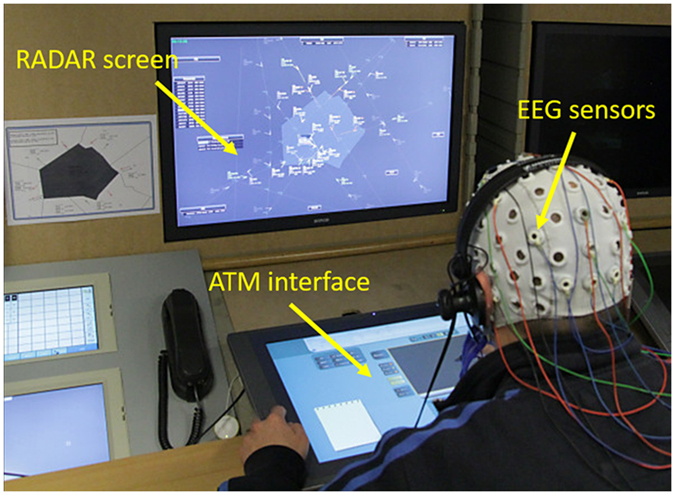
Experimental setup: ATCO working positions developed and hosted at ENAC (Toulouse, France). The ATCO’s brain activity has been recorded continuously during the execution of the ATM scenario, and the SRK events have been marked in order to recognize them within the EEG recording.
Figure 3
Figure 3
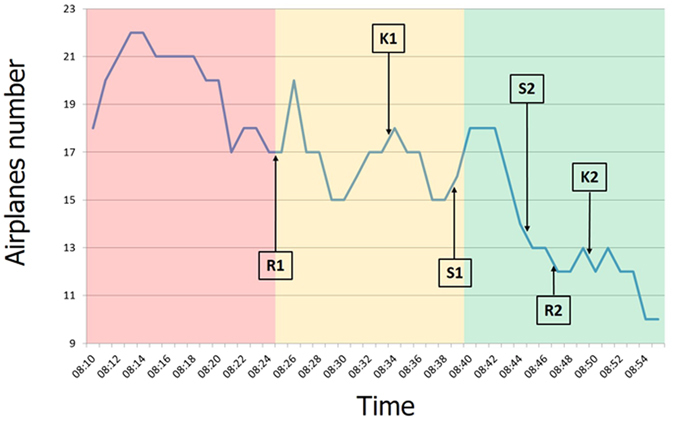
Distribution of the SRK events along the considered ATM scenario. The triplets of SRK events have been inserted in a randomized sequence in order to avoid any habituation and expectation effects. No SRK events have been inserted in the Hard condition in order to do not generate unrealistic ATC conditions.
Figure 4
Figure 4
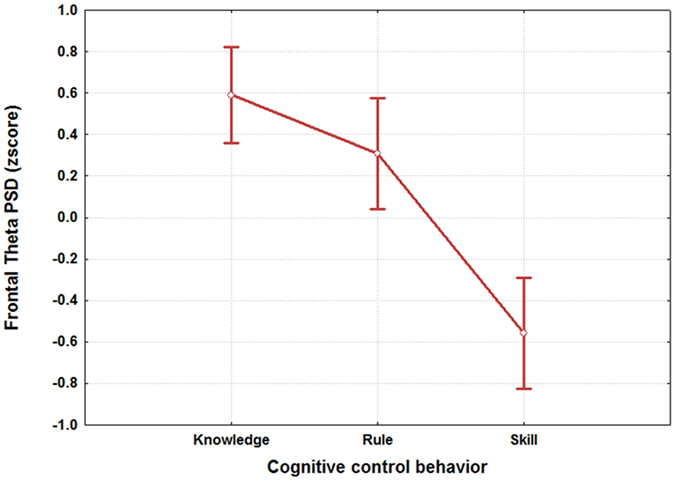
The figure reports the results of the ANOVA analysis on the frontal theta PSD with the factor “SRK” of 3 levels (Skill, Rule and Knowledge). The results showed that such brain feature could be used as SRK discriminant brain feature, as its PSD values were significantly different (p = 0.000001) between the S, R and K levels.
Figure 5
Figure 5
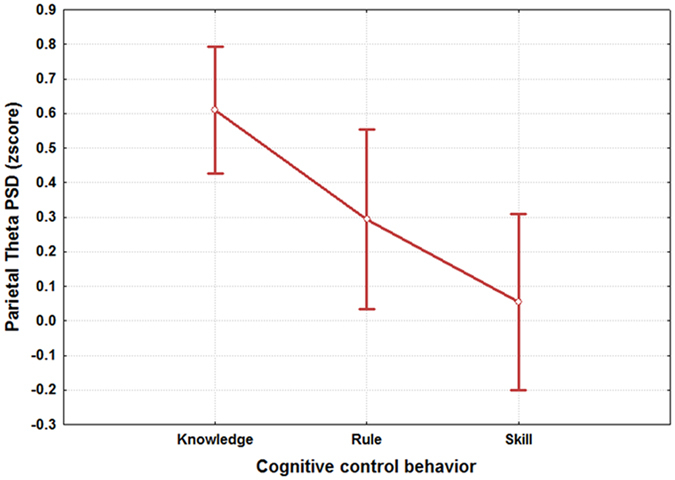
The figure reports the results of the ANOVA analysis (CI = 0.95) on the parietal theta PSD with the factor “SRK” of 3 levels (Skill, Rule and Knowledge) The results showed that such brain feature could be used as SRK discriminant brain feature, as its PSD values were significantly different (p = 0.02092) between the S, R and K levels.
Figure 6
Figure 6
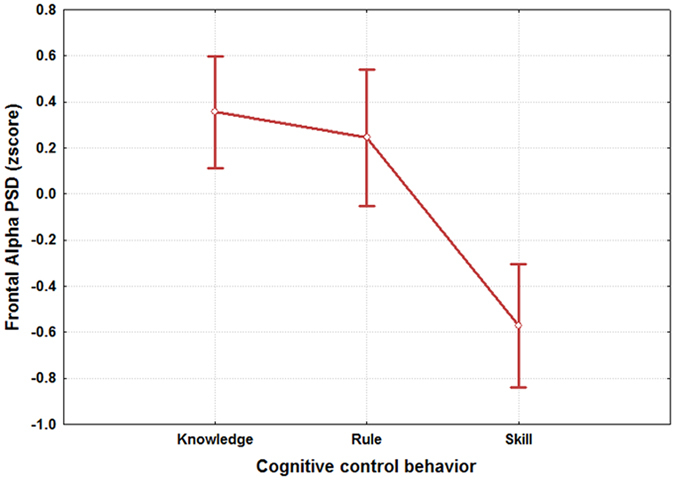
The figure reports the results of the ANOVA analysis (CI = 0.95) on the frontal alpha PSD with the factor “SRK” of 3 levels (Skill, Rule and Knowledge). The results showed that such brain feature could be used as SRK discriminant brain feature, as its PSD values were significantly different (p = 0.00006) between the S, R and K levels.
Figure 7
Figure 7
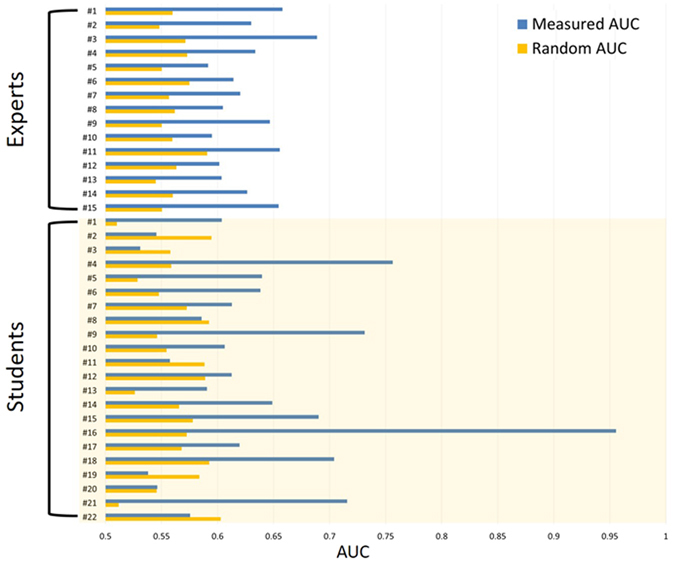
Bars plot of the averaged Measured AUC (blue bars) across all the possible labels combinations with respect to the Random AUC (orange bars) for each ATCO. In particular, the AUC values of the Experts are reported on the top part of the image, while those of the Students are reported on the bottom.
Figure 8
Figure 8
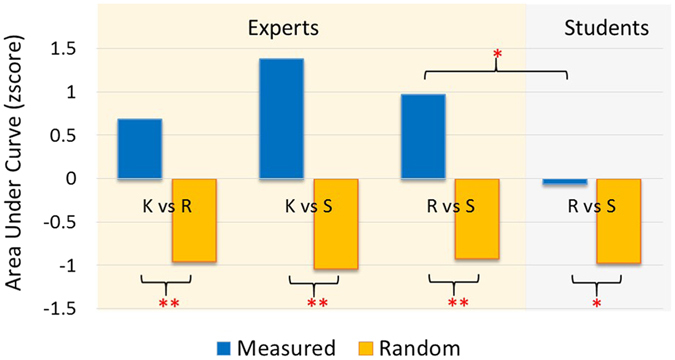
Bars plot related to the zscore-normalized Measured AUC (blue bars) distributions and the Random AUC (red bars) distributions, achieved by the ATCO Experts (left side) and Students (right side), referred to the discrimination accuracy between the three couples of conditions (S vs R, S vs K, R vs K) for Experts, and S vs R for Students. The three cognitive control behaviours could be significantly discriminate for both the groups (p < 0.05). In addition, the results show how the S and R behaviours were significantly (p < 0.05) more discriminable for the Experts than for the Students (p < 0.05).
Figure 9
Figure 9
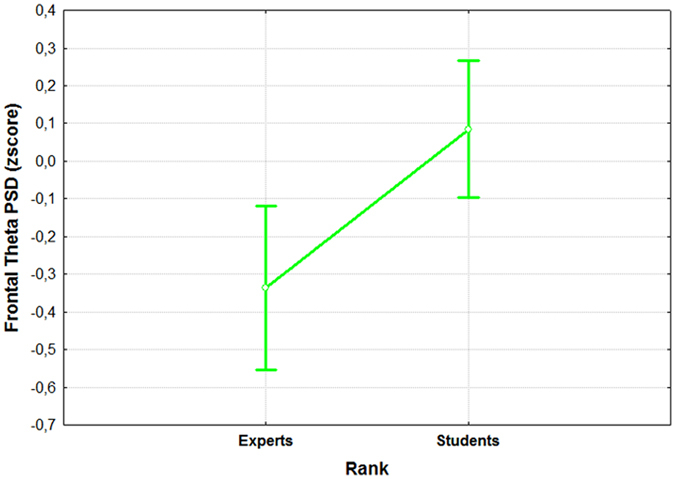
The figure reports the results of the ANOVA analysis (CI = 0.95) on the frontal theta PSD with the factor “RANK” of 2 levels (Experts and Students). The results showed that the two groups were statistically different (p = 0.005) in terms of activation of the frontal theta rhythm when facing the same SRK events.
Figure 10
Figure 10
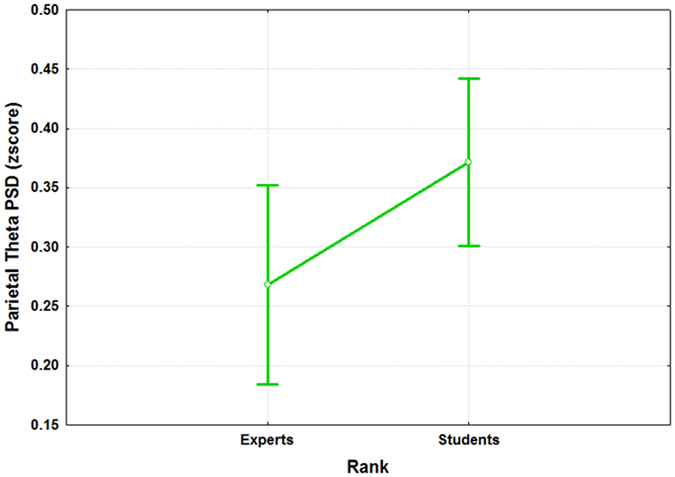
The figure reports the results of the ANOVA analysis (CI = 0.95) on the parietal theta PSD with the factor “RANK” of 2 levels (Experts and Students). The results showed that the two groups were statistically different (p = 0.0023) in terms of activation of the parietal theta rhythm when facing the same S, R and K events.
Figure 11
Figure 11
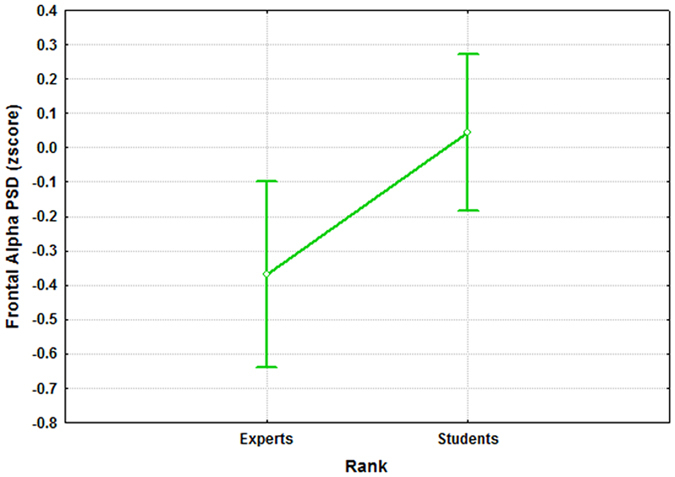
The figure reports the results of the ANOVA analysis (CI = 0.95) on the frontal alpha PSD with the factor “RANK” of 2 levels (Experts and Students). The results showed that the two groups were statistically different (p = 0.024) in terms of activation of the frontal alpha rhythm when facing the same S, R and K events.
Figure 12
Figure 12
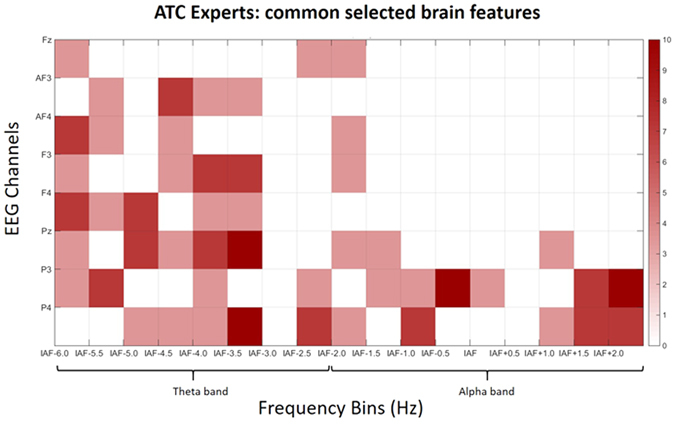
Percentages related to the brain features most commonly selected by the asSWLDA across the ATCO Experts for the SRK-based cognitive control behaviours discrimination. White color means that brain features have not been selected at all. On the contrary, the red colors means that the brain features were selected more frequently.
Figure 13
Figure 13
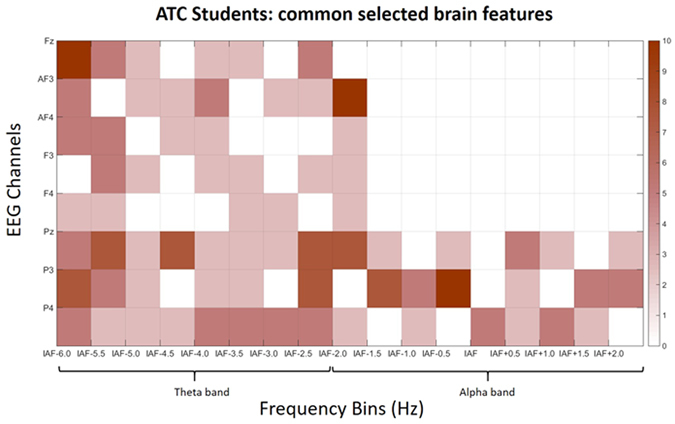
Percentages related to the brain features most commonly selected by the asSWLDA across the ATCO Students for the SRK-based cognitive control behaviours discrimination. White color means that brain features have not been selected at all. On the contrary, the red colors means that the brain features were selected more frequently.

References

    1. Rasmussen, J. The definition of human error and a taxonomy for technical system design. New technology and human error 23–30 (1987).
    1. Rasmussen J, Vicente K. Coping with Human Errors Through System Design: Implications for Ecological Interface Design. Int J Man-Mach Stud. 1989;31:517–534. doi: 10.1016/0020-7373(89)90014-X. - DOI
    1. Vicente KJ, Rasmussen J. Ecological interface design: theoretical foundations. IEEE Trans. Syst. Man Cybern. 1992;22:589–606. doi: 10.1109/21.156574. - DOI
    1. Giraudet L, Imbert J-P, Bérenger M, Tremblay S, Causse M. The neuroergonomic evaluation of human machine interface design in air traffic control using behavioral and EEG/ERP measures. Behav. Brain Res. 2015;294:246–253. doi: 10.1016/j.bbr.2015.07.041. - DOI - PubMed
    1. Gluck, K. A. & Pew, R. W. Modeling Human Behavior With Integrated Cognitive Architectures: Comparison, Evaluation, and Validation. (Psychology Press, 2006).

Publication types