


Upregulation of kazrin F by miR-186 suppresses apoptosis but promotes epithelial-mesenchymal transition to contribute to malignancy in human cervical cancer cells
- PMID: 28373753
- PMCID: PMC5348475
- DOI: 10.21147/j.issn.1000-9604.2017.01.06
Upregulation of kazrin F by miR-186 suppresses apoptosis but promotes epithelial-mesenchymal transition to contribute to malignancy in human cervical cancer cells
Abstract
Objective: Previous studies have identified that kazrin is a constituent of desmosome and influences intercellular adhesion, growing development and morphology. We previously cloned another new isoform, kazrin F and found that it has anti-apoptotic effects on human glioma cell line. To further explore whether kazrin F is involved in tumorigenesis, we investigated its expression and role in cervical cancer (CC) cells.
Methods: The role of kazrin F and miR-186 in CC was determined by 3-(4,5-dimethylthiazol-2-yl)-2,5-diphenyltetrazolium bromide (MTT) assay, colony formation, transwell, and apoptosis assays. Using enhanced green fluorescent protein (EGFP) reporter assays, reverse transcription-quantitative polymerase chain reaction (RT-qPCR) and western blot analysis, we identified kazrin F post-transcriptional regulation by miR-186.
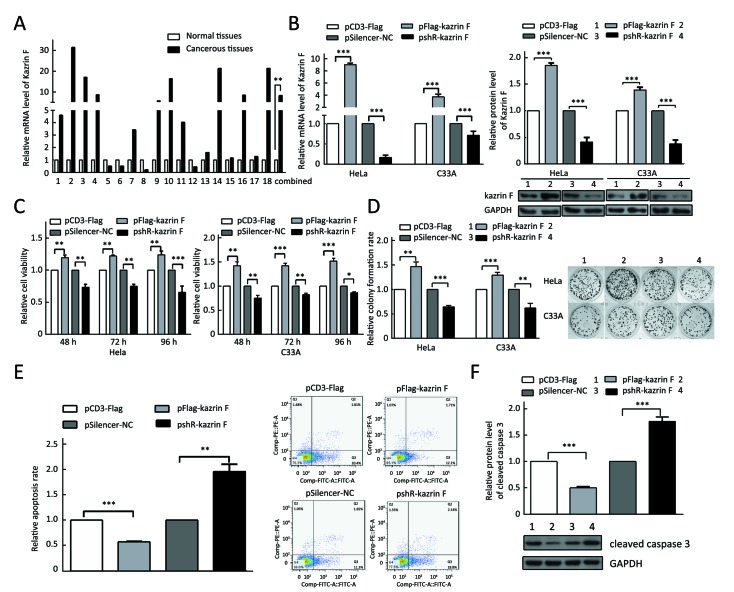
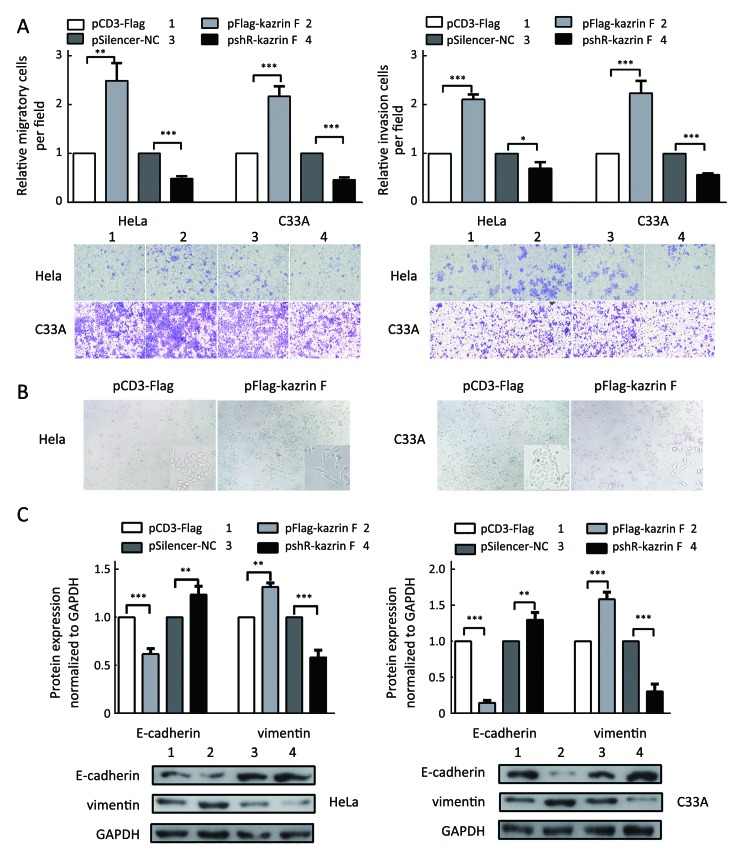
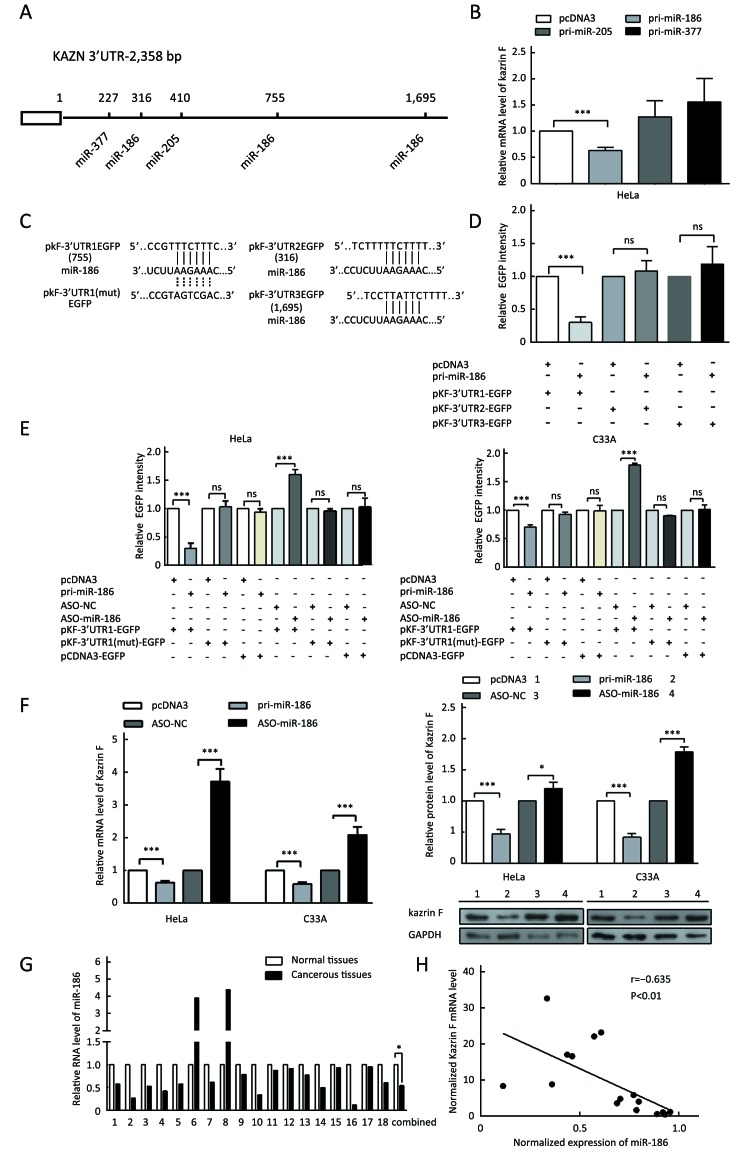
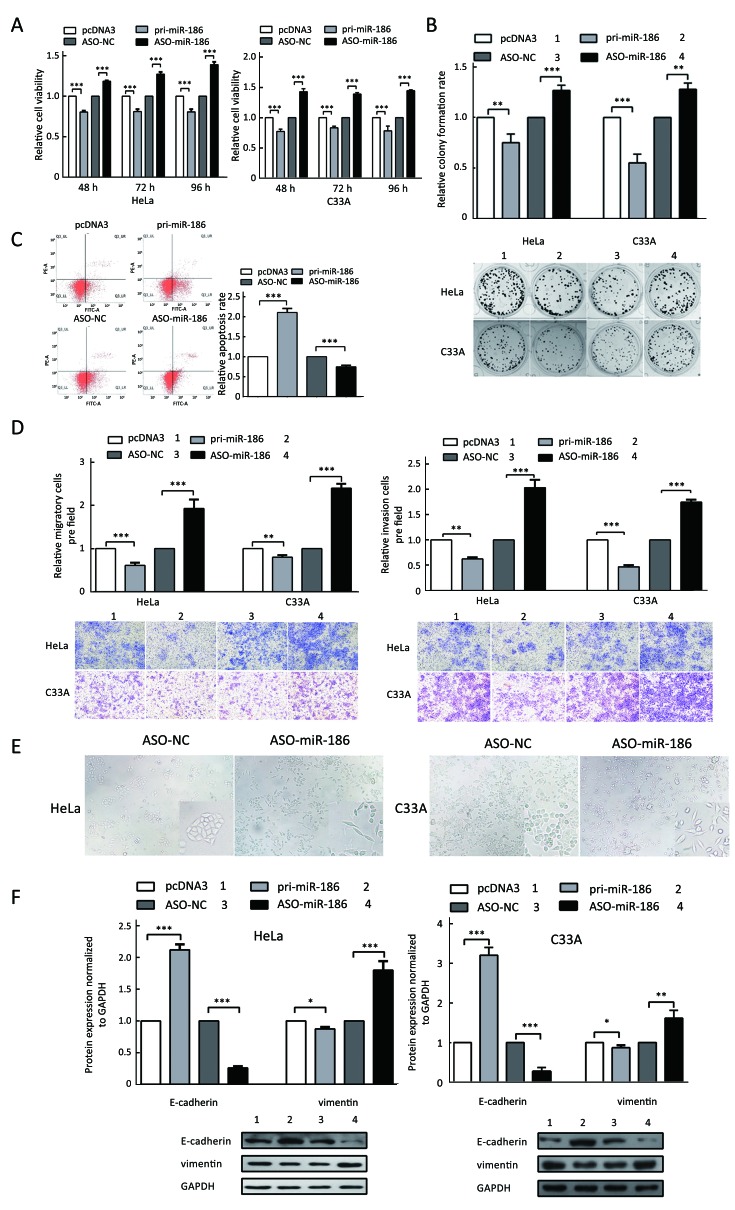
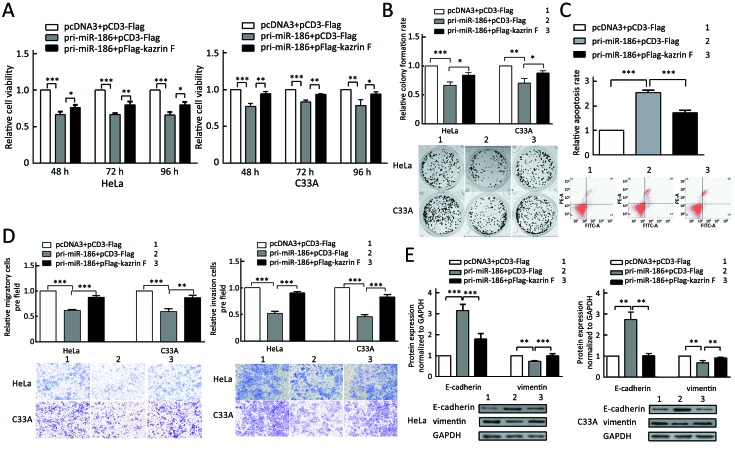
Results: We demonstrate that kazrin F is highly expressed in CC tissues compared with the adjacent noncancerous tissues and promotes cell proliferation, colony formation, migration and invasion in HeLa and C33A cells by suppressing apoptosis and facilitating epithelial-to-mesenchymal transition (EMT). Furthermore, miR-186 was confirmed as a regulator of kazrin F dysregulation. An EGFP reporter assay proved that miR-186 directly targets the 3'-untranslated region (3'UTR) of kazrin F and downregulates its expression, and miR-186 expression showed an inverse correlation with kazrin F levels in CC tissues. In addition, overexpression of miR-186 suppressed the malignant behaviors of CC cells. The ectopic expression of kazrin F rescued the inhibitory effects of miR-186.
Conclusions: Our findings indicate that the upregulation of kazrin F due to downregulated miR-186 levels contributes to malignancy, and highlight the significance of kazrin F in CC tumorigenesis.
Keywords: EMT; Kazrin F; apoptosis; cervical cancer; miR-186.
Conflict of interest statement
Conflicts of Interest: The authors have no conflicts of interest to declare.
Figures
References
-
- Jemal A, Siegel R, Xu J, et al. Cancer statistics, 2010. CA Cancer J Clin. 2010;60:277–300. - PubMed
-
- Torre LA, Bray F, Siegel RL, et al. Global cancer statistics, 2012. CA Cancer J Clin. 2015;65:87–108. - PubMed
-
- Sevilla LM, Rana AA, Watt FM, et al. KazrinA is required for axial elongation and epidermal integrity in Xenopus tropicalis. Dev Dyn. 2008;237:1718–25. - PubMed
LinkOut - more resources
Full Text Sources
Other Literature Sources