


Aromatic Plants: Antioxidant Capacity and Polyphenol Characterisation
- PMID: 28375185
- PMCID: PMC5409316
- DOI: 10.3390/foods6040028
Aromatic Plants: Antioxidant Capacity and Polyphenol Characterisation
Abstract
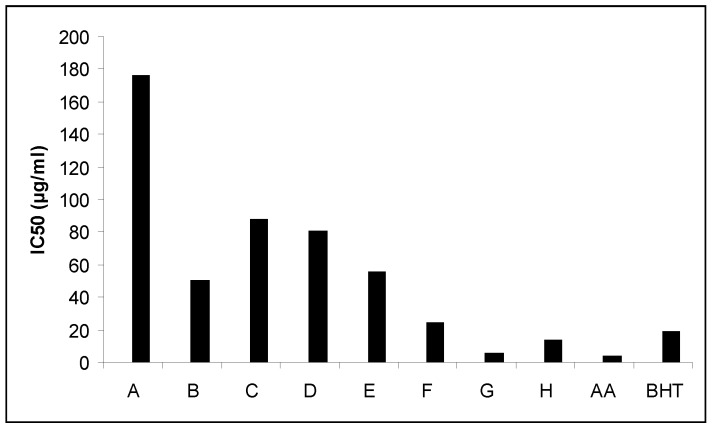
The antioxidant properties and polyphenol content of some selected aromatic plants grown in Greece were studied. Plants were refluxed with 60% methanol after acid hydrolysis. The phenolic substances were quantified by High Performance Liquid Chromatography-Diode Array Detector (HPLC-DAD). The antioxidant capacity of the extracts was determined with the Rancimat test using sunflower oil as substrate. Free radical scavenging activity was measured using the stable free radical 1, 1-diphenyl-2-picrylhydrazyl (DPPH). Results were compared with standard butylated hydroxytoluene (BHT) and ascorbic acid. Total phenol concentration of the extracts was estimated with Folin-Ciocalteu reagent using gallic acid as standard. All plant extracts examined showed antioxidant capacity and contained phenolic compounds. Caffeic acid was detected in all the examined plant extracts. Ferulic acid was also detected in all the methanolic extracts, except from P. lanata, in rather high concentration. The amount of total phenolics varied slightly in plant materials and ranged from 8.2 mg to 31.6 mg of gallic acid/g dry sample. The highest amount was found in O. dictamnus, and the lowest in N. melissifolia.
Keywords: DPPH; HPLC; Rancimat test; antioxidant capacity; aromatic plants.
Conflict of interest statement
The authors declare no conflict of interest.
Figures
References
-
- Justesen U., Knuthsen P. Composition of flavonoids in fresh herbs and calculation of flavonoid intake by use of herbs in traditional Danish dishes. Food Chem. 2001;73:245–250. doi: 10.1016/S0308-8146(01)00114-5. - DOI
-
- Rice-Evans C.A., Packer L. Flavonoids in Health and Disease. Volume 2. Marcel Dekker Inc.; New York, NY, USA: 1998. Flavonoids in herbs; pp. 43–70.
-
- Hollman P.C.H., Hertog M.G.L., Katan M.B. Analysis and health effects of flavonoids. Food Chem. 1996;57:43–46. doi: 10.1016/0308-8146(96)00065-9. - DOI
LinkOut - more resources
Full Text Sources
Other Literature Sources
