


Evaluation of the anti-diarrheal activity of the aqueous stem extract of Lantana camara Linn (Verbenaceae) in mice
- PMID: 28376868
- PMCID: PMC5379525
- DOI: 10.1186/s12906-017-1696-1
Evaluation of the anti-diarrheal activity of the aqueous stem extract of Lantana camara Linn (Verbenaceae) in mice
Abstract
Background: Diarrheal disease remains a public health problem in developing countries, including Ethiopia. In order to alleviate this disease, Ethiopian traditional healers use a wide range of medicinal plants from which Lantana camara is one of them. The stem of this plant is traditionally used for the treatment of diarrhoea. In addition, this plant is scientifically evaluated to have an antispasmodic effect on in vitro study. The aim of this study was to evaluate the antidiarrheal activity of the aqueous stem extract of L. camara Linn in mice.
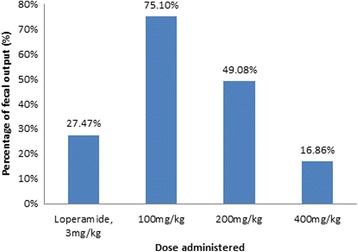
Methods: The antidiarrheal activity of the extract was investigated using castor oil induced diarrhoea, enteropooling and small intestine transit models. The test groups received various doses (100, 200, and 400 mg/kg) of the extract, whereas positive controls received Loperamide (3 mg/kg) and negative controls received distilled water (10 ml/kg).
Results: In castor oil induced diarrhoea model, the extract, at all test doses, significantly (p < 0.001) prolonged diarrhoea onset, decreased the frequency of defecation, and weight of faeces. Similarly, the extract produced a significant (p < 0.001) decline in the weight and volume of intestinal contents at all tested doses. In addition, a significant (P < 0.001) reduction in the gastrointestinal motility in charcoal meal test was also observed in all doses of the extract. Phytochemical screening of the extract revealed the presence of flavonoids, alkaloids, tannins, and phytosterols that may play a key role in its antidiarrheal activity.
Conclusion: The obtained results of the present study confirm antidiarrheal activity of the stem of L. camara, thus provide the scientific basis for the traditional uses of this plant as a treatment for diarrhoea.
Keywords: Anti-enteropooling; Antidiarrheal activity; Castor oil induced diarrhoea; Gastrointestinal motility; L. camara.
Figures
References
-
- Liu L, Johnson HL, Cousens S, Perin J, Scott S, Lawn JE, et al. Child health epidemiology referencegroup of WHO and UNICEF. Global, regional andnational causes of child mortality: an updated systematic analysis for 2010 with time trends since 2000. Lancet. 2012;379:2151–2161. doi: 10.1016/S0140-6736(12)60560-1. - DOI - PubMed
-
- WHO. Diarrheal disease [Internet]. 2013. [cited 2015 January 28]. Available at: http://www.who.int/mediacentre/factsheets/fs330/en/
-
- Pneumonia and Diarrhea Progress Report. International Vaccine Access Center [Internet]. 2014. [cited 2015 March 3]. Available at: http://www.jhsph.edu/research/ centers-and-institutes/ivac/resources/IVA...
-
- Centers for Disease Control and Prevention in Ethiopia CDC [Internet]. 2013 [cited 2014 December 22]. Available at: http://viz.healthmetricsandevaluation.org/gbd-compare/
-
- Central Statistical Agency (CSA). Ethiopia Demographic and Health Survey. Preliminary Report. Addis Ababa; 2011.
MeSH terms
Substances
LinkOut - more resources
Full Text Sources
Other Literature Sources
Medical
