


Intervention strategies for cesarean section-induced alterations in the microbiota-gut-brain axis
- PMID: 28379454
- PMCID: PMC5410982
- DOI: 10.1093/nutrit/nuw069
Intervention strategies for cesarean section-induced alterations in the microbiota-gut-brain axis
Abstract
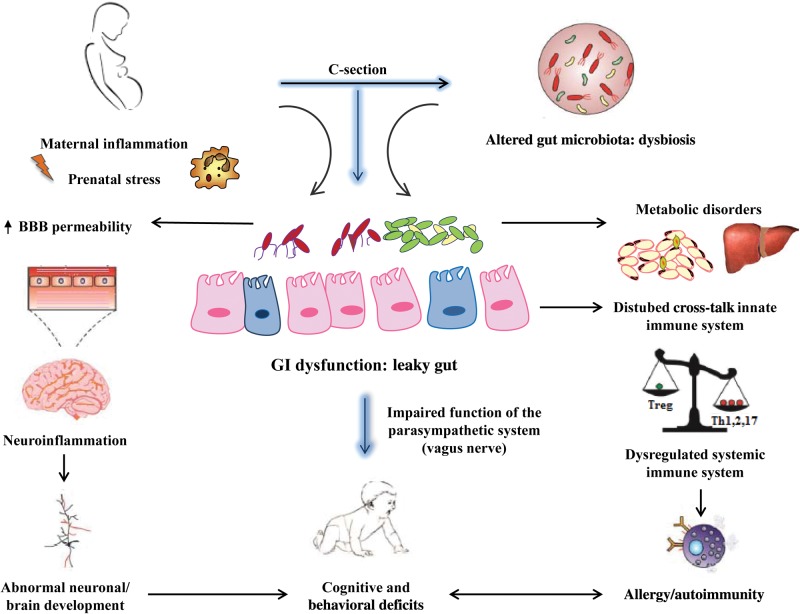
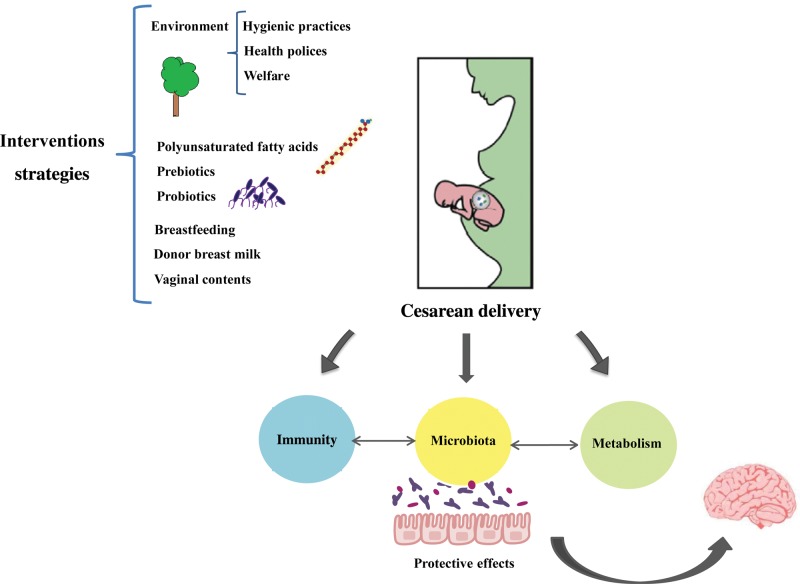
Microbial colonization of the gastrointestinal tract is an essential process that modulates host physiology and immunity. Recently, researchers have begun to understand how and when these microorganisms colonize the gut and the early-life factors that impact their natural ecological establishment. The vertical transmission of maternal microbes to the offspring is a critical factor for host immune and metabolic development. Increasing evidence also points to a role in the wiring of the gut-brain axis. This process may be altered by various factors such as mode of delivery, gestational age at birth, the use of antibiotics in early life, infant feeding, and hygiene practices. In fact, these early exposures that impact the intestinal microbiota have been associated with the development of diseases such as obesity, type 1 diabetes, asthma, allergies, and even neurodevelopmental disorders. The present review summarizes the impact of cesarean birth on the gut microbiome and the health status of the developing infant and discusses possible preventative and restorative strategies to compensate for early-life microbial perturbations.
Keywords: cesarean section; immunity; metabolism; microbiota; prebiotics; probiotics.
© The Author(s) 2017. Published by Oxford University Press on behalf of the International Life Sciences Institute.
Figures
References
-
- Hooper L V, Gordon JI. Commensal host-bacterial relationships in the gut. Science. 2001;292:1115–1118. - PubMed
-
- Nicholson J, Holmes E, Kinross J et al. . Host-gut microbiota metabolic interactions. Science. 2012;336:1262–1267. - PubMed
-
- Bäckhed F, Ley RE, Sonnenburg JL et al. . Host-bacterial mutualism in the human intestine. Science. 2005;307:1915–1920. - PubMed
-
- Hooper L V, Macpherson AJ. Immune adaptations that maintain homeostasis with the intestinal microbiota. Nat Rev Immunol. 2010;10:159–169. - PubMed
Publication types
MeSH terms
LinkOut - more resources
Full Text Sources
Other Literature Sources
Medical
