Unraveling Chagas disease transmission through the oral route: Gateways to Trypanosoma cruzi infection and target tissues
- PMID: 28379959
- PMCID: PMC5397068
- DOI: 10.1371/journal.pntd.0005507
Unraveling Chagas disease transmission through the oral route: Gateways to Trypanosoma cruzi infection and target tissues
Abstract
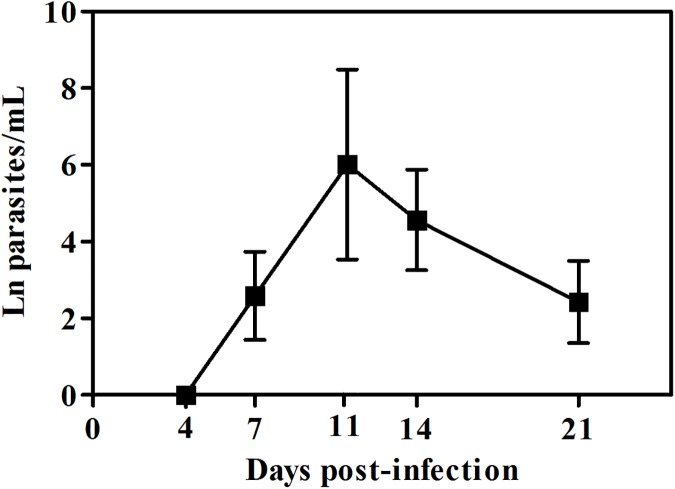
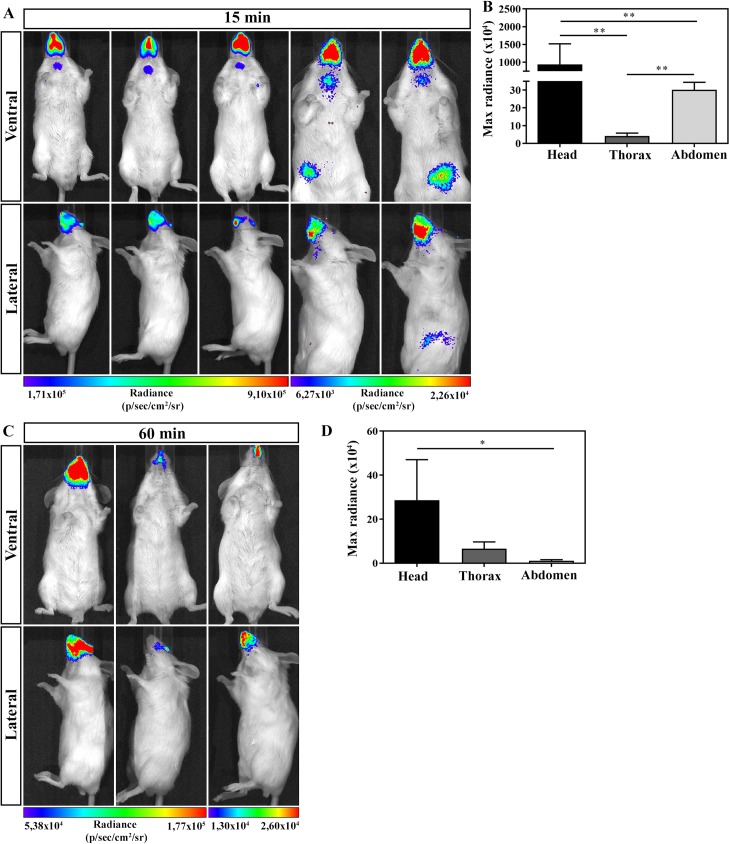
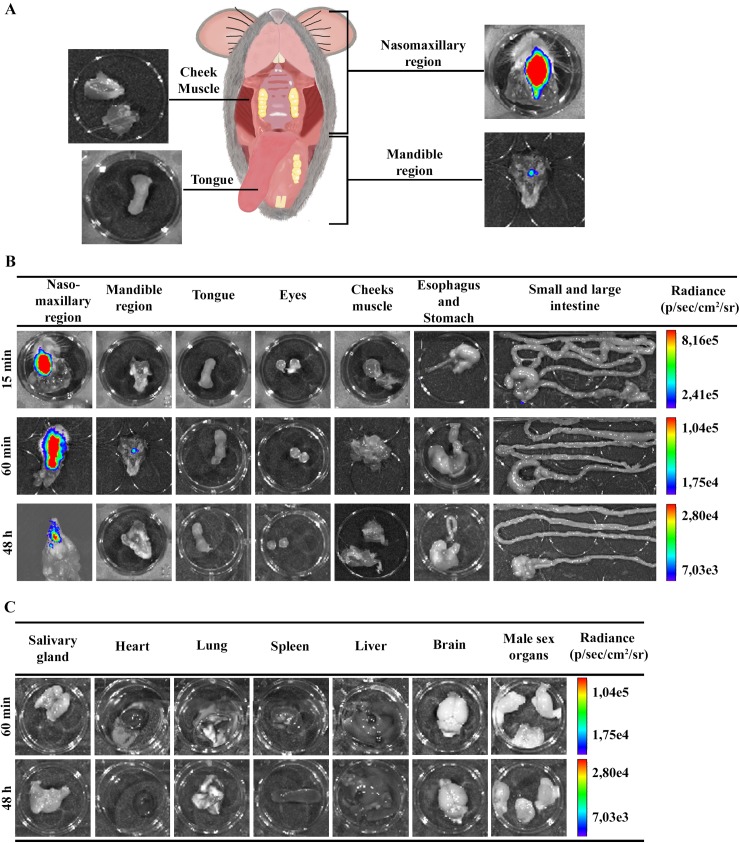
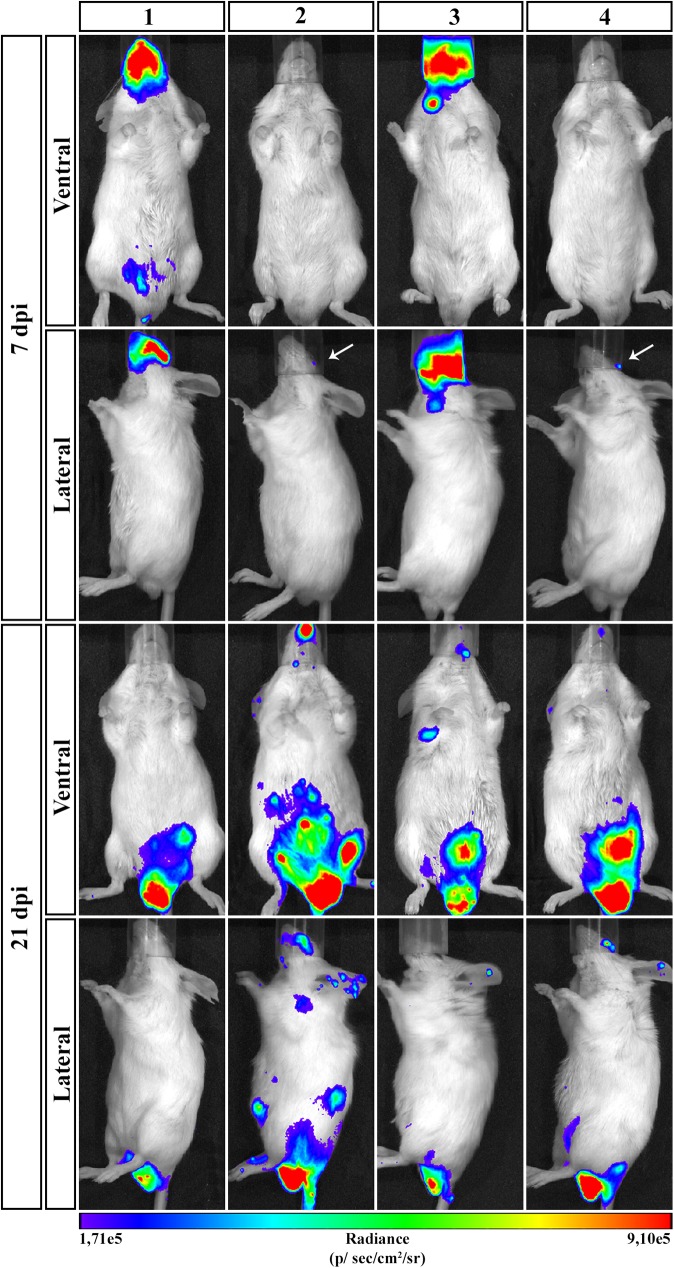
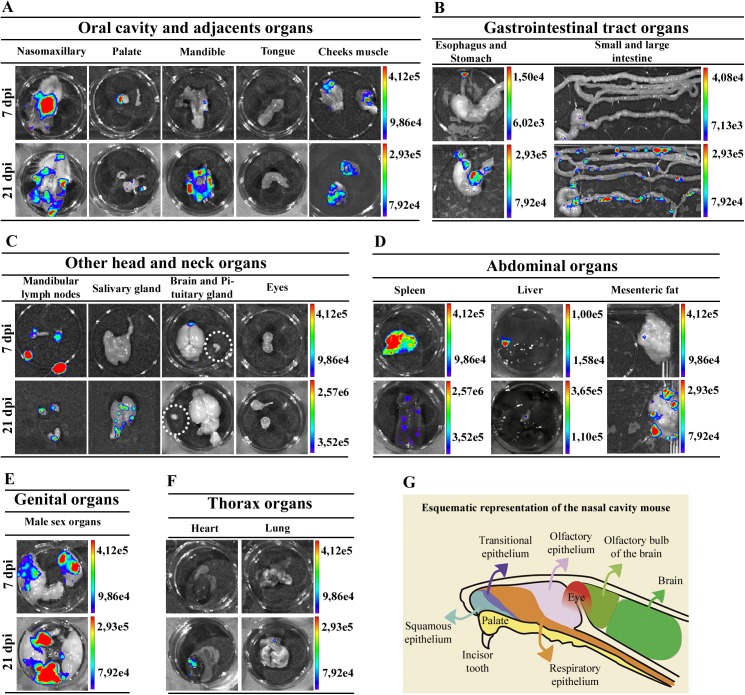
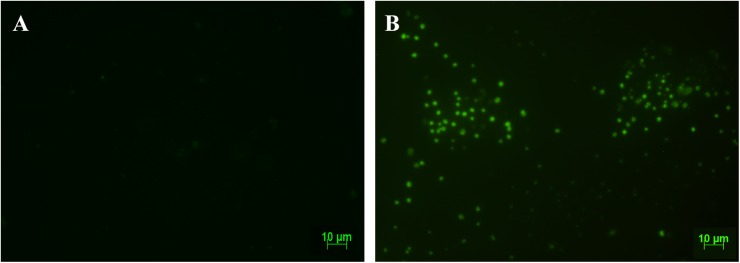
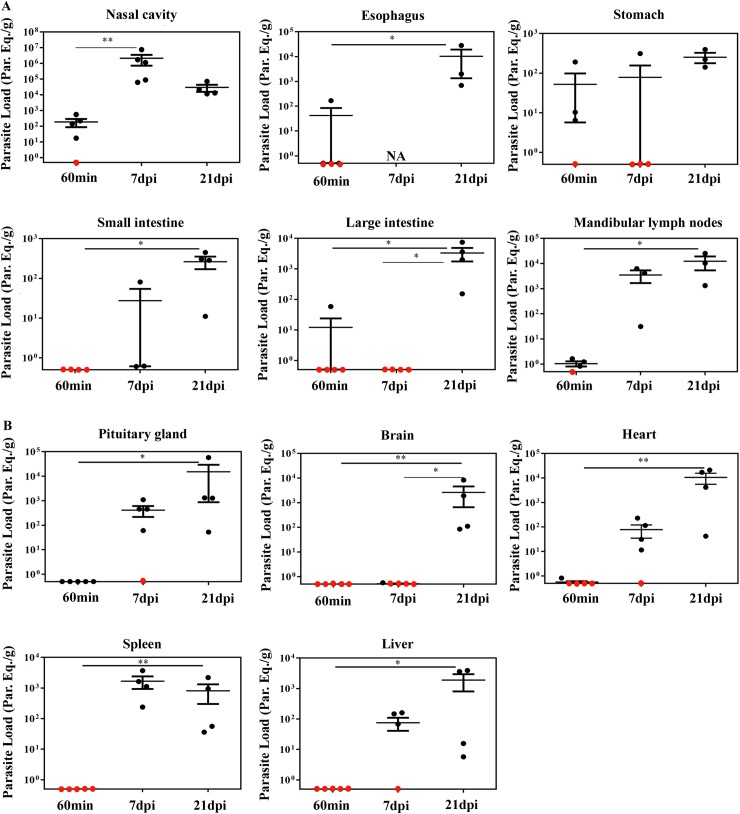
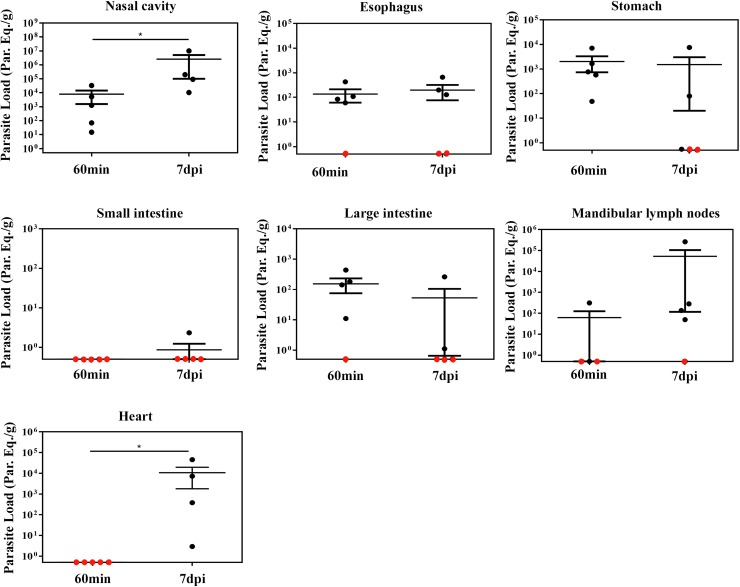
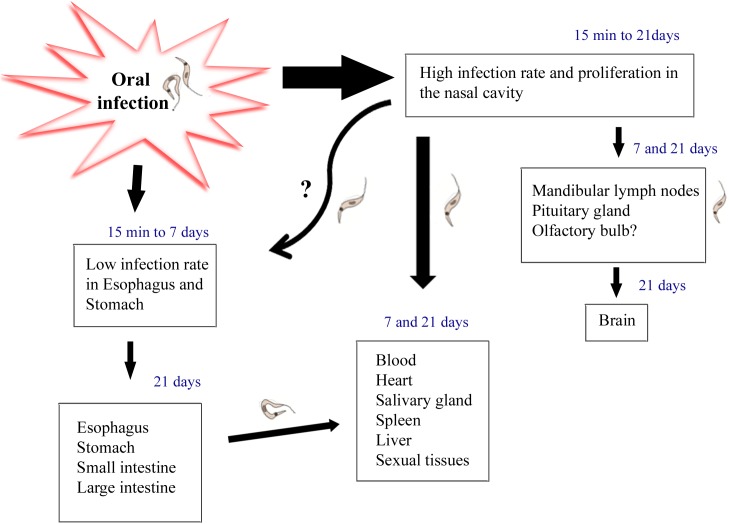
Oral transmission of Trypanosoma cruzi, the causative agent of Chagas disease, is the most important route of infection in Brazilian Amazon and Venezuela. Other South American countries have also reported outbreaks associated with food consumption. A recent study showed the importance of parasite contact with oral cavity to induce a highly severe acute disease in mice. However, it remains uncertain the primary site of parasite entry and multiplication due to an oral infection. Here, we evaluated the presence of T. cruzi Dm28c luciferase (Dm28c-luc) parasites in orally infected mice, by bioluminescence and quantitative real-time PCR. In vivo bioluminescent images indicated the nasomaxillary region as the site of parasite invasion in the host, becoming consistently infected throughout the acute phase. At later moments, 7 and 21 days post-infection (dpi), luminescent signal is denser in the thorax, abdomen and genital region, because of parasite dissemination in different tissues. Ex vivo analysis demonstrated that the nasomaxillary region, heart, mandibular lymph nodes, liver, spleen, brain, epididymal fat associated to male sex organs, salivary glands, cheek muscle, mesenteric fat and lymph nodes, stomach, esophagus, small and large intestine are target tissues at latter moments of infection. In the same line, amastigote nests of Dm28c GFP T. cruzi were detected in the nasal cavity of 6 dpi mice. Parasite quantification by real-time qPCR at 7 and 21 dpi showed predominant T. cruzi detection and expansion in mouse nasal cavity. Moreover, T. cruzi DNA was also observed in the mandibular lymph nodes, pituitary gland, heart, liver, small intestine and spleen at 7 dpi, and further, disseminated to other tissues, such as the brain, stomach, esophagus and large intestine at 21 dpi. Our results clearly demonstrated that oral cavity and adjacent compartments is the main target region in oral T. cruzi infection leading to parasite multiplication at the nasal cavity.
Conflict of interest statement
The authors have declared that no competing interests exist.
Figures
References
-
- Coura JR, Vinas PA. Chagas disease: a new worldwide challenge. Nature. 465(7301):S6–7. doi: 10.1038/nature09221 - DOI - PubMed
-
- Gascon J, Bern C, Pinazo MJ. Chagas disease in Spain, the United States and other non-endemic countries. Acta Trop. 2010;115(1–2):22–7. Epub 2009/08/04. doi: 10.1016/j.actatropica.2009.07.019 - DOI - PubMed
-
- Schmunis GA, Yadon ZE. Chagas disease: a Latin American health problem becoming a world health problem. Acta Trop. 2010;115(1–2):14–21. Epub 2009/11/26. doi: 10.1016/j.actatropica.2009.11.003 - DOI - PubMed
-
- Toso MA, Vial UF, Galanti N. [Oral transmission of Chagas' disease]. Rev Med Chil. 2011;139(2):258–66. Epub 2011/07/21. doi: /S0034-98872011000200017 - PubMed
-
- Sanchez LV, Ramirez JD. Congenital and oral transmission of American trypanosomiasis: an overview of physiopathogenic aspects. Parasitology. 2013;140(2):147–59. Epub 2012/09/27. doi: 10.1017/S0031182012001394 - DOI - PubMed
MeSH terms
LinkOut - more resources
Full Text Sources
Other Literature Sources
Medical
Molecular Biology Databases