


Epidemiology and outcome analysis of 6325 burn patients: a five-year retrospective study in a major burn center in Southwest China
- PMID: 28383066
- PMCID: PMC5382583
- DOI: 10.1038/srep46066
Epidemiology and outcome analysis of 6325 burn patients: a five-year retrospective study in a major burn center in Southwest China
Abstract
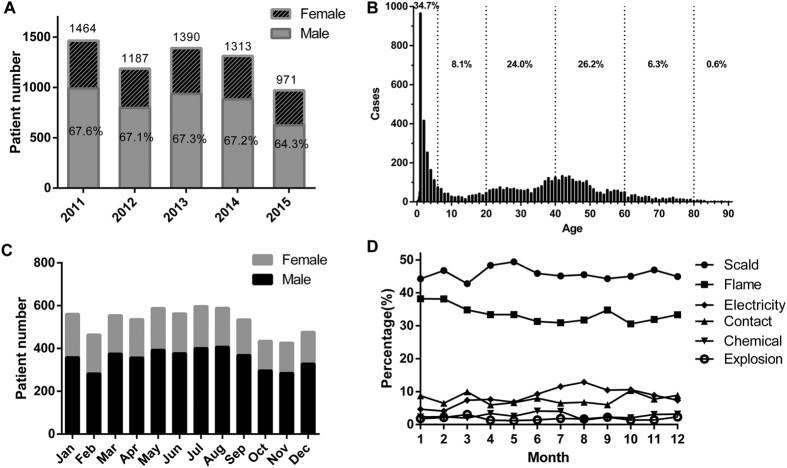
Burns are a major cause of injury worldwide. We investigated the epidemiology and outcomes of burn patients in a major burn center in southwest China between 2011 and 2015 to provide guidance for burn prevention. Of the 6,325 included burn patients, 66.8% were male and 34.7% were 0 ~ 6 years old. The incidence of burns peaked in autumn. Scald was the most common cause of burns, which was predominant in patients aged 0 ~ 6 years. The mean total body surface area (TBSA) of burns was 13.4%, and patients with burns ≤10% TBSA comprised 64.1% of all cases. Patients with full-thickness burns accounted for 40.1% of all patients and 81.0% of operated patients; these burns were primarily caused by flame (34.8%), scald (21.0%), and electricity (20.4%). Fifty-six deaths occurred (mortality 0.9%), and risk factors included full-thickness burns, larger TBSA and older age. The median length of stay was 17 days, and major risk factors included more operations, better outcomes and larger TBSA. Our data showed that closer attention should be paid to children under 6 years old, males, incidents in autumn and scald burns to prevent burn injuries. Furthermore, individualized burn prevention and treatment measures based on related risk factors should be adopted.
Conflict of interest statement
The authors declare no competing financial interests.
Figures
References
-
- Murray C. J. L. & Lopez A. D. The global burden of disease. a comprehensive assessment of mortality and disability from diseases injuries and risk factors in 1990 and projected to 2020 (Harvard University School of Public Health, 1996).
-
- Ahn C. S. & Maitz P. K. M. The true cost of burn. Burns 38, 967–974 (2012). - PubMed
-
- Zhu L. et al. Hospitalized pediatric burns in north China: a 10-year epidemiologic review. Burns 39, 1004–1011 (2013). - PubMed
-
- Xu J. H. et al. Pediatric burns in military hospitals of China from 2001 to 2007: a retrospective study. Burns 40, 1780–1788 (2014). - PubMed
Publication types
MeSH terms
LinkOut - more resources
Full Text Sources
Other Literature Sources
Medical
