Epidemiology of Quadriceps Strains in National Collegiate Athletic Association Athletes, 2009-2010 Through 2014-2015
- PMID: 28383282
- PMCID: PMC5455251
- DOI: 10.4085/1062-6050-52.2.17
Epidemiology of Quadriceps Strains in National Collegiate Athletic Association Athletes, 2009-2010 Through 2014-2015
Abstract
Context: Few researchers have examined the rates and patterns of quadriceps strains in student-athletes in the National Collegiate Athletic Association (NCAA).
Objective: To describe the epidemiology of quadriceps strains in 25 NCAA sports during the 2009-2010 through 2014-2015 academic years.
Design: Descriptive epidemiology study.
Setting: Convenience sample of NCAA programs from 25 sports during the 2009-2010 through 2014-2015 academic years. Patients or Other Particpants: Collegiate student-athletes participating in men's and women's NCAA athletics during the 2009-2010 through 2014-2015 academic years.
Main outcome measure(s): Aggregate quadriceps strain injury and exposure data from the NCAA Injury Surveillance Program during the 2009-2010 through 2014-2015 academic years were analyzed. Quadriceps strain injury rates and injury rate ratios (IRRs) were reported with 95% confidence intervals (CIs).
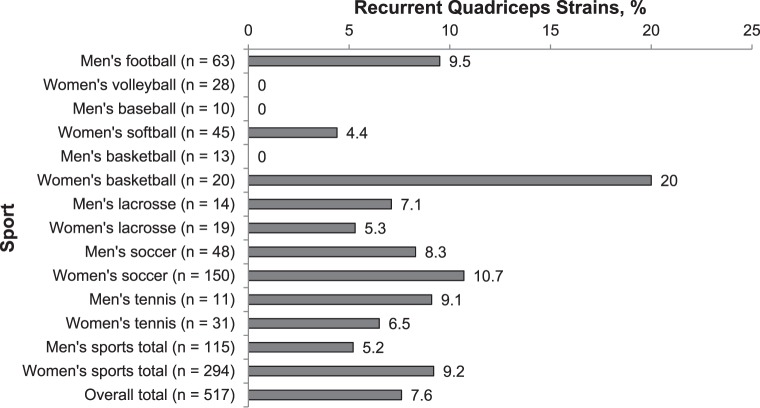
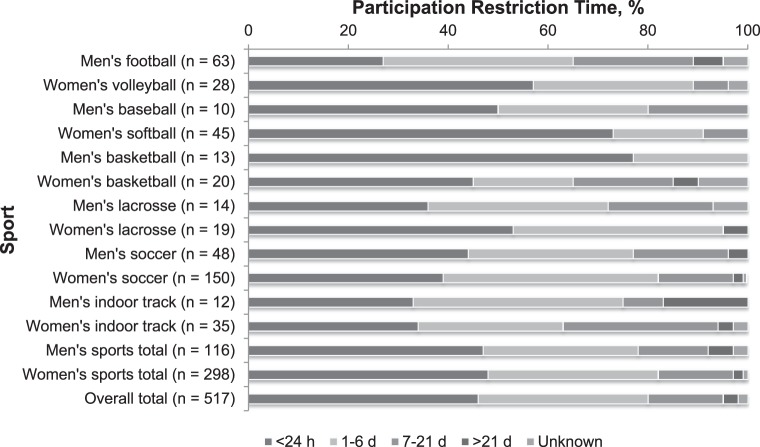
Results: Overall, 517 quadriceps strains were reported, resulting in an injury rate of 1.07/10 000 athlete-exposures (AEs). The sports with the highest overall quadriceps strain rates were women's soccer (5.61/10 000 AEs), men's soccer (2.52/10 000 AEs), women's indoor track (2.24/10 000 AEs), and women's softball (2.15/10 000 AEs). Across sex-comparable sports, women had a higher rate of quadriceps strains than men overall (1.97 versus 0.65/10 000 AEs; IRR = 3.03; 95% CI = 2.45, 3.76). The majority of quadriceps strains were sustained during practice (77.8%). However, the quadriceps strain rate was higher during competition than during practice (1.29 versus 1.02/10 000 AEs; IRR = 1.27; 95% CI = 1.03, 1.56). Most quadriceps strains occurred in the preseason (57.8%), and rates were higher during the preseason compared with the regular season (2.29 versus 0.63/10 000 AEs; IRR = 3.60; 95% CI = 3.02, 4.30). Common injury mechanisms were noncontact (63.2%) and overuse (21.9%). Most quadriceps strains restricted participation by less than 1 week (79.3%).
Conclusions: Across 25 sports, higher quadriceps strain rates were found in women versus men, in competitions versus practices, and in the preseason versus the regular season. Most quadriceps strains were minor in severity, although further surveillance is needed to better examine the risk factors associated with incidence and severity.
Keywords: collegiate sports; injury prevention; injury surveillance.
Figures
References
-
- Fousekis K, Tsepis E, Poulmedis P, Athanasopoulos S, Vagenas G. . Intrinsic risk factors of non-contact quadriceps and hamstring strains in soccer: a prospective study of 100 professional players. Br J Sports Med. 2011; 45 9: 709– 714. - PubMed
-
- Knapik JJ, Bauman CL, Jones BH, Harris JM, Vaughan L. . Preseason strength and flexibility imbalances associated with athletic injuries in female collegiate athletes. Am J Sports Med. 1991; 19 1: 76– 81. - PubMed
-
- LaBella CR. . Common acute sports-related lower extremity injuries in children and adolescents. Clin Pediatr Emerg Med. 2007; 8 1: 31– 42.
MeSH terms
LinkOut - more resources
Full Text Sources
Other Literature Sources
Medical