


Risk factor screening to identify women requiring oral glucose tolerance testing to diagnose gestational diabetes: A systematic review and meta-analysis and analysis of two pregnancy cohorts
- PMID: 28384264
- PMCID: PMC5383279
- DOI: 10.1371/journal.pone.0175288
Risk factor screening to identify women requiring oral glucose tolerance testing to diagnose gestational diabetes: A systematic review and meta-analysis and analysis of two pregnancy cohorts
Abstract
Background: Easily identifiable risk factors including: obesity and ethnicity at high risk of diabetes are commonly used to indicate which women should be offered the oral glucose tolerance test (OGTT) to diagnose gestational diabetes (GDM). Evidence regarding these risk factors is limited however. We conducted a systematic review (SR) and meta-analysis and individual participant data (IPD) analysis to evaluate the performance of risk factors in identifying women with GDM.
Methods: We searched MEDLINE, Medline in Process, Embase, Maternity and Infant Care and the Cochrane Central Register of Controlled Trials (CENTRAL) up to August 2016 and conducted additional reference checking. We included observational, cohort, case-control and cross-sectional studies reporting the performance characteristics of risk factors used to identify women at high risk of GDM. We had access to IPD from the Born in Bradford and Atlantic Diabetes in Pregnancy cohorts, all pregnant women in the two cohorts with data on risk factors and OGTT results were included.
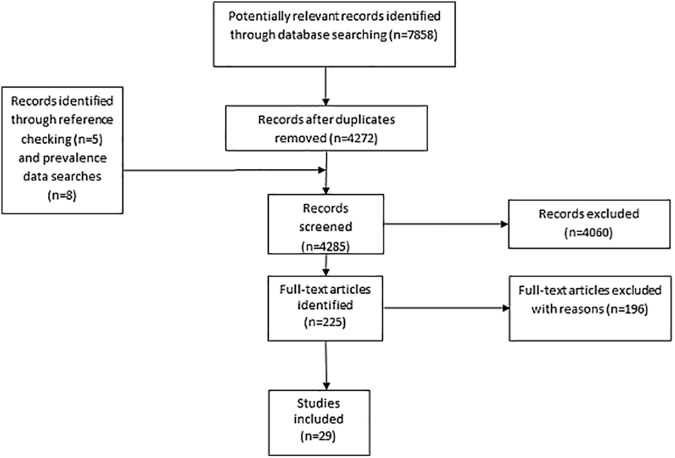
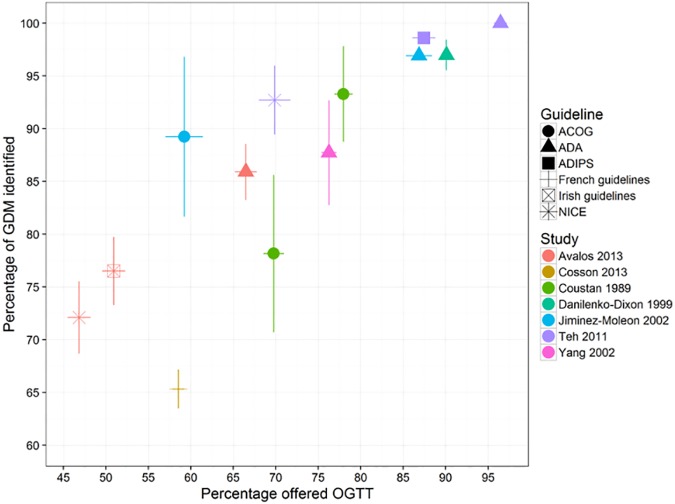
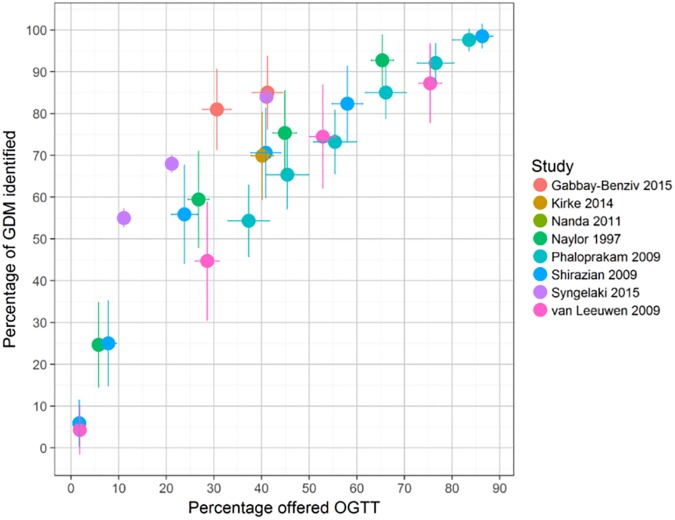
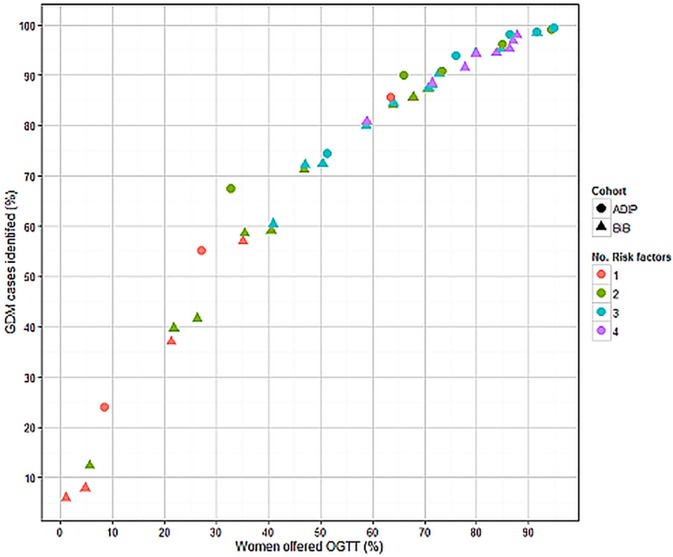
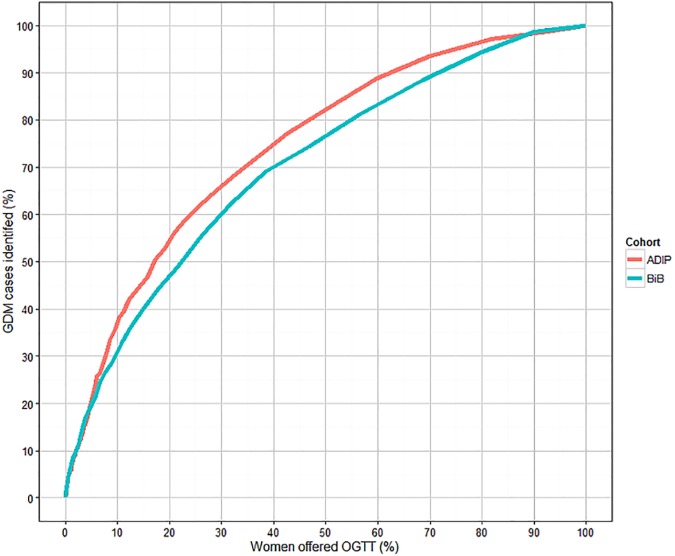
Results: Twenty nine published studies with 211,698 women for the SR and a further 14,103 women from two birth cohorts (Born in Bradford and the Atlantic Diabetes in Pregnancy study) for the IPD analysis were included. Six studies assessed the screening performance of guidelines; six examined combinations of risk factors; eight evaluated the number of risk factors and nine examined prediction models or scores. Meta-analysis using data from published studies suggests that irrespective of the method used, risk factors do not identify women with GDM well. Using IPD and combining risk factors to produce the highest sensitivities, results in low specificities (and so higher false positives). Strategies that use the risk factors of age (>25 or >30) and BMI (>25 or 30) perform as well as other strategies with additional risk factors included.
Conclusions: Risk factor screening methods are poor predictors of which pregnant women will be diagnosed with GDM. A simple approach of offering an OGTT to women 25 years or older and/or with a BMI of 25kg/m2 or more is as good as more complex risk prediction models. Research to identify more accurate (bio)markers is needed. Systematic Review Registration: PROSPERO CRD42013004608.
Conflict of interest statement
Figures

References
-
- Casey BM, Lucas MJ, McIntire DD, Leveno KJ (1997) Pregnancy Outcomes in Women With Gestational Diabetes Compared With the General Obstetric Population. Obstet Gynecol 90: 869–873. - PubMed
-
- O'Sullivan JB, Mahan CM (1980) Insulin treatment and high risk groups. Diabetes Care 3: 482–485. - PubMed
-
- Bellamy L, Casas J-P, Hingorani AD, Williams D (2009) Type 2 diabetes mellitus after gestational diabetes: a systematic review and meta-analysis. Lancet 373: 1773–1779. doi: 10.1016/S0140-6736(09)60731-5 - DOI - PubMed
-
- Lawlor DA, Fraser A, Lindsay RS, Ness A, Dabelea D, Cantalano P, et al. (2010) Association of existing diabetes, gestational diabetes and glycosuria in pregnancy with macrosomia and offspring body mass index, waist and fat mass in later childhood: findings from a prospective pregnancy cohort. Diabetologia 53: 89–97. doi: 10.1007/s00125-009-1560-z - DOI - PubMed
-
- Shah BR, Retnakaran R, Booth GL (2008) Increased Risk of Cardiovascular Disease in Young Women Following Gestational Diabetes Mellitus. Diabetes Care 31: 1668–1669. doi: 10.2337/dc08-0706 - DOI - PMC - PubMed
Publication types
MeSH terms
Grants and funding
LinkOut - more resources
Full Text Sources
Other Literature Sources
Research Materials
