Bleeding risk of surgery and its prevention in patients with inherited platelet disorders
- PMID: 28385783
- PMCID: PMC5566025
- DOI: 10.3324/haematol.2016.160754
Bleeding risk of surgery and its prevention in patients with inherited platelet disorders
Abstract
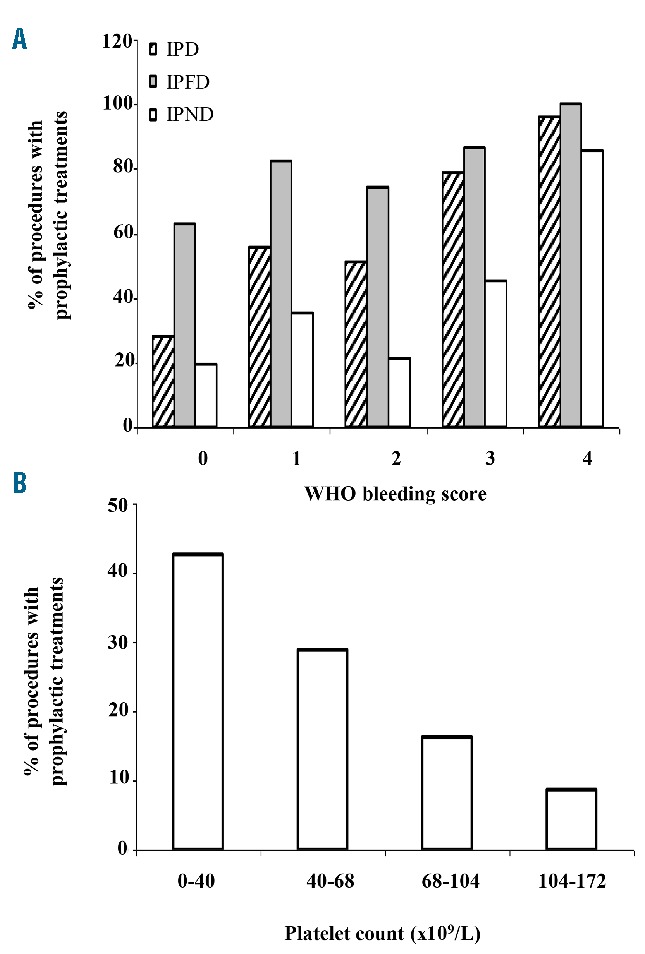
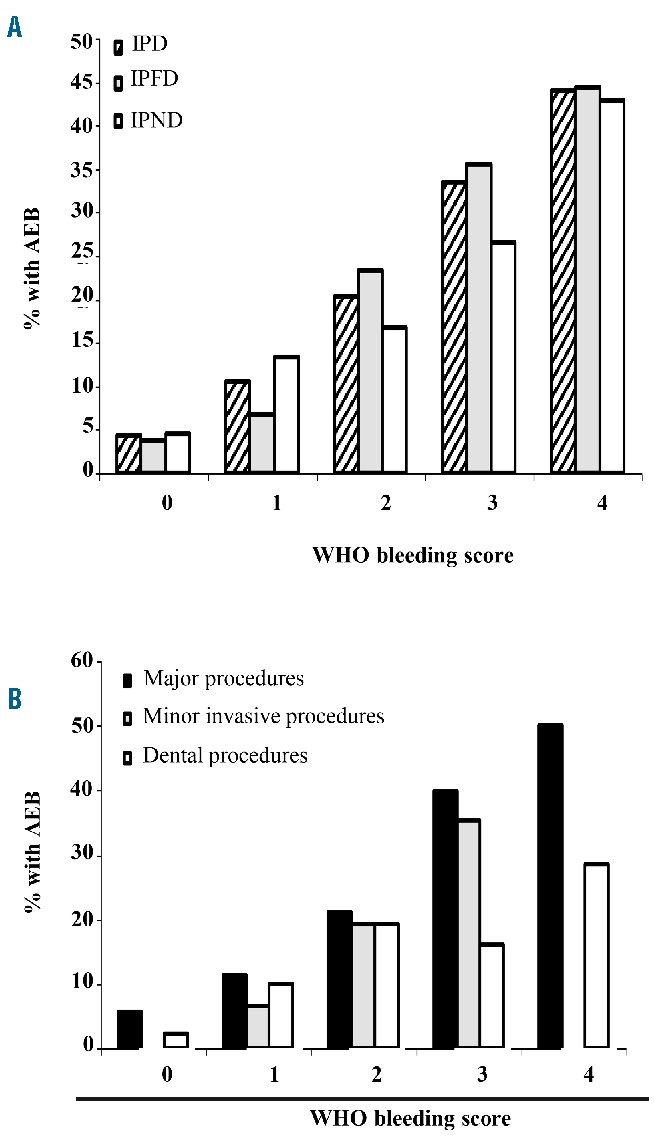
Excessive bleeding at surgery is a feared complication in patients with inherited platelet disorders. However, very few studies have evaluated the frequency of surgical bleeding in these hemorrhagic disorders. We performed a worldwide, multicentric, retrospective study to assess the bleeding complications of surgery, the preventive and therapeutic approaches adopted, and their efficacy in patients with inherited platelet disorders: the Surgery in Platelet disorders And Therapeutic Approach (SPATA) study. We rated the outcome of 829 surgical procedures carried out in 423 patients with well-defined forms of inherited platelet disorders: 238 inherited platelet function disorders and 185 inherited platelet number disorders. Frequency of surgical bleeding was high in patients with inherited platelet disorders (19.7%), with a significantly higher bleeding incidence in inherited platelet function disorders (24.8%) than in inherited platelet number disorders (13.4%). The frequency of bleeding varied according to the type of inherited platelet disorder, with biallelic Bernard Soulier syndrome having the highest occurrence (44.4%). Frequency of bleeding was predicted by a pre-operative World Health Organization bleeding score of 2 or higher. Some types of surgery were associated with a higher bleeding incidence, like cardiovascular and urological surgery. The use of pre-operative pro-hemostatic treatments was associated with a lower bleeding frequency in patients with inherited platelet function disorders but not in inherited platelet number disorders. Desmopressin, alone or with antifibrinolytic agents, was the preventive treatment associated with the lowest bleedings. Platelet transfusions were used more frequently in patients at higher bleeding risk. Surgical bleeding risk in inherited platelet disorders is substantial, especially in inherited platelet function disorders, and bleeding history, type of disorder, type of surgery and female sex are associated with higher bleeding frequency. Prophylactic pre-operative pro-hemostatic treatments appear to be required and are associated with a lower bleeding incidence.
Copyright© 2017 Ferrata Storti Foundation.
Figures
References
-
- Podda G, Femia EA, Pugliano M, Cattaneo M. Congenital defects of platelet function. Platelets. 2012;23(7):552–563. - PubMed
-
- Gresele P, Bury L, Falcinelli E. Inherited platelet function disorders: algorithms for phenotypic and genetic investigation. Semin Thromb Hemost 2016;42(3):292–305. - PubMed
-
- Gresele P, Harrison P, Bury L, et al. Diagnosis of suspected inherited platelet function disorders: results of a worldwide survey. J Thromb Haemost. 2014;12(9): 1562–1569. - PubMed
-
- Valera MC, Kemoun P, Cousty S, Sie P, Payrastre B. Inherited platelet disorders and oral health. J Oral Pathol Med. 2013;42(2):115–124. - PubMed
-
- Gresele P, Falcinelli E, Bury L. Diagnostic approach and management of inherited platelet function disorders. Hamostaseologie. 2016; 36(4):265–278. - PubMed
Publication types
MeSH terms
LinkOut - more resources
Full Text Sources
Other Literature Sources
Medical