


Virtual Reality and Medical Inpatients: A Systematic Review of Randomized, Controlled Trials
- PMID: 28386517
- PMCID: PMC5373791
Virtual Reality and Medical Inpatients: A Systematic Review of Randomized, Controlled Trials
Abstract
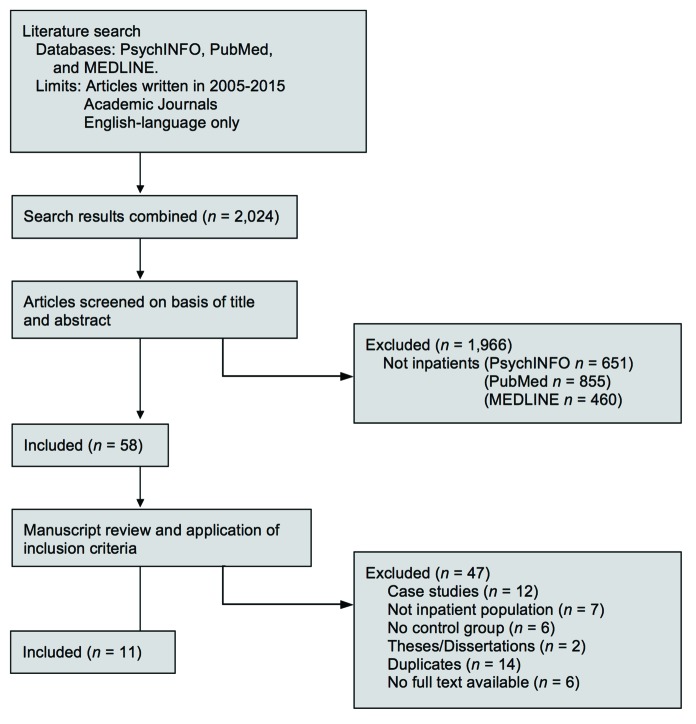
Objective: We evaluated the evidence supporting the use of virtual reality among patients in acute inpatient medical settings. Method: We conducted a systematic review of randomized controlled trials conducted that examined virtual reality applications in inpatient medical settings between 2005 and 2015. We used PsycINFO, PubMed, and Medline databases to identify studies using the keywords virtual reality, VR therapy, treatment, and inpatient.Results: We identified 2,024 citations, among which 11 met criteria for inclusion. Studies addressed three general areas: pain management, eating disorders, and cognitive and motor rehabilitation. Studies were small and heterogeneous and utilized different designs and measures. Virtual reality was generally well tolerated by patients, and a majority of studies demonstrated clinical efficacy. Studies varied in quality, as measured by an evaluation metric developed by Reisch, Tyson, and Mize (average quality score=0.87; range=0.78-0.96). Conclusion: Virtual reality is a promising intervention with several potential applications in the inpatient medical setting. Studies to date demonstrate some efficacy, but there is a need for larger, well-controlled studies to show clinical and cost-effectiveness.
Keywords: eating disorders; inpatients; pain management; rehabilitation; treatment efficacy; virtual reality.
Conflict of interest statement
FINANCIAL DISCLOSURES:The authors have no conflicts of interest relevant to the content of this article.
Figures
References
-
- Ferrer-Garcia M, Gutiérrez-Maldonado J, Riva G. Virtual reality based treatments in eating disorders and obesity: a review. J Contemp Psychother. 2013;43:207–221.
-
- Medling B. Virtual reality utilization in health care: it’s virtually done. Biomed Instrum Technol. 2005;39:16–18. - PubMed
-
- Riener R, Harders M. Virtual Reality in Medicine. London: Springer; 2012. pp. 1–2.
-
- Riva G, Gaggioli A, Villani D, et al. NeuroVR: an open source virtual reality platform for clinical psychology and behavioral neurosciences. Stud Health Technol Inform. 2007;125:394–399. - PubMed
-
- McCann RA, Armstrong CM, Skopp NA, et al. Virtual reality exposure therapy for the treatment of anxiety disorders: an evaluation of research quality. J Anxiety Disord. 2014;28:625–631. - PubMed
Publication types
LinkOut - more resources
Full Text Sources
Medical
Miscellaneous