


A comparison of nicotine dependence among exclusive E-cigarette and cigarette users in the PATH study
- PMID: 28389330
- PMCID: PMC5868349
- DOI: 10.1016/j.ypmed.2017.04.001
A comparison of nicotine dependence among exclusive E-cigarette and cigarette users in the PATH study
Abstract
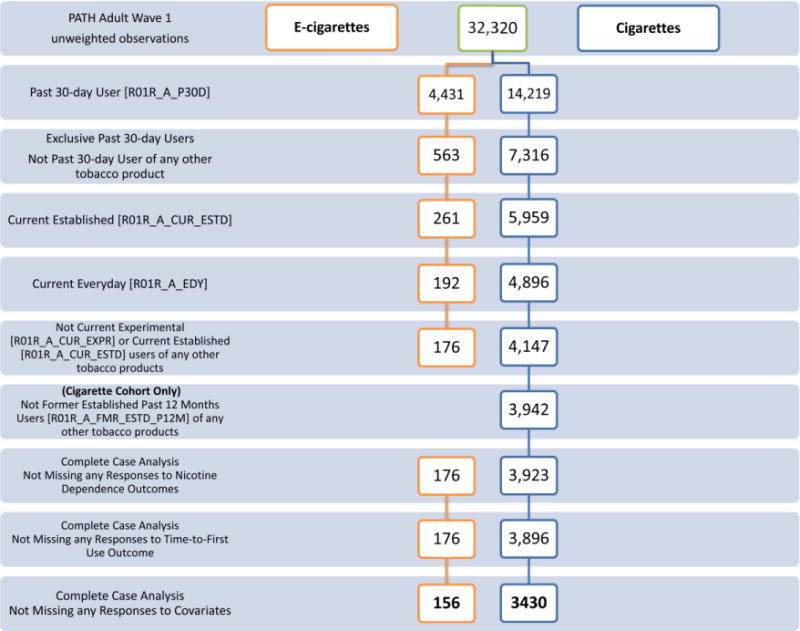
Electronic cigarettes ("e-cigs") have recently gained in popularity, but their health risks, including dependence potential are unclear. This study analyzed the adult database from the Wave 1 Population Assessment of Tobacco and Health (PATH) Study, a nationally representative survey of tobacco use in the United States, to assess the relative level of dependence among adult, exclusive everyday users of e-cigarettes and cigarettes. Of the total 32,320 observations from the Wave 1 PATH adult database, 3586 (5.9%, weighted) were eligible for our analysis population. Among those who met the eligibility criteria, 156 (4.6%) were exclusive e-cig users, and 3430 (95.4%) were exclusive cigarette smokers. Our results show that e-cig users reported a significantly longer time-to-first-use of the day after waking (measured in minutes) compared to cigarette smokers after adjusting for confounders (adjusted geometric mean [95% confidence limits (CL)]: 29.2 [24.4-34.9] vs. 20.0 [18.7, 21.5]). In addition, cigarette smokers were significantly more likely to consider themselves addicted (Adj. Odds Ratio [95% CL]: 6.9 [4.5-10.7]); have strong cravings (2.9 [1.9-4.2]); find it difficult in the past 12months to refrain from using their product in places where it was prohibited (6.4 [2.9-14.3]); and feel like they really needed to use their product (3.9 [2.4-6.4]). These results are consistent with previous studies, in finding that exclusive daily e-cigarette users are less dependent on their respective product than comparable cigarette smokers.
Keywords: Addiction; Adults; Cigarettes; Dependence; E-cigarettes; Electronic cigarettes; Inhaled nicotine device; Nicotine; Smoking; Tobacco.
Copyright © 2017 Elsevier Inc. All rights reserved.
Figures
References
-
- Ayers JW, Ribisl KM, Brownstein JS. Tracking the Rise in Popularity of Electronic Nicotine Delivery Systems (Electronic Cigarettes) Using Search Query Surveillance. American Journal of Preventive Medicine. 2011;40(4):448–53. - PubMed
Publication types
MeSH terms
Grants and funding
LinkOut - more resources
Full Text Sources
Other Literature Sources
Medical
Miscellaneous
