Effects of online group exercises for older adults on physical, psychological and social wellbeing: a randomized pilot trial
- PMID: 28392983
- PMCID: PMC5384569
- DOI: 10.7717/peerj.3150
Effects of online group exercises for older adults on physical, psychological and social wellbeing: a randomized pilot trial
Abstract
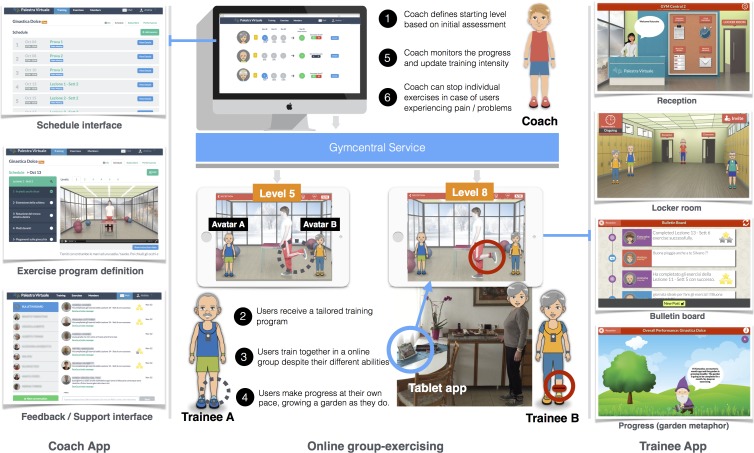
Background: Intervention programs to promote physical activity in older adults, either in group or home settings, have shown equivalent health outcomes but different results when considering adherence. Group-based interventions seem to achieve higher participation in the long-term. However, there are many factors that can make of group exercises a challenging setting for older adults. A major one, due to the heterogeneity of this particular population, is the difference in the level of skills. In this paper we report on the physical, psychological and social wellbeing outcomes of a technology-based intervention that enable online group exercises in older adults with different levels of skills.
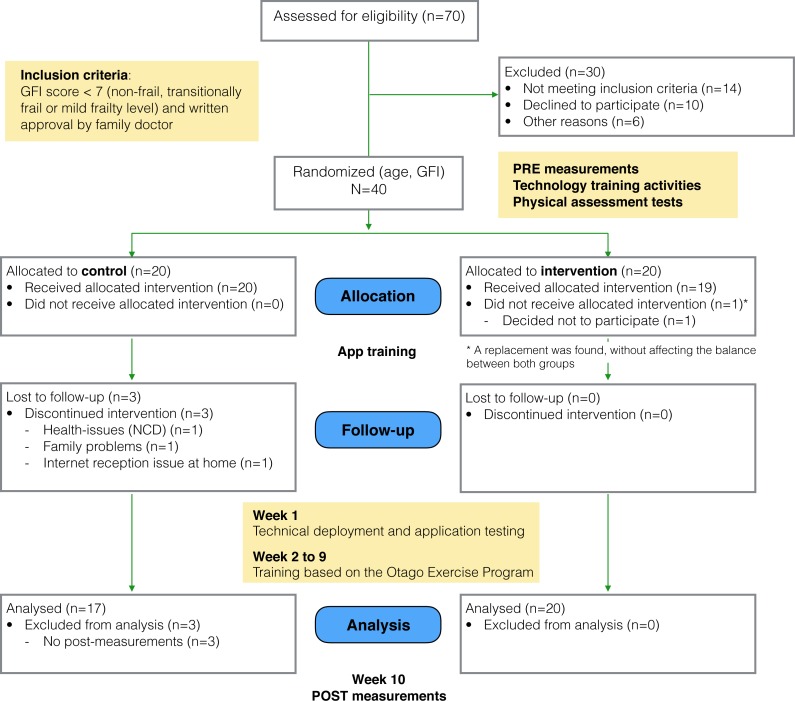
Methods: A total of 37 older adults between 65 and 87 years old followed a personalized exercise program based on the OTAGO program for fall prevention, for a period of eight weeks. Participants could join online group exercises using a tablet-based application. Participants were assigned either to the Control group, representing the traditional individual home-based training program, or the Social group, representing the online group exercising. Pre- and post- measurements were taken to analyze the physical, psychological and social wellbeing outcomes.
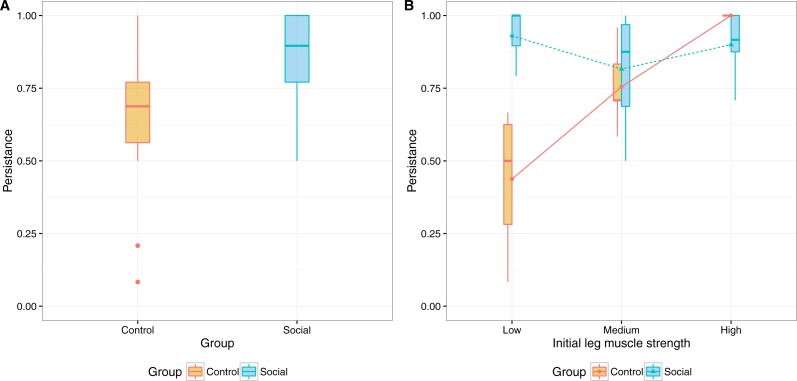
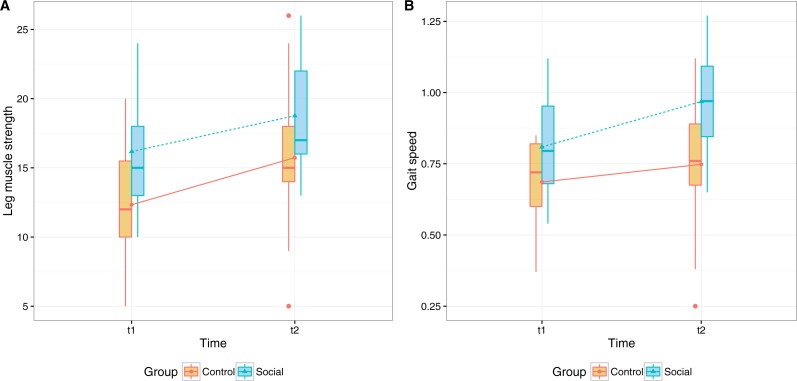
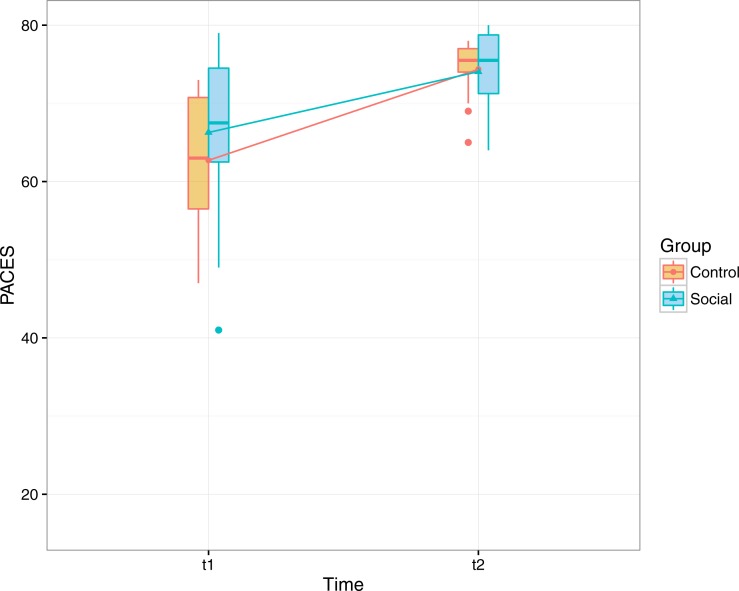
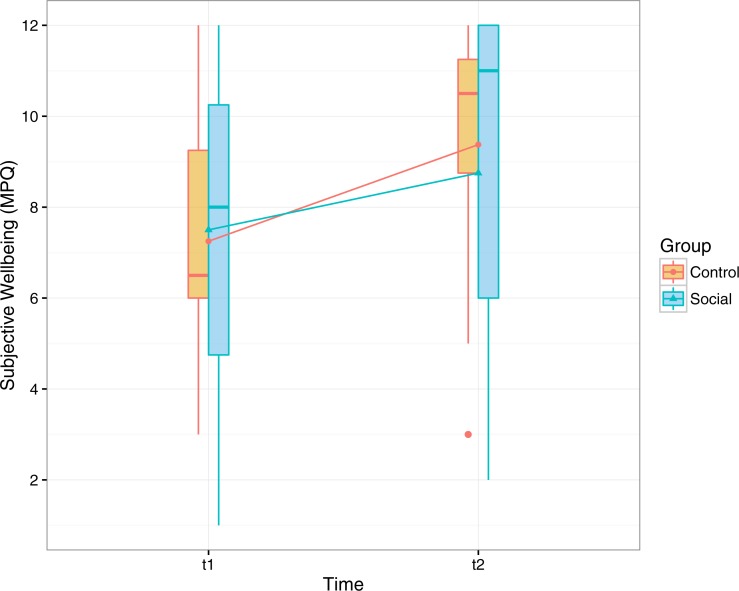
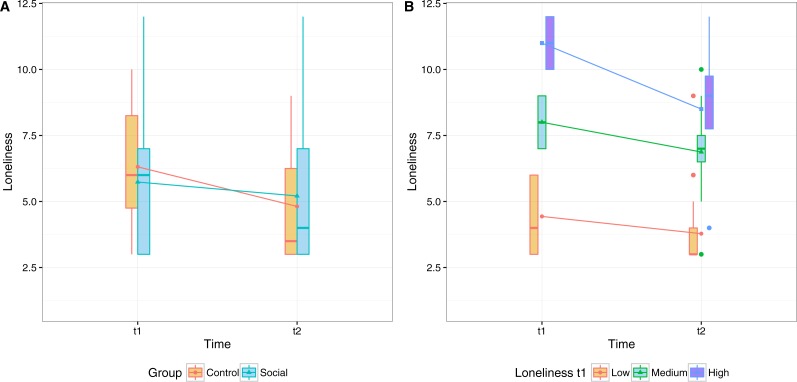
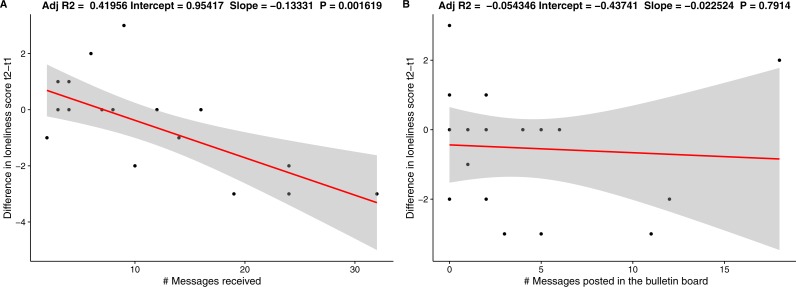
Results: After the eight-weeks training program there were improvements in both the Social and Control groups in terms of physical outcomes, given the high level of adherence of both groups. Considering the baseline measures, however, the results suggest that while in the Control group fitter individuals tended to adhere more to the training, this was not the case for the Social group, where the initial level had no effect on adherence. For psychological outcomes there were improvements on both groups, regardless of the application used. There was no significant difference between groups in social wellbeing outcomes, both groups seeing a decrease in loneliness despite the presence of social features in the Social group. However, online social interactions have shown to be correlated to the decrease in loneliness in the Social group.
Conclusion: The results indicate that technology-supported online group-exercising which conceals individual differences in physical skills is effective in motivating and enabling individuals who are less fit to train as much as fitter individuals. This not only indicates the feasibility of training together despite differences in physical skills but also suggests that online exercise might reduce the effect of skills on adherence in a social context. However, results from this pilot are limited to a small sample size and therefore are not conclusive. Longer term interventions with more participants are instead recommended to assess impacts on wellbeing and behavior change.
Keywords: Fall prevention; Group exercises; Home-based intervention; Older adults; Preclinical trial; Technology; Virtual environments.
Conflict of interest statement
Marcos Baez, Iman Khaghani Far, Francisco Ibarra, Fabio Casati are researchers at their corresponding institutions and are also associated with Gymcentral, a training platform maintained by the University of Trento and freely available to researchers at http://gymcentral.net; however, they do not receive compensation from Gymcentral nor did Gymcentral have any role in their research or publications.
Figures
References
-
- Benavent-Caballer V, Rosado-Calatayud P, Segura-Ortí E, Amer-Cuenca JJ, Lisón JF. The effectiveness of a video-supported group-based Otago exercise programme on physical performance in community-dwelling older adults: a preliminary study. Physiotherapy. 2015;102(3):280–286. doi: 10.1016/j.physio.2015.08.002. - DOI - PubMed
-
- Campbell AJ, Robertson MC, Gardner MM, Norton RN, Tilyard MW, Buchner DM. Randomised controlled trial of a general practice programme of home based exercise to prevent falls in elderly women. BMJ: British Medical Journal. 1997;315(7115):1065–1069. doi: 10.1136/bmj.315.7115.1065. - DOI - PMC - PubMed
-
- Campbell AJ, Robertson MC. Otago exercise programme to prevent falls in older adults. http://www.acc.co.nz/PRD_EXT_CSMP/groups/external_providers/documents/pu.... [1 July 2014];A home-based, individually tailored strength and balance retraining programme. 2003
LinkOut - more resources
Full Text Sources
Other Literature Sources