


The Diet and Haemodialysis Dyad: Three Eras, Four Open Questions and Four Paradoxes. A Narrative Review, Towards a Personalized, Patient-Centered Approach
- PMID: 28394304
- PMCID: PMC5409711
- DOI: 10.3390/nu9040372
The Diet and Haemodialysis Dyad: Three Eras, Four Open Questions and Four Paradoxes. A Narrative Review, Towards a Personalized, Patient-Centered Approach
Abstract
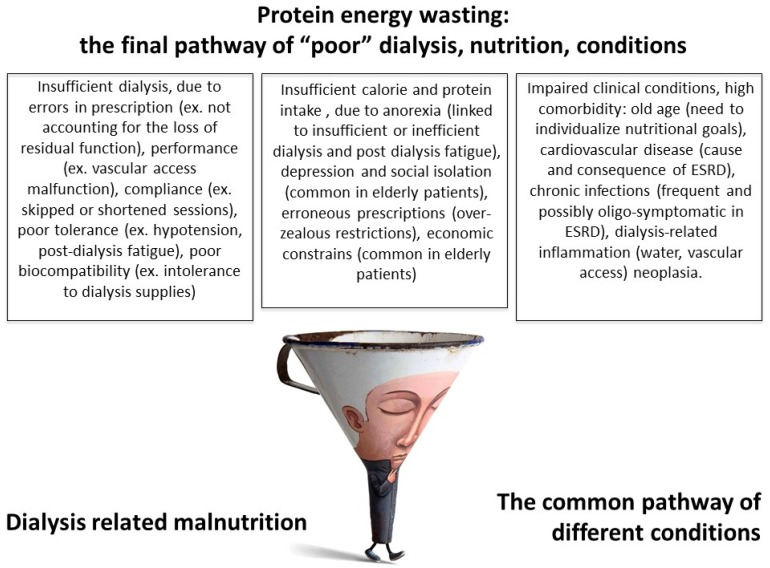
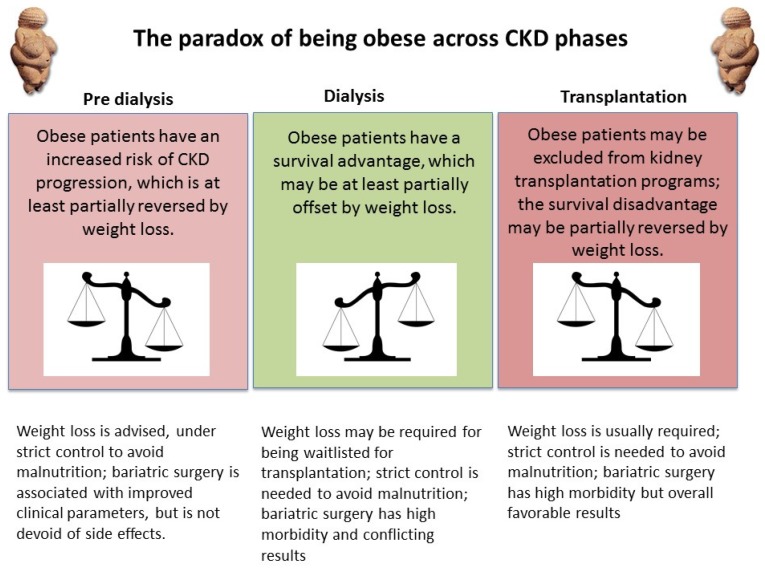
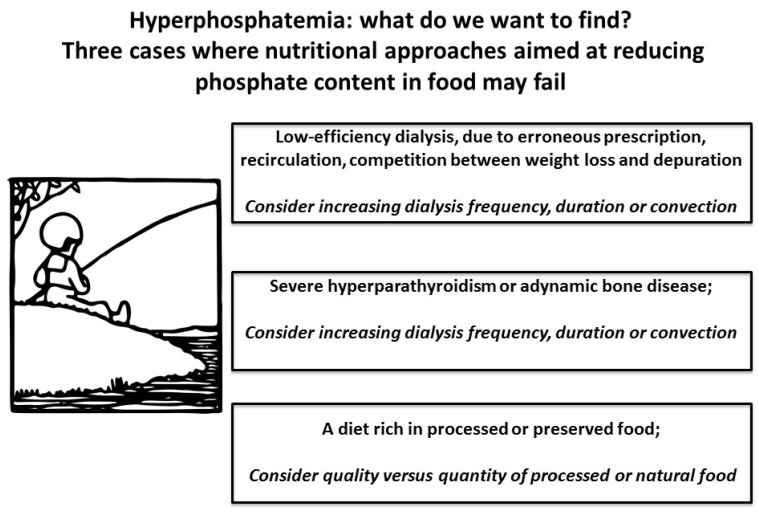
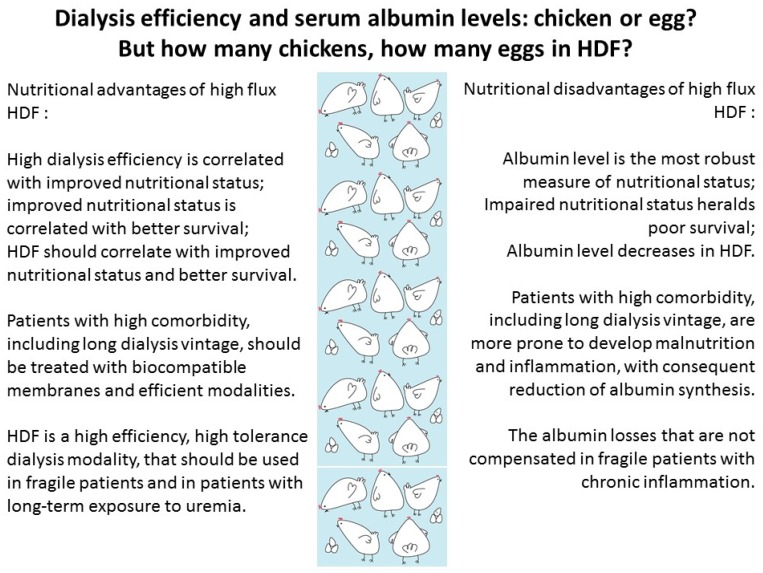
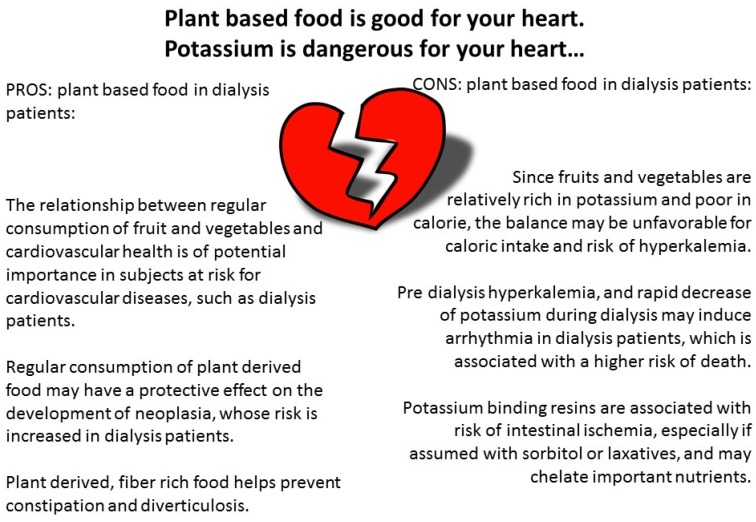
The history of dialysis and diet can be viewed as a series of battles waged against potential threats to patients' lives. In the early years of dialysis, potassium was identified as "the killer", and the lists patients were given of forbidden foods included most plant-derived nourishment. As soon as dialysis became more efficient and survival increased, hyperphosphatemia, was identified as the enemy, generating an even longer list of banned aliments. Conversely, the "third era" finds us combating protein-energy wasting. This review discusses four questions and four paradoxes, regarding the diet-dialysis dyad: are the "magic numbers" of nutritional requirements (calories: 30-35 kcal/kg; proteins > 1.2 g/kg) still valid? Are the guidelines based on the metabolic needs of patients on "conventional" thrice-weekly bicarbonate dialysis applicable to different dialysis schedules, including daily dialysis or haemodiafiltration? The quantity of phosphate and potassium contained in processed and preserved foods may be significantly different from those in untreated foods: what are we eating? Is malnutrition one condition or a combination of conditions? The paradoxes: obesity is associated with higher survival in dialysis, losing weight is associated with mortality, but high BMI is a contraindication for kidney transplantation; it is difficult to limit phosphate intake when a patient is on a high-protein diet, such as the ones usually prescribed on dialysis; low serum albumin is associated with low dialysis efficiency and reduced survival, but on haemodiafiltration, high efficiency is coupled with albumin losses; banning plant derived food may limit consumption of "vascular healthy" food in a vulnerable population. Tailored approaches and agreed practices are needed so that we can identify attainable goals and pursue them in our fragile haemodialysis populations.
Keywords: dialysis; dialysis efficiency; diet; haemodialysis; phosphate; protein energy wasting; serum albumin Kt/V; survival.
Conflict of interest statement
The authors declare no conflict of interest.
Figures
References
-
- Quintanilla A.P., Weffer M.I. Hyperkalemia in the patient on chronic dialysis. Int. J. Artif. Organs. 1987;10:17–19. - PubMed
Publication types
MeSH terms
LinkOut - more resources
Full Text Sources
Other Literature Sources
Medical
Research Materials
