


Mechanistic insights into energy conservation by flavin-based electron bifurcation
- PMID: 28394885
- PMCID: PMC7646311
- DOI: 10.1038/nchembio.2348
Mechanistic insights into energy conservation by flavin-based electron bifurcation
Abstract
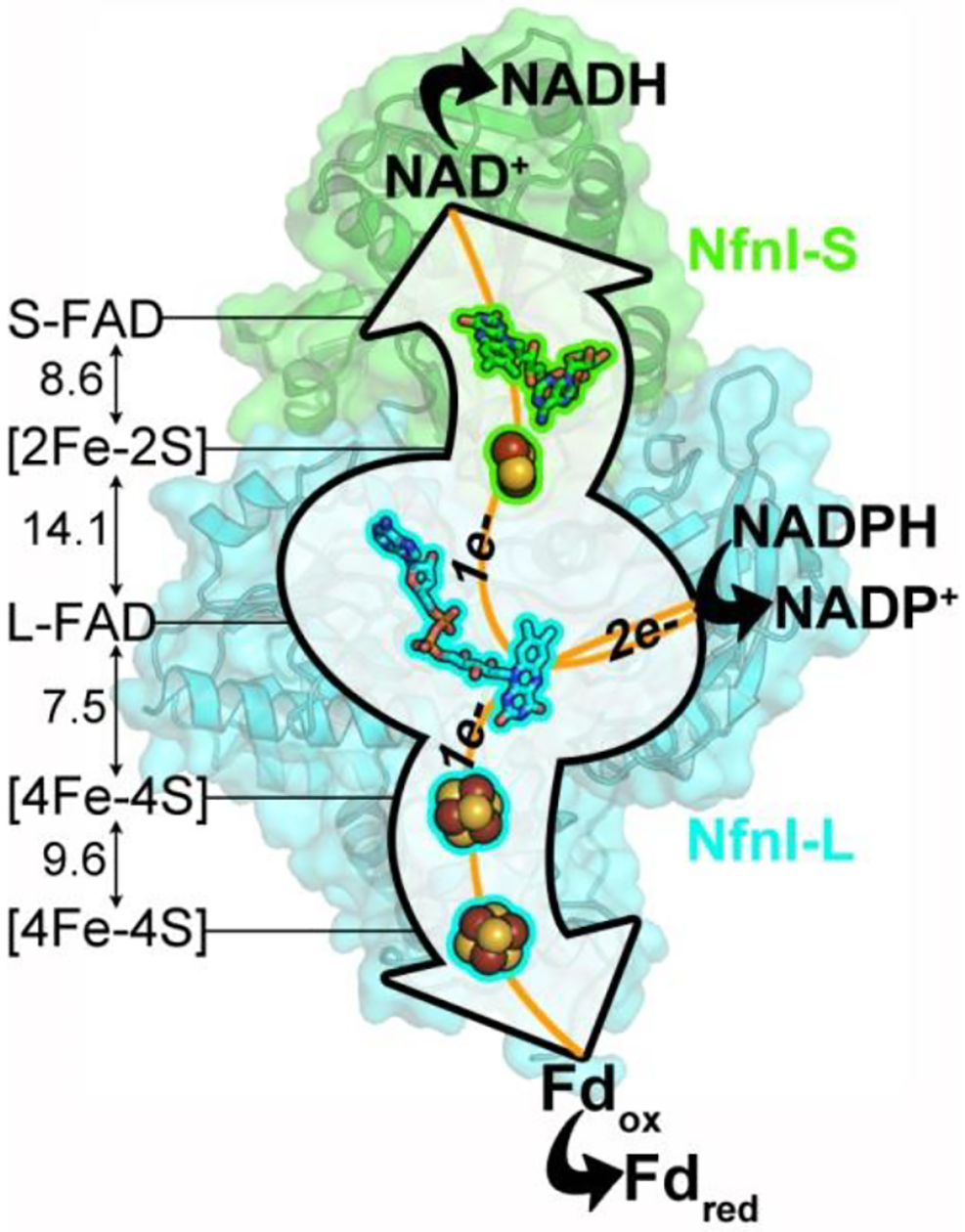
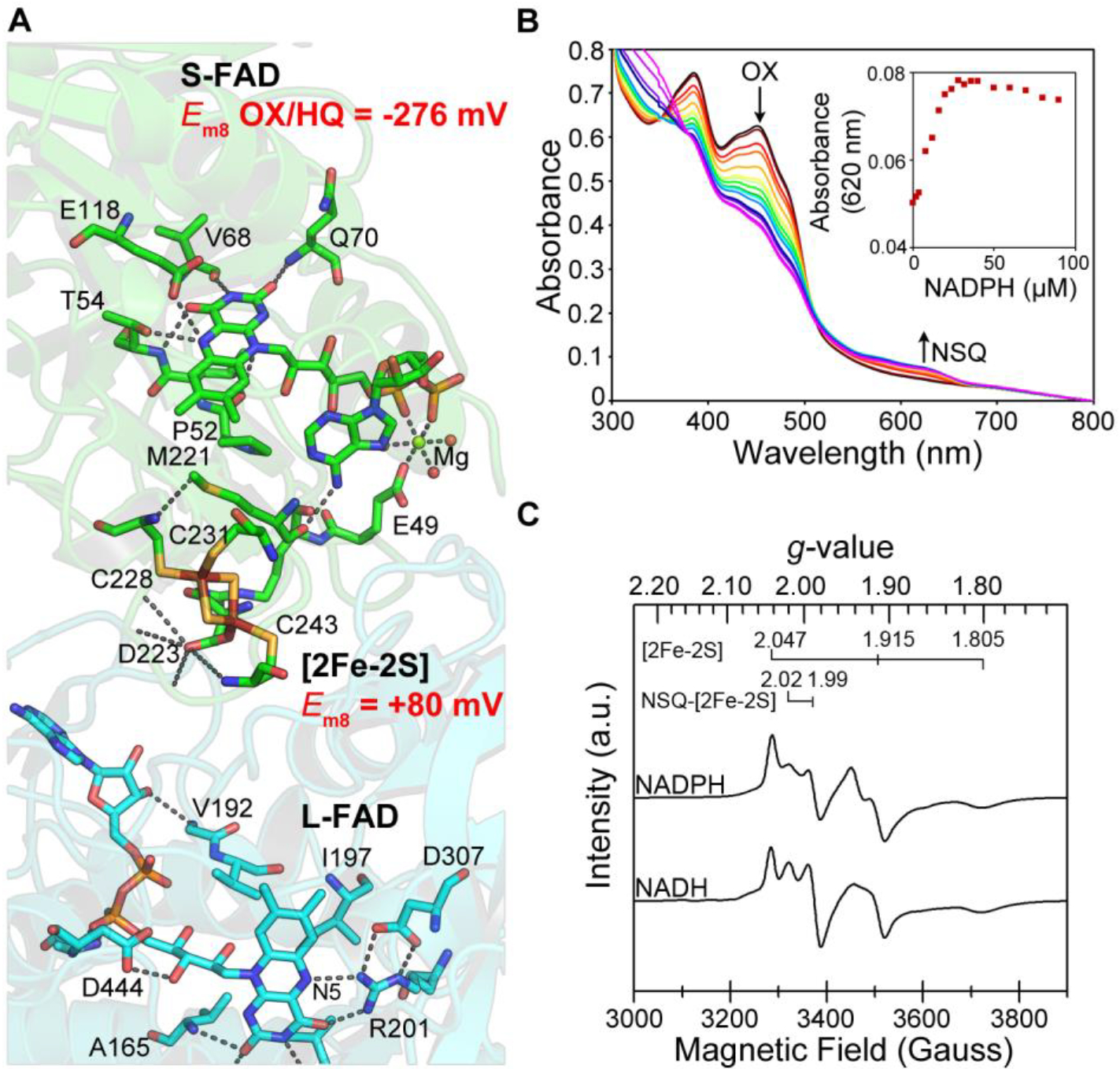
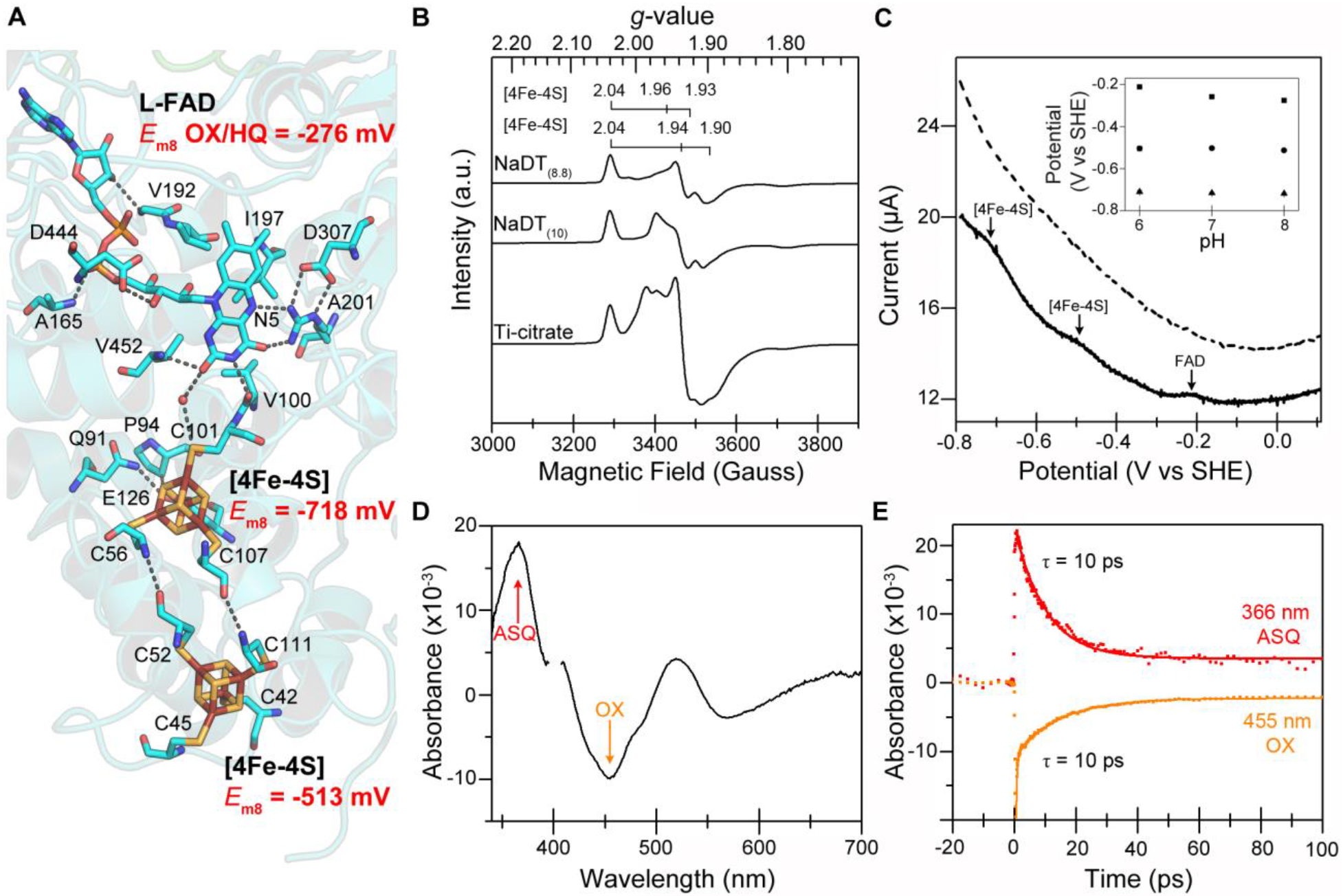
The recently realized biochemical phenomenon of energy conservation through electron bifurcation provides biology with an elegant means to maximize utilization of metabolic energy. The mechanism of coordinated coupling of exergonic and endergonic oxidation-reduction reactions by a single enzyme complex has been elucidated through optical and paramagnetic spectroscopic studies revealing unprecedented features. Pairs of electrons are bifurcated over more than 1 volt of electrochemical potential by generating a low-potential, highly energetic, unstable flavin semiquinone and directing electron flow to an iron-sulfur cluster with a highly negative potential to overcome the barrier of the endergonic half reaction. The unprecedented range of thermodynamic driving force that is generated by flavin-based electron bifurcation accounts for unique chemical reactions that are catalyzed by these enzymes.
Conflict of interest statement
Competing financial interests
The authors declare no competing financial interests.
Figures
References
-
- Buckel W & Thauer RK Energy conservation via electron bifurcating ferredoxin reduction and proton/Na+ translocating ferredoxin oxidation. Biochimica et Biophysica Acta 1827, 94–113 (2013). - PubMed
-
- Mitchell P The Protonmotive Q Cycle: A General Formulation. FEBS Letters 59, 137–139 (1975). - PubMed
-
- Peters JW, Miller A-F, Jones AK, King PW & Adams MW Electron bifurcation. Current Opinions in Chemical Biology 31 (2016). - PubMed
-
- Brandt U Bifurcated ubihydroquinone oxidation in the cytochrome bc1 complex by proton-gated charge transfer. FEBS Letters 387, 1–6 (1996). - PubMed
Publication types
MeSH terms
Substances
Grants and funding
LinkOut - more resources
Full Text Sources
Other Literature Sources
