Seroprevalence of Q fever among human and animal in Iran; A systematic review and meta-analysis
- PMID: 28394889
- PMCID: PMC5398711
- DOI: 10.1371/journal.pntd.0005521
Seroprevalence of Q fever among human and animal in Iran; A systematic review and meta-analysis
Abstract
Background: Q fever is a main zoonotic disease around the world. The aim of this meta-analysis was to estimate the overall seroprevalence of Coxiella burnetii among human and animal population in Iran.
Methods: Major national and international databases were searched from 2005 up to August 2016. We extracted the prevalence of Q fever antibodies (IgG) as the main primary outcome. We reported the prevalence of the seropositivity as point and 95% confidence intervals.
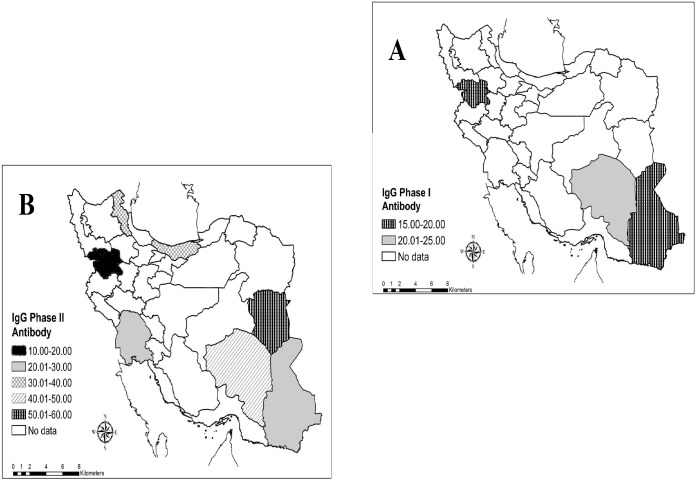
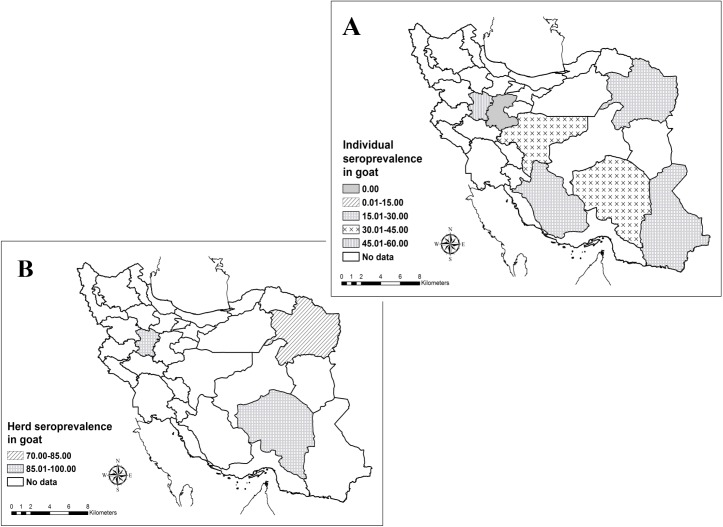
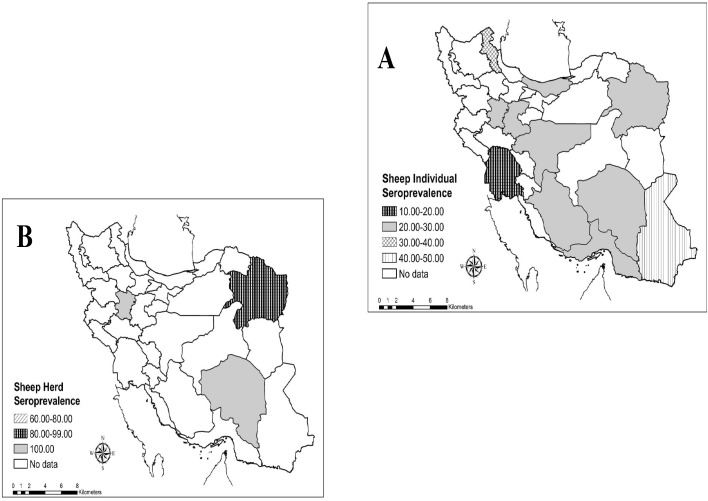
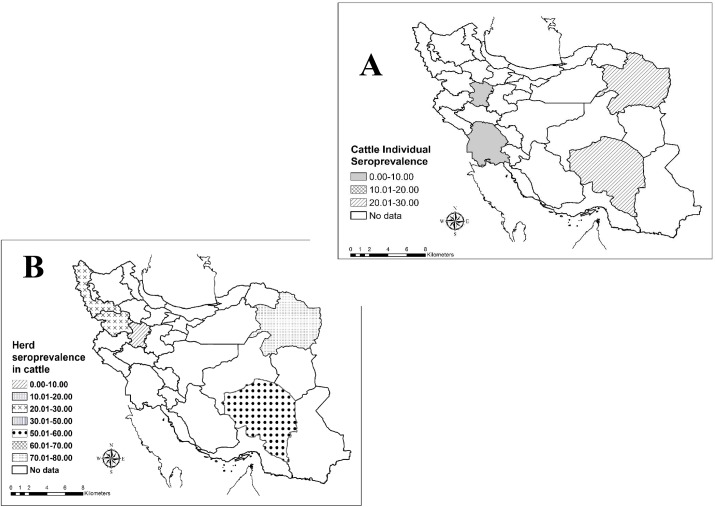
Results: The overall seroprevalence of IgG phase I and II antibodies of Q fever in human was 19.80% (95% CI: 16.35-23.25%) and 32.86% (95% CI: 23.80-41.92%), respectively. The herd and individual prevalence of C. burnetii antibody in goat were 93.42% (95% CI: 80.23-100.00) and 31.97% (95% CI: 20.96-42.98%), respectively. The herd and individual prevalence of Q fever antibody in sheep's were 96.07% (95% CI: 89.11-100.00%) and 24.66% (95% CI: 19.81-29.51%), respectively. The herd and individual prevalence of C. burnetii antibody in cattle were 41.37% (95% CI: 17.88-64.86%) and 13.30% (95% CI: 2.98-23.62%), respectively. Individual seropositivity of Q fever in camel and dog were 28.26% (95% CI: 21.47-35.05) and 0.55% (0.03-2.68), respectively.
Conclusion: Seroprevalence of Q fever among human and domestic animals is considerable. Preventative planning and control of C. burnetii infections in Iran is necessary. Active surveillance and further research studies are recommended, to more clearly define the epidemiology and importance of C. burnetii infections in animals and people in Iran.
Conflict of interest statement
The authors have declared that no competing interests exist.
Figures
References
-
- van Schaik EJ, Chen C, Mertens K, Weber MM, Samuel JE (2013) Molecular pathogenesis of the obligate intracellular bacterium Coxiella burnetii. Nature Reviews Microbiology 11: 561–573. doi: 10.1038/nrmicro3049 - DOI - PMC - PubMed
-
- Madariaga MG, Rezai K, Trenholme GM, Weinstein RA (2003) Q fever: a biological weapon in your backyard. The Lancet infectious diseases 3: 709–721. - PubMed
-
- Oyston P, Davies C (2011) Q fever: the neglected biothreat agent. Journal of medical microbiology 60: 9–21. doi: 10.1099/jmm.0.024778-0 - DOI - PubMed
-
- Angelakis E, Raoult D (2010) Q fever. Veterinary microbiology 140: 297–309. doi: 10.1016/j.vetmic.2009.07.016 - DOI - PubMed
-
- Raoult D, Marrie T, Mege J (2005) Natural history and pathophysiology of Q fever. The Lancet infectious diseases 5: 219–226. doi: 10.1016/S1473-3099(05)70052-9 - DOI - PubMed
Publication types
MeSH terms
Substances
LinkOut - more resources
Full Text Sources
Other Literature Sources
Medical