Review
. 2017 May;18(5):677-692.
doi: 10.15252/embr.201744010. Epub 2017 Apr 10.

Synapses in the spotlight with synthetic optogenetics

Affiliations
Review

Synapses in the spotlight with synthetic optogenetics

Shai Berlin et al. EMBO Rep. 2017 May.

Abstract

Membrane receptors and ion channels respond to various stimuli and relay that information across the plasma membrane by triggering specific and timed processes. These include activation of second messengers, allowing ion permeation, and changing cellular excitability, to name a few. Gaining control over equivalent processes is essential to understand neuronal physiology and pathophysiology. Recently, new optical techniques have emerged proffering new remote means to control various functions of defined neuronal populations by light, dubbed optogenetics. Still, optogenetic tools do not typically address the activity of receptors and channels native to neurons (or of neuronal origin), nor gain access to their signaling mechanisms. A related method-synthetic optogenetics-bridges this gap by endowing light sensitivity to endogenous neuronal receptors and channels by the appending of synthetic, light-receptive molecules, or photoswitches. This provides the means to photoregulate neuronal receptors and channels and tap into their native signaling mechanisms in select regions of the neurons, such as the synapse. This review discusses the development of synthetic optogenetics as a means to study neuronal receptors and channels remotely, in their natural environment, with unprecedented spatial and temporal precision, and provides an overview of tool design, mode of action, potential clinical applications and insights and achievements gained.

Keywords: native receptors; neurons; optogenetics; photoswitches; synthetic optogenetics.


Figures

Figure 1
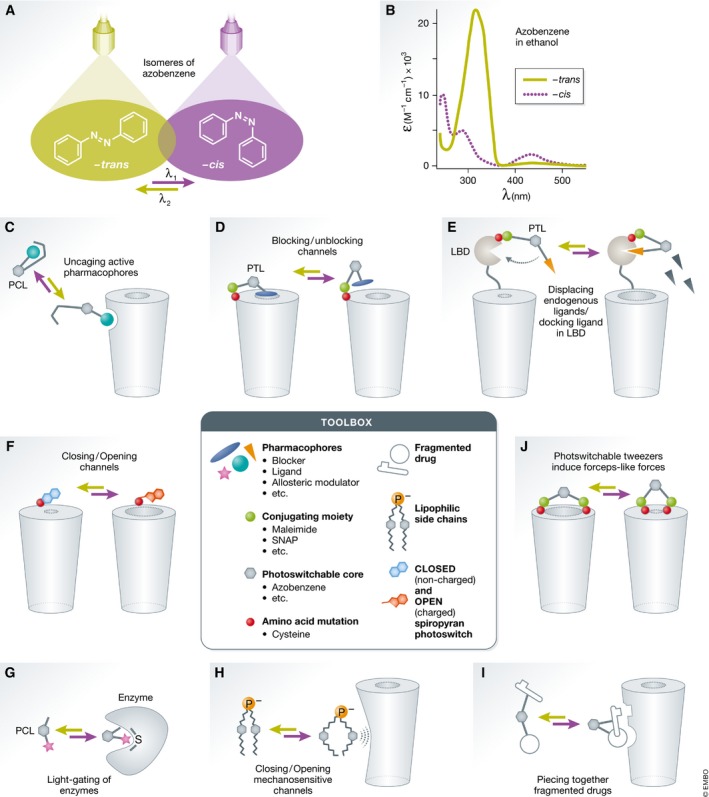
Figure 1. Isomerization of azobenzene to modulate protein function
(A) Molecular structures of –trans and –cis isomers of azobenzene, depending on the wavelengths used. Near‐UV light (violet) induces isomerization to –cis, whereas green light reverts the molecule back to –trans. (B) Absorption spectra of –trans and –cis isomers of azobenzene in ethanol. (C–J) Mechanisms of actions of azobenzene‐based (gray hexagon) photoswitches. (middle) Toolbox: building blocks for the synthesis of photoswitches. Isomerization of PCLs can uncage an active pharmacophore (C). A PTL bearing a channel blocker (blue ellipse) is tethered to a modified channel (cysteine, red circle) via a conjugating moiety (maleimide, green circle). In –trans, the blocker reaches the pore of the channel (D). A receptor with a PTL bound to its LBD undergoing isomerization enables the ligand (orange triangle) to enter the LBD to activate or displace the endogenous ligand (black triangles) (E). Spiropyran undergoing isomerization from the closed (non‐charged, cyan) to the open (charged, red) state induces channel opening (F). Light‐gating of an enzyme by a PCL (G). Membrane incorporated photoswitches induce lateral mechanical pressure in the membrane during isomerization to open mechanosensitive channels (H). A fragmented drug is pieced together by the isomerization process (I). Photoswitchable tweezers bound to two cysteines (red circles) via maleimides (green circles) induce forceps‐like forces (J).
Figure 2
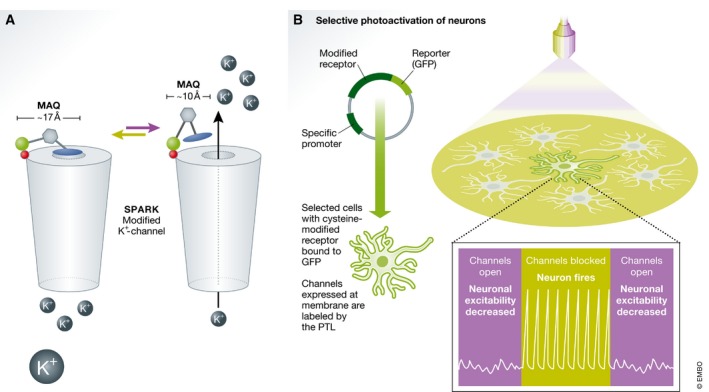
Figure 2. SPARK regulates neuronal excitability
(A) SPARK, a modified K+ channel tethered to MAQ. In –trans (green arrow), MAQ extends to ~17 Å, enabling block of the pore and no ion conductance (open circles denoted with K+). During isomerization (violet arrow), the shorter –cis isomer (~10 Å) relieves the block and the channel opens, generating an efflux of K+ ions. (B) Selective photoactivation of neurons. The cysteine‐modified receptor (bound to GFP) is genetically targeted to a defined neuronal population (via specific promoters). Channels expressed at the membrane (green highlight) of selected cells are labeled by the PTL. During green‐light illumination (green bar, bottom), the channels are blocked, enabling firing by the neuron (bottom trace, APs). Neuronal excitability is decreased by isomerization back to –cis (by near‐UV light, violet bar) and opening of the channels. Cysteine, red circle; azobenzene, gray hexagon; maleimide, green circle; quaternary amine/QA, blue ellipse.
Figure 3
Figure 3. Crystal structure of the LBD of a kainate receptor bound to a photoswitch
(A) Surface representation of GluK2‐LBD dimers. One LBD (orange) is bound to domoate (not shown), whereas the second LBD (blue) is in complex with GluAzo (magenta), a specific iGluR5 and ‐6 PCL (structure is from PDB: 4H8I). The structure shows a closed LBD conformation. (B) Front view of the LBD with the tip of the azobenzene tail protruding from the LBD. (C) Transparent view of the dimer, depicting the partially embedded GluAzo photoswitch within the LBD (dashed line) and the exit tunnel through which the azobenzene protrudes. (D) Front view of the LBD (GluAzo removed).
Figure 4
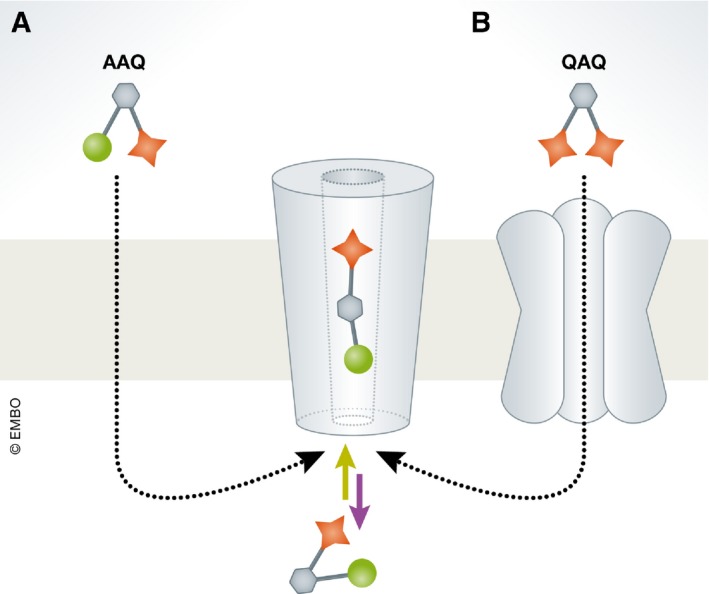
Figure 4. Intracellular photoswitchable blockers
(A) AAQ (acrylamide–azobenzene–QA) crosses the membrane owing to its lipophilic acrylamide group, can enter the inner vestibule of the channel, and exert its block when in –trans. (B) The blocking mechanism of QAQ (QA–azobenzene–QA) resembles that of AAQ. However, QAQ cannot cross the membrane and needs to travel through pore‐dilated channels (e.g., TRPV1) to enter the cell.

References

    1. Luscher C, Isaac JT (2009) The synapse: center stage for many brain diseases. J Physiol 587: 727–729 - PMC - PubMed
    1. Penzes P, Cahill ME, Jones KA, VanLeeuwen JE, Woolfrey KM (2011) Dendritic spine pathology in neuropsychiatric disorders. Nat Neurosci 14: 285–293 - PMC - PubMed
    1. Newcomer JW, Farber NB, Olney JW (2000) NMDA receptor function, memory, and brain aging. Dialogues Clin Neurosci 2: 219–232 - PMC - PubMed
    1. Chen J, Yu S, Fu Y, Li X (2014) Synaptic proteins and receptors defects in autism spectrum disorders. Front Cell Neurosci 8: 276 - PMC - PubMed
    1. van Spronsen M, Hoogenraad CC (2010) Synapse pathology in psychiatric and neurologic disease. Curr Neurol Neurosci Rep 10: 207–214 - PMC - PubMed