


Characteristics and Treatment of Patients with Clinical Illness Due to Synthetic Cannabinoid Inhalation Reported by Medical Toxicologists: A ToxIC Database Study
- PMID: 28397128
- PMCID: PMC5440319
- DOI: 10.1007/s13181-017-0605-9
Characteristics and Treatment of Patients with Clinical Illness Due to Synthetic Cannabinoid Inhalation Reported by Medical Toxicologists: A ToxIC Database Study
Abstract
Introduction: Synthetic cannabinoid (SC) abuse has resulted in numerous outbreaks of severe clinical illness across the United States over the past decade. The primary objective of this study was to determine the clinical characteristics of patients abusing SC requiring bedside consultation by medical toxicologists.
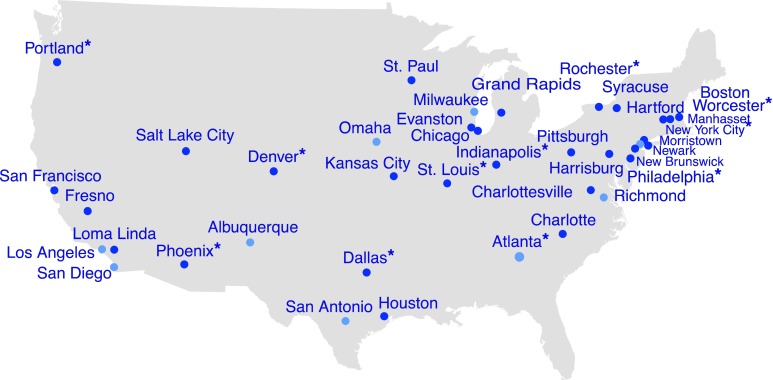
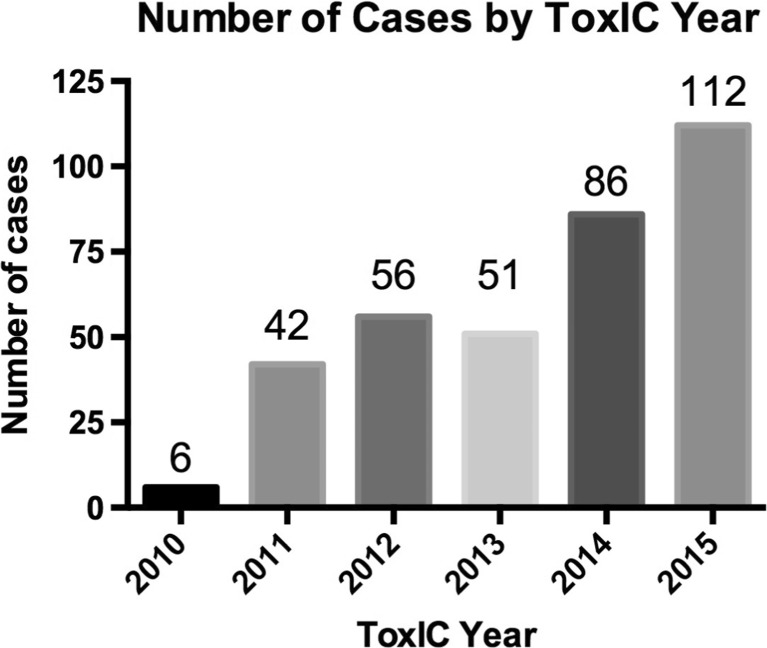
Methods: This was a multicenter analysis from a prospectively collected cohort of patients presenting to medical care after synthetic cannabinoid exposure, utilizing the ToxIC Registry. Management of cases by medical toxicologists in this cohort occurred in emergency departments, inpatient medical floors, and intensive care units. Cases were identified from January 5, 2010 - July 31, 2015. We characterized the clinical presentations, treatments, outcomes, and sociologic factors associated with SC use in these patients.
Results: Medical toxicologists participating in the ToxIC Registry cared for 39,925 cases between 2010 and 2015. Three hundred fifty three of these cases were determined to be SC toxicity. The median age of patients was 25 (IQR: 18, 36) and the majority were males (84%). The most common symptoms were agitation, delirium and toxic psychosis, n=146 (41%). Forty-four (12.5%) had heart rates above 140 beats per minute. Bradycardia was the second most commonly reported severe vital sign abnormality with 20 (5.7%) having heart rates of less than 50 beats per minute. Fifteen (4.2%) patients had hypotension. Fifty-nine (17%) had seizures. The most common pharmacologic treatment provided was benzodiazepines (n=131, 37%) followed by antipsychotics (n=36, 10%).Disposition was available for 276; of these 167 (61%) were managed in the emergency department, 42 (15%) were admitted to the hospital floor, and 67 (24%) were admitted to the ICU.
Conclusions: Synthetic cannabinoids are associated with severe central nervous system and cardiovascular effects.
Keywords: K2; Novel psychoactive substance; Spice; Synthetic cannabinoid; ToxIC.
Conflict of interest statement
Conflict of Interest
The contents of this work are the sole responsibility of the authors and do not necessarily represents the views of the National Institutes of Health (NIH). The authors declare that they have no conflict of interest.
Funding and Financial Disclosures
Dr. Monte receives support from NIH 1 K23 GM110516 and NIH CTSI UL1 TR001082. Dr. Monte has a patent pending for a synthetic cannabinoid clinical assay and has been awarded funding through the Department of Defense for examination of patterns of use of synthetic cannabinoids and assay development. A subset of the data collected was funded by the grant NIH R56 DA038366 (Carlson, Sheth, Boyer, PIs).
Figures
References
-
- Castaneto MS, Wohlfarth A, Desrosiers NA, et al. Synthetic cannabinoids pharmacokinetics and detection methods in biological matrices. Drug metabolism reviews. 2015; 1–51. - PubMed
Publication types
MeSH terms
Substances
Grants and funding
LinkOut - more resources
Full Text Sources
Other Literature Sources
Medical
Miscellaneous
