


Comparison of self-reported signs of facial ageing among Caucasian women in Australia versus those in the USA, the UK and Canada
- PMID: 28397327
- PMCID: PMC6001558
- DOI: 10.1111/ajd.12637
Comparison of self-reported signs of facial ageing among Caucasian women in Australia versus those in the USA, the UK and Canada
Abstract
Background/objectives: Australians are more exposed to higher solar UV radiation levels that accelerate signs of facial ageing than individuals who live in temperate northern countries. The severity and course of self-reported facial ageing among fair-skinned Australian women were compared with those living in Canada, the UK and the USA.
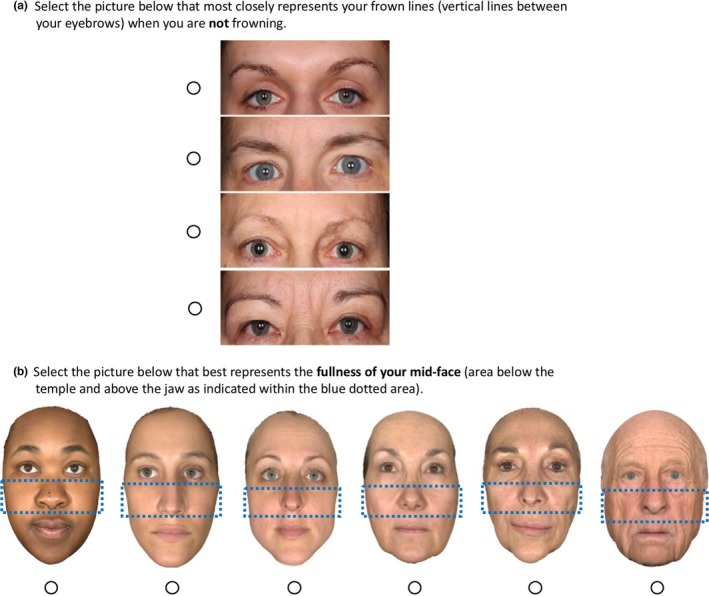
Methods: Women voluntarily recruited into a proprietary opt-in survey panel completed an internet-based questionnaire about their facial ageing. Participants aged 18-75 years compared their features against photonumeric rating scales depicting degrees of severity for forehead, crow's feet and glabellar lines, tear troughs, midface volume loss, nasolabial folds, oral commissures and perioral lines. Data from Caucasian and Asian women with Fitzpatrick skin types I-III were analysed by linear regression for the impact of country (Australia versus Canada, the UK and the USA) on ageing severity for each feature, after controlling for age and race.
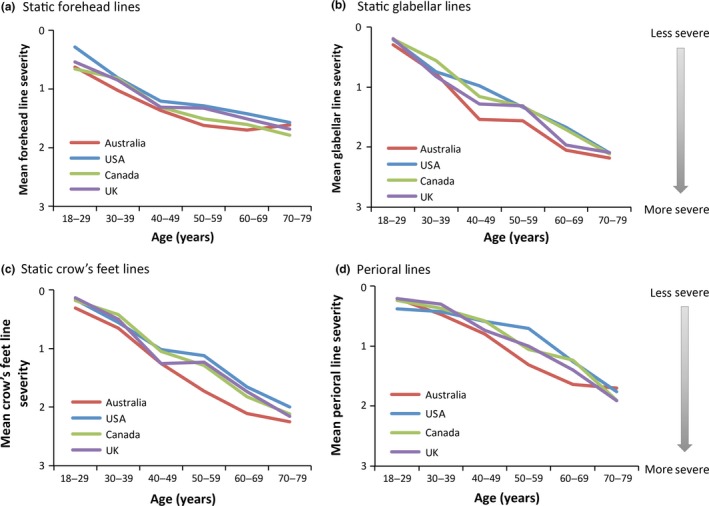
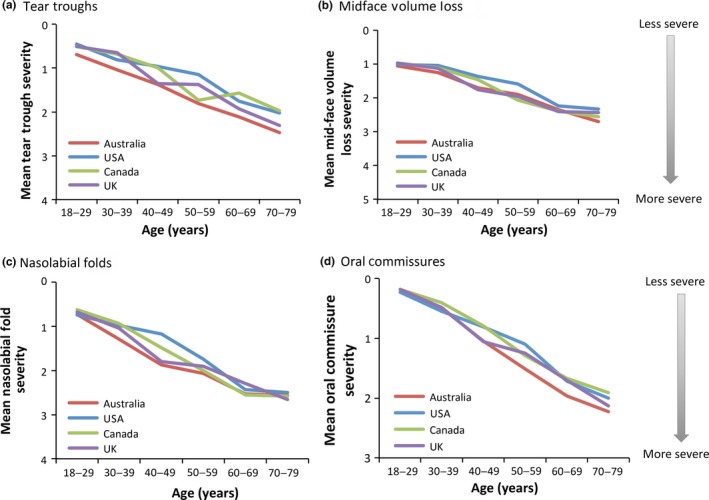
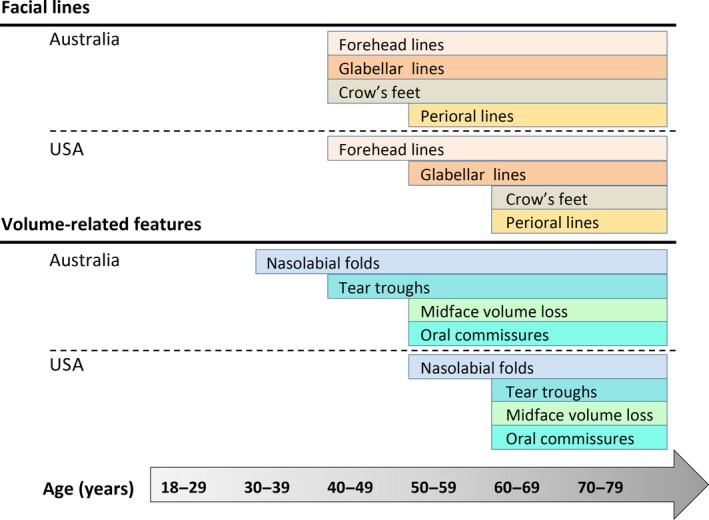
Results: Among 1472 women, Australians reported higher rates of change and significantly more severe facial lines (P ≤ 0.040) and volume-related features like tear troughs and nasolabial folds (P ≤ 0.03) than women from the other countries. More Australians also reported moderate to severe ageing for all features one to two decades earlier than US women.
Conclusions: Australian women reported more severe signs of facial ageing sooner than other women and volume-related changes up to 20 years earlier than those in the USA, which may suggest that environmental factors also impact volume-related ageing. These findings have implications for managing their facial aesthetic concerns.
Keywords: Caucasian; Fitzpatrick phototype; facial ageing; facial lines; mid-face ageing; photoageing; volume-related ageing.
© 2017 The Authors. Australasian Journal of Dermatology published by John Wiley and Sons Australia, Ltd on behalf of The Australasian College of Dermatologists.
Figures
References
-
- Liley JB, McKenzie RL. Where on Earth has the Highest UV? UV Radiation and its Effects: An Update 2006. Dunedin: National Institute of Water and Atmospheric Research, 2006.
-
- Gies P, Roy C, Javorniczky J et al Global solar UV index: australian measurements, forecasts and comparison with the UK. Photochem. Photobiol. 2004; 79: 32–9. - PubMed
-
- Fisher GJ, Kang S, Varani J et al Mechanisms of photoaging and chronological skin aging. Arch. Dermatol. 2002; 138: 1462–70. - PubMed
-
- Rawlings AV. Ethnic skin types: are there differences in skin structure and function? Int. J. Cosmet. Sci. 2006; 28: 79–93. - PubMed
Publication types
MeSH terms
LinkOut - more resources
Full Text Sources
Other Literature Sources
Medical
