


Salivary IL-8, IL-6 and TNF-α as Potential Diagnostic Biomarkers for Oral Cancer
- PMID: 28397778
- PMCID: PMC5489941
- DOI: 10.3390/diagnostics7020021
Salivary IL-8, IL-6 and TNF-α as Potential Diagnostic Biomarkers for Oral Cancer
Abstract
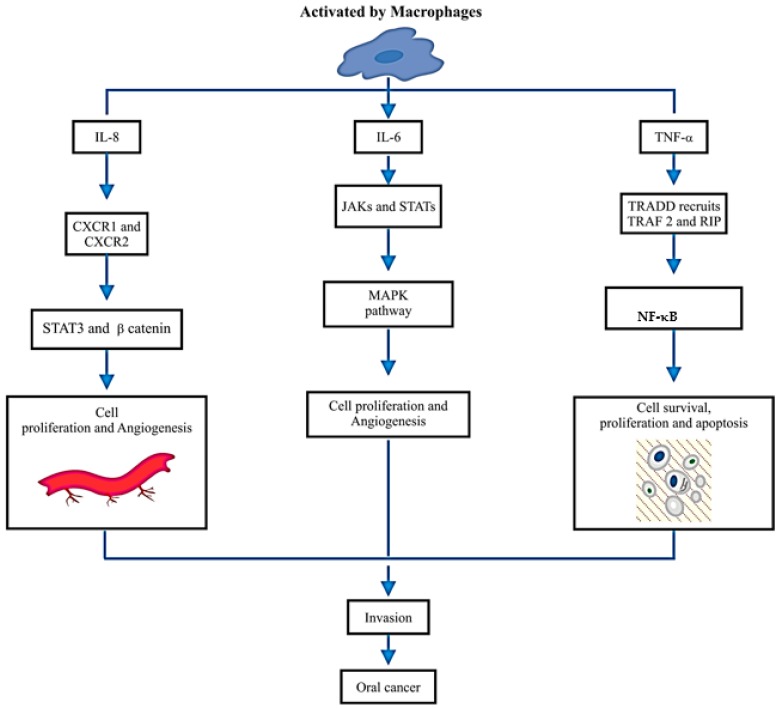
Saliva has been useful as a liquid biopsy for the diagnosis of various oral or systemic diseases, and oral squamous cell carcinoma (OSCC) is no exception. While its early detection and prevention is important, salivary cytokines expression, specifically of Interleukin-8 (IL-8), Interleukin-6 (IL-6) and Tumor necrosis factor (TNF-α), does contribute to the pathogenesis of cancer and these cytokines serve as potential biomarkers. Their excessive production plays a role in cancer progression and establishment of angiogenesis. However, other inflammatory or immunological conditions may affect the levels of cytokines in saliva. This article reviews the expression of levels of specific cytokines i.e., IL-8, IL-6 and TNF-α, their signaling pathways in the development of oral cancer, and how they are essential for the diagnosis of OSCC and updates related to it. Apart from serum, the saliva-based test can be a cost-effective tool in the follow-up and diagnosis of OSCC. Moreover, large-scale investigations are still needed for the validation of salivary cytokines.
Keywords: biomarker; biopsy; cancer and salivaomics; interleukin-6; interleukin-8; saliva; tumor necrosis factor-α (TNF-α).
Conflict of interest statement
The authors declare no conflict of interest.
Figures
References
-
- Baig M.S., Bhutto R.A., Muhammad S., Siddiqui M.I. Epidemiology of oral cancer in Southern Punjab, Pakistan. Pak. J. Med. Heal. Sci. 2015;9:1269–1271.
-
- Ford P.J., Farah C.S. Early detection and diagnosis of oral cancer: Strategies for improvement. J. Cancer Policy. 2013;1:e2–e7. doi: 10.1016/j.jcpo.2013.04.002. - DOI
-
- Kalavrezos N., Scully C. Mouth Cancer for Clinicians Part 7: Cancer Diagnosis and Pre-treatment Preparation. Dent. Update. 2016;43:50–54, 57–60 & 63–65. - PubMed
Publication types
LinkOut - more resources
Full Text Sources
Other Literature Sources
Medical
