. 2017 Sep;16(7):699-708.
doi: 10.1111/gbb.12384. Epub 2017 May 2.

Midkine in the mouse ventral tegmental area limits ethanol intake and Ccl2 gene expression

Affiliations

Midkine in the mouse ventral tegmental area limits ethanol intake and Ccl2 gene expression

H Chen et al. Genes Brain Behav. 2017 Sep.

Abstract

Midkine (MDK) is a cytokine and neurotrophic factor that is more highly expressed in the brains of alcoholics and in mice predisposed to drink large amounts of ethanol, suggesting that MDK may regulate ethanol consumption. Here we measured ethanol consumption in male and female Mdk knockout (-/-) mice using the two-bottle choice and the drinking in the dark (DID) tests. We found that Mdk -/- mice consumed significantly more ethanol than wild-type controls in both tests. To determine if MDK acts in the ventral tegmental area (VTA) to regulate ethanol consumption, we delivered lentivirus expressing a Mdk shRNA into the VTA of male C57BL/6J mice to locally knockdown Mdk and performed the DID test. Mice expressing a Mdk shRNA in the VTA consumed more ethanol than mice expressing a control non-targeting shRNA, demonstrating that the VTA is one site in the brain through which MDK acts to regulate ethanol consumption. Since MDK also controls the expression of inflammatory cytokines in other organs, we examined gene expression of interleukin-1 beta (Il1b), tumor necrosis factor alpha (Tnfα) and the chemokine (C-C motif) ligand 2 (Ccl2) in the VTA of Mdk -/- mice and in mice expressing Mdk shRNA in the VTA. Expression of Ccl2 was elevated in the VTA of Mdk -/- mice and in mice expressing Mdk shRNA in the VTA. These results demonstrate that MDK functions in the VTA to limit ethanol consumption and levels of CCL2, a chemokine known to increase ethanol consumption.

Keywords: Addiction; Ccl2; Il1b; Mdk; alcohol; chemokine; cytokine; dopamine; innate immune; ventral tegmental area.


Figures

Figure 1
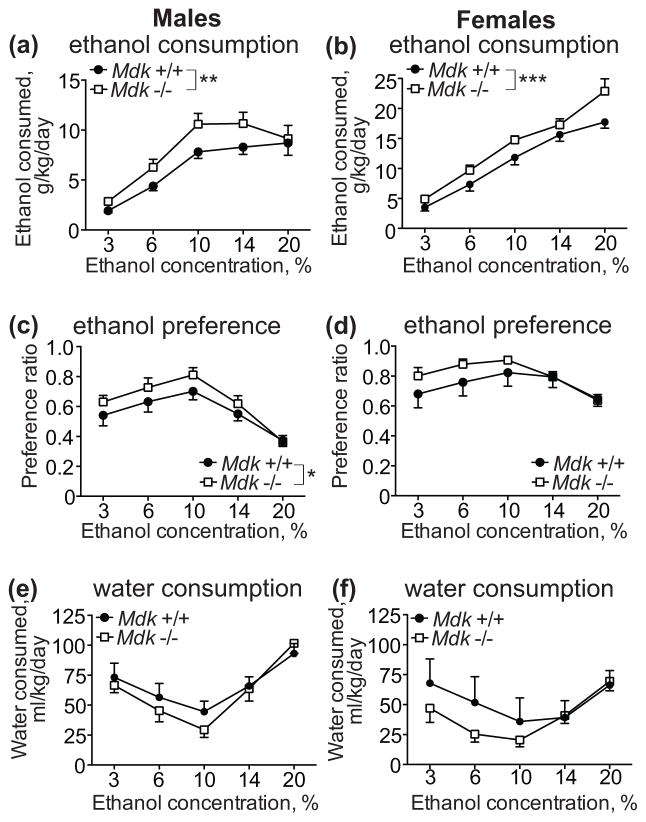
Figure 1. Midkine knockout mice consume more ethanol than controls in a 2-bottle choice ethanol consumption test
Male (a, c, e) and female (b, d, f) wild type (Mdk +/+, filled circles) and homozygous midkine knockout (Mdk −/−, open squares) mice underwent a 2-bottle choice test for water or 3, 6, 10, 14, and 20% (v/v) ethanol with four days of 24 h access at each ethanol concentration. (a, b) ethanol consumed in g ethanol/kg body weight/day. There was a significant effect of genotype and ethanol concentration in both sexes. (c, d) Ethanol preference, calculated as the ratio of the volume of ethanol consumed over the volume of total fluid consumed. There was a significant effect of genotype and ethanol concentration in males, and a significant effect of ethanol concentration in females. (e, f) Water consumed during the ethanol consumption test at each concentration of ethanol. Data is presented as ml water consumed/kg body weight/day. No significant genotype effect was observed for water consumption in either sex. Male Mdk +/+, n = 9; male Mdk −/−, n = 7; female Mdk +/+, n = 6; female Mdk −/−, n = 9. * P < 0.05, ** P < 0.01, *** P < 0.001 by two-way ANOVA. Data are presented as the mean ± SEM.
Figure 2
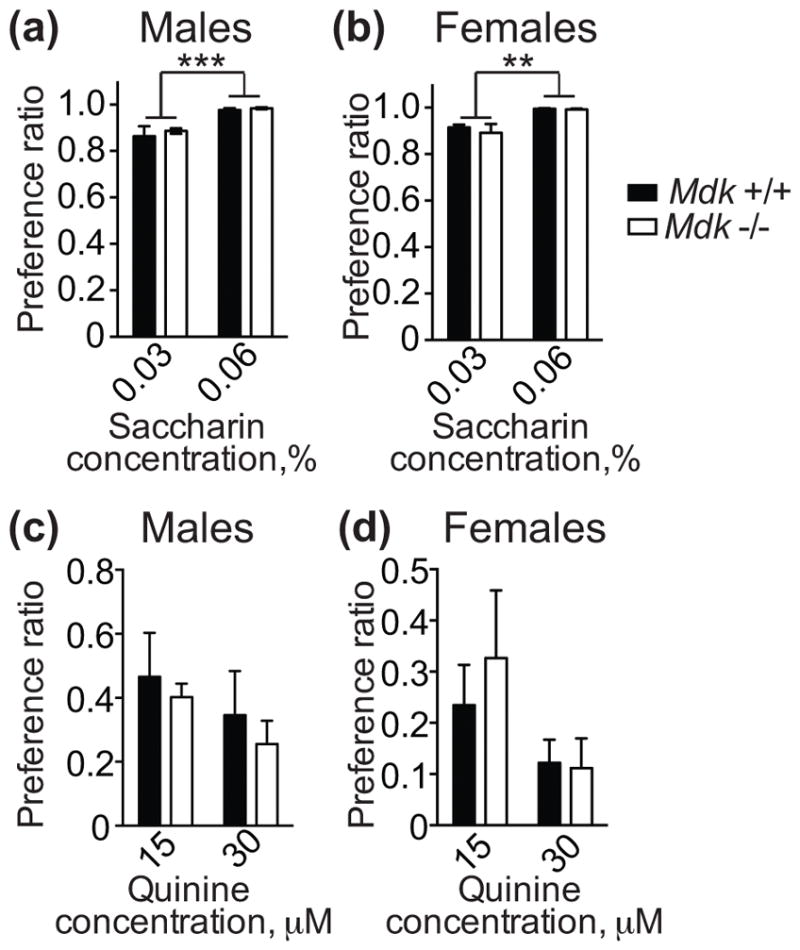
Figure 2. Midkine knockout mice do not differ in saccharin or quinine intake compared with controls
Male (a, c) and female (b, d) wild type (Mdk +/+, black bars) and homozygous midkine knockout (Mdk −/−, white bars) mice underwent a 2-bottle choice test for water and saccharin (0.03 or 0.06%, w/v) or water and quinine (15 or 30 μM). (a, b) Saccharin consumption plotted as the ratio of the volume of saccharin solution consumed over total fluid consumed. There were no significant effects of genotype, but there were significant main effects of saccharin concentration for both sexes. Male Mdk +/+, n = 9; male Mdk −/−, n = 7; female Mdk +/+, n = 6; female Mdk −/−, n = 9. ** P < 0.01, *** P < 0.001 by two-way ANOVA. (c, d) Quinine consumption plotted as the ratio of the volume of quinine solution consumed over total fluid consumed. There were no significant differences between genotypes or quinine concentration. Male Mdk +/+, n = 6; male Mdk −/−, n = 5; female Mdk +/+, n = 4; female Mdk −/−, n = 6. Data are presented as the mean ± SEM.
Figure 3
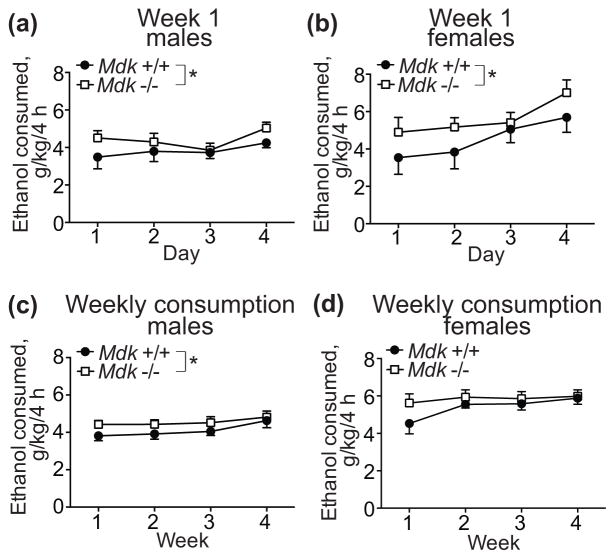
Figure 3. Midkine knockout mice consume more ethanol than controls in the drinking in the dark (DID) test
Male (a, c) and female (b, d) wild type (Mdk +/+, filled circles) and homozygous midkine knockout (Mdk −/−, open squares) mice underwent a modified DID test, in which they were provided 20% ethanol in water (v/v) for 4 h per day, 4 days per week for 4 weeks. (a, b) Ethanol consumed in g ethanol/kg body weight/4 h during the first week of the DID test. There were significant effects of genotype for males and females and a significant effect of day for females. (c, d) Average ethanol consumed each week, expressed as g ethanol/kg body weight/4 h. There was a significant effect of genotype in males. Male Mdk +/+, n = 9; male Mdk −/−, n = 9; female Mdk +/+, n = 7; female Mdk −/−, n = 7. * P < 0.05 by two-way ANOVA. Data are presented as the mean ± SEM.
Figure 4
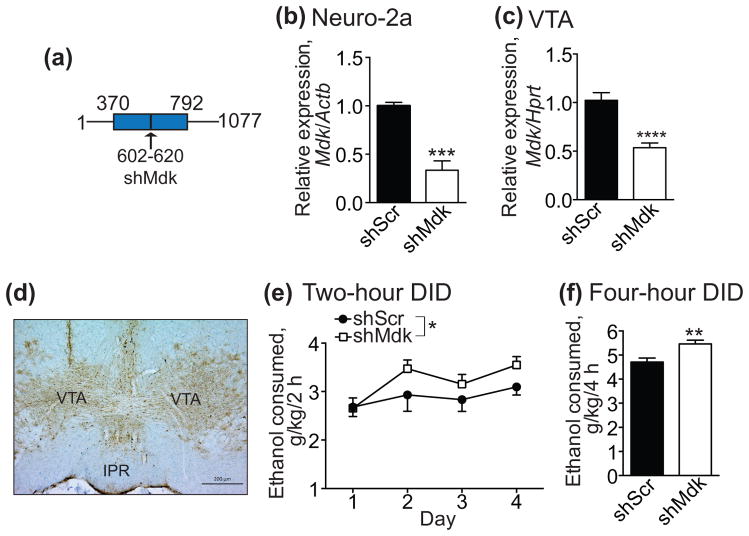
Figure 4. Mdk knockdown by RNAi in the ventral tegmental area (VTA) of male mice increases binge-like ethanol consumption
C57BL/6J mice were stereotaxically injected in the VTA with a lentivirus expressing a short hairpin RNA (shRNA) targeting Mdk (shMdk) or a control shRNA (shScr) and green fluorescent protein (GFP). Mice were allowed to recover for three weeks and tested for ethanol consumption in the drinking in the dark protocol. (a) Schematic diagram showing the location of the 19 nucleotide targeting sequence on the Mdk transcript (transcript variant 1). The blue box indicates the open reading frame. The arrow points to a vertical black line indicating the location of the targeting sequence. Numbers indicate the nucleotide position on the transcript. (b) Demonstration of knockdown efficacy of shMdk in Neuro-2a cells transfected with the lentiviral plasmid encoding shMdk compared with cells transfected with shScr. RNA was isolated from cells 48 h after transfection and analyzed by quantitative real-time PCR (qPCR, n = 3) (c) Demonstration of knockdown efficacy of shMdk in mouse VTA three weeks after lentiviral infection. Infected VTA was dissected from mice 3 weeks after injection, RNA isolated and analyzed by qPCR. shScr, n = 9; shMdk, n = 11. (d) Representative image of lentiviral infection in the VTA. Immunohistochemistry with a GFP antibody was performed on brain sections containing the VTA. IPR, interpeduncular nucleus, rostral. Scale bar, 200 μM. (e) Ethanol consumption in the DID test by mice infected in the VTA with lentivirus expressing shMdk (open squares) or shScr (filled circles). Shown is the amount of ethanol consumed in g ethanol/kg body weight during the 2 h drinking sessions each day. There were significant main effects of shRNA and day. (f) Ethanol consumption in mice infected in the VTA with lentivirus expressing shMdk (white bar) or shScr (black bar) during the 4 h drinking session on day 4 in the DID test, expressed as g ethanol/kg body weight. shScr, n = 16; shMdk, n = 17. *P < 0.05 by two-way ANOVA. **P < 0.01, ***P < 0.001, and ****P < 0.0001 by student’s t-test. Data are presented as the mean ± SEM.
Figure 5
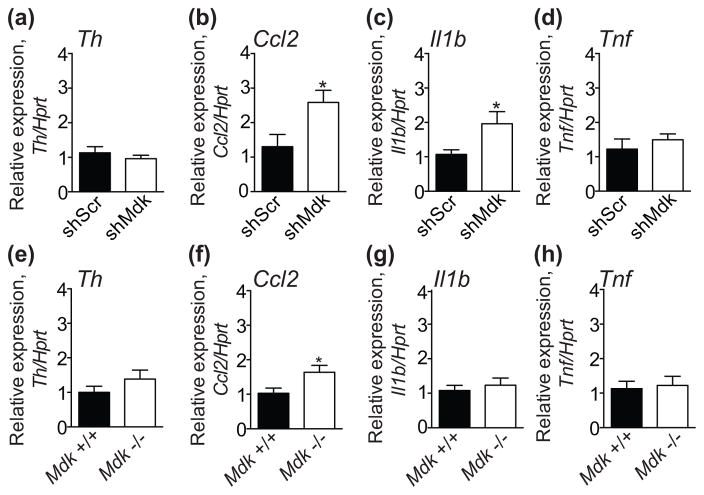
Figure 5. Increased expression of Ccl2 in the ventral tegmental area (VTA) of mice deficient in midkine
(a–d) VTA RNA samples from mice expressing shScr (black bars, n = 9) or shMdk (white bars, n = 11) in the VTA were analyzed by qPCR for expression of (a) Th, (b) Ccl2, (c) Il1b, and (d) Tnf. The same samples from Fig. 4c that were used to test knockdown of Mdk in the VTA were used in this experiment. There were significant increases in Ccl2 and Il1b expression in VTA samples from mice expressing shMdk compared with shScr. (e–h) VTA RNA samples from wild type (+/+, black bars, n = 12) and Mdk knockout (−/−, white bars, n = 15) mice were analyzed by qPCR for expression of (e) Th, (f) Ccl2, (g) Il1b, and (h) Tnf. There was a significant increase in Ccl2 expression in the VTA of Mdk −/− compared with Mdk +/+ mice. *P < 0.05 by student’s t-test. Data are presented as the mean ± SEM.

References

    1. Banisadr G, Gosselin RD, Mechighel P, Kitabgi P, Rostene W, Parsadaniantz SM. Highly regionalized neuronal expression of monocyte chemoattractant protein-1 (MCP-1/CCL2) in rat brain: evidence for its colocalization with neurotransmitters and neuropeptides. J Comp Neurol. 2005a;489:275–292. - PubMed
    1. Banisadr G, Gosselin RD, Mechighel P, Rostene W, Kitabgi P, Melik Parsadaniantz S. Constitutive neuronal expression of CCR2 chemokine receptor and its colocalization with neurotransmitters in normal rat brain: functional effect of MCP-1/CCL2 on calcium mobilization in primary cultured neurons. J Comp Neurol. 2005b;492:178–192. - PubMed
    1. Blednov YA, Benavidez JM, Black M, Ferguson LB, Schoenhard GL, Goate AM, Edenberg HJ, Wetherill L, Hesselbrock V, Foroud T, Harris RA. Peroxisome proliferator-activated receptors alpha and gamma are linked with alcohol consumption in mice and withdrawal and dependence in humans. Alcohol Clin Exp Res. 2015;39:136–145. - PMC - PubMed
    1. Blednov YA, Bergeson SE, Walker D, Ferreira VM, Kuziel WA, Harris RA. Perturbation of chemokine networks by gene deletion alters the reinforcing actions of ethanol. Behav Brain Res. 2005;165:110–125. - PMC - PubMed
    1. Blednov YA, Ponomarev I, Geil C, Bergeson S, Koob GF, Harris RA. Neuroimmune regulation of alcohol consumption: behavioral validation of genes obtained from genomic studies. Addict Biol. 2012;17:108–120. - PMC - PubMed

MeSH terms