Review
. 2017 Apr 11;10(2):40.
doi: 10.3390/ph10020040.

Novel Proteasome Inhibitors and Histone Deacetylase Inhibitors: Progress in Myeloma Therapeutics

Affiliations
Review

Novel Proteasome Inhibitors and Histone Deacetylase Inhibitors: Progress in Myeloma Therapeutics

Saurabh Chhabra. Pharmaceuticals (Basel). .

Abstract

The unfolded protein response is responsible for the detection of misfolded proteins and the coordination of their disposal and is necessary to maintain the cellular homoeostasis. Multiple myeloma cells secrete large amounts of immunoglobulins, proteins that need to be correctly folded by the chaperone system. If this process fails, the misfolded proteins have to be eliminated by the two main garbage-disposal systems of the cell: proteasome and aggresome. The blockade of either of these systems will result in accumulation of immunoglobulins and other toxic proteins in the cytoplasm and cell death. The simultaneous inhibition of the proteasome, by proteasome inhibitors (PIs) and the aggresome, by histone deacetylase inhibitors (HDACi) results in a synergistic increase in cytotoxicity in myeloma cell lines. This review provides an overview of mechanisms of action of second-generation PIs and HDACi in multiple myeloma (MM), the clinical results currently observed with these agents and assesses the potential therapeutic impact of the different agents in the two classes. The second-generation PIs offer benefits in terms of increased efficacy, reduced neurotoxicity as off-target effect and may overcome resistance to bortezomib because of their different chemical structure, mechanism of action and biological properties. HDACi with anti-myeloma activity in clinical development discussed in this review include vorinostat, panobinostat and selective HDAC6 inhibitor, ricolinostat.

Keywords: clinical trials in myeloma; histone deacetylase inhibitors; multiple myeloma; proteasome inhibitors.


Conflict of interest statement

The author declares no relevant conflict of interest.

Figures
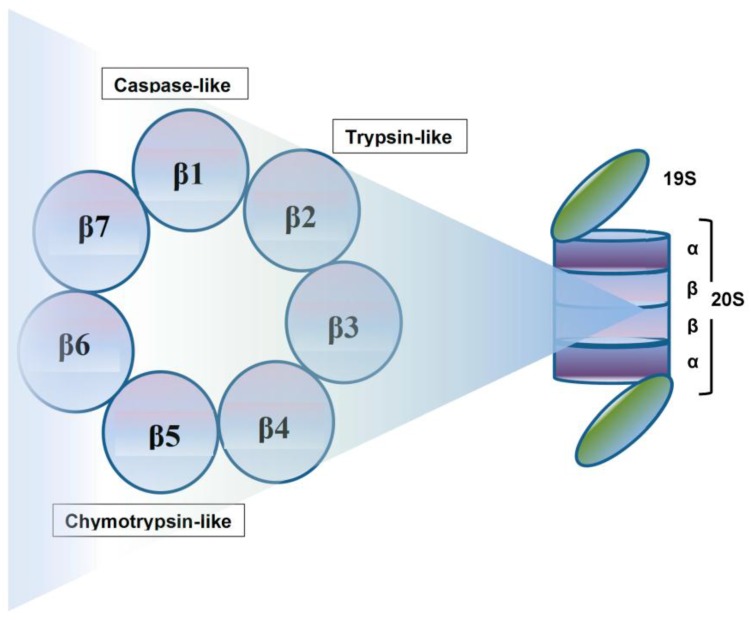
Figure 1
Figure 1
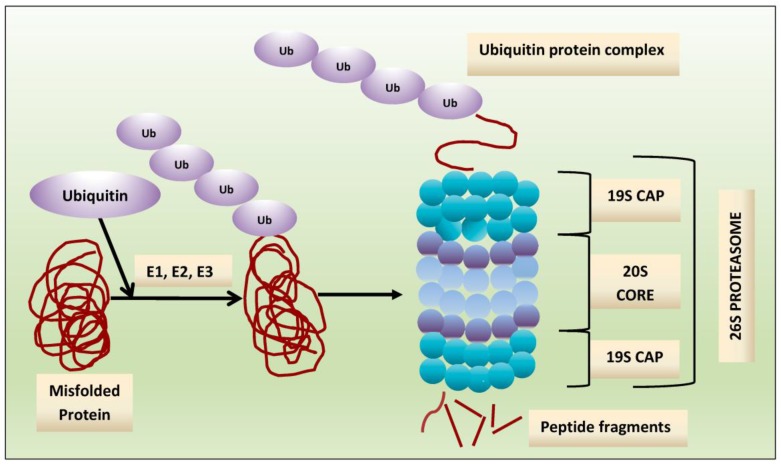
The structure of the 26S proteasome comprises a 20S core that contains active enzymatic sites with chymotrypsin-like (β5), trypsin-like (β2) and caspase-like (β1) activities, and a 19S cap at either end [11].
Figure 2
Figure 2
Ubiquitin-Proteasome System. A chain of ubiquitin moieties is attached by the action of a series of ubiquitin ligases (E1, E2, E3) to lysine residues on the target protein to be degraded. The ubiquitin-protein complex is transported to the proteasome, where the ubiquitin chain is removed, allowing the target protein to be unfolded and translocated to the interior of the proteasome, where it is degraded by 3 threonine proteases to yield peptide fragments. Adapted from Molineaux [67].
Figure 3
Figure 3
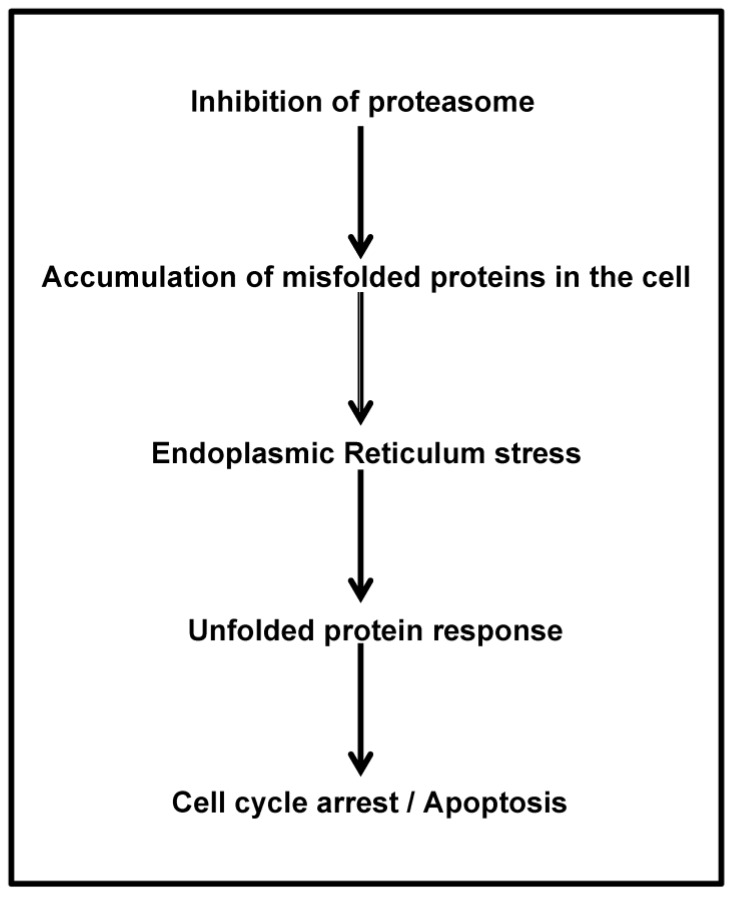
Consequences of proteasome inhibition. Adapted from Franken [68].
Figure 4
Figure 4
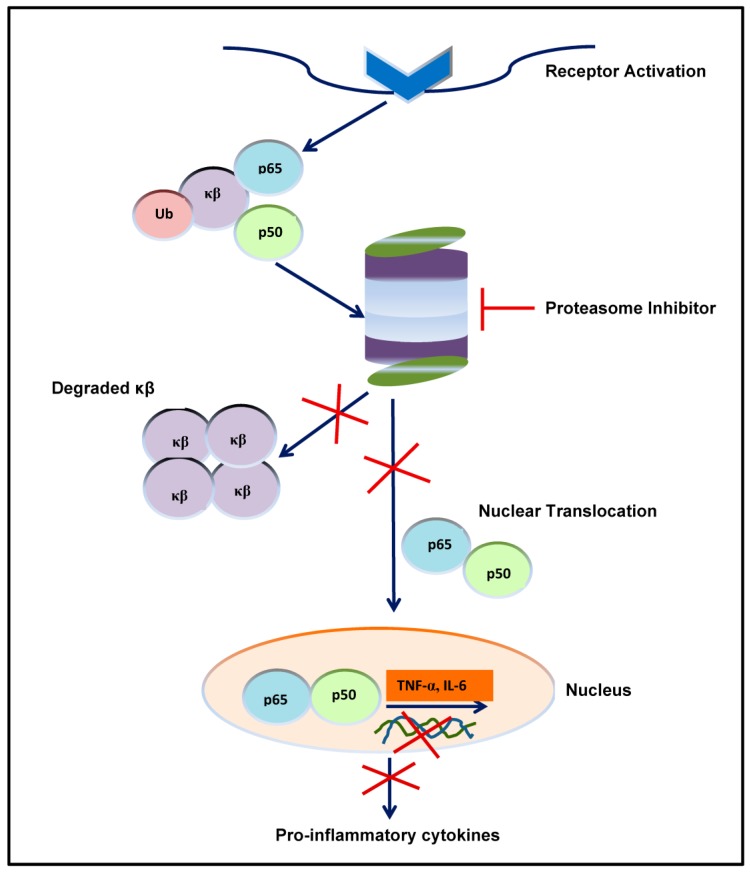
Blockade of nuclear factor (NF)-κB activation by the proteasome inhibition. Inhibition of proteasome prevents the degradation of the natural inhibitor of NF-κB (i.e., IκB) along with nuclear translocation of p50/p65 and transcription of pro-inflammatory cytokines. Adapted from Verbrugge, [69]. TNF-α: tumor necrosis factor-α.
Figure 5
Figure 5
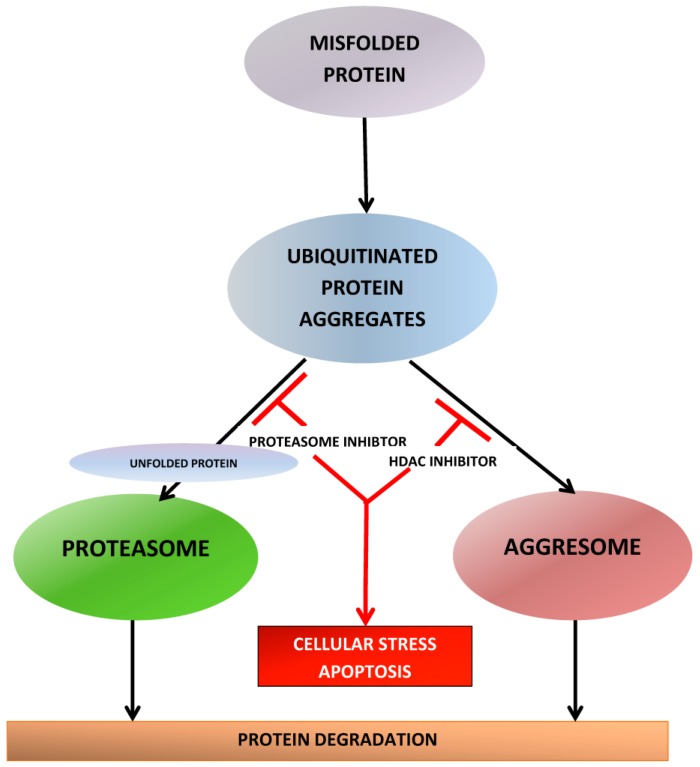
Inhibitions of the proteasome and aggresome pathways. Misfolded proteins are ubiquitinated for degradation by the proteasome and aggresome pathways. The proteasome inhibitors lead to the accumulation of ubiquitin-protein aggregates. These aggregates are transported to the lysosome, where they are degraded by the aggresome pathway. The interaction of the unfolded and/or misfolded protein complexes is facilitated by histone deacetylase 6 (HDAC6) and HDACi blocks this process. The combination of proteasome inhibitors (PI) and histone deacetylase inhibitor (HDACi) leads to increased cellular stress and apoptosis. Adapted from Hideshima et al. [153].

References

    1. Kumar S.K., Rajkumar S.V., Dispenzieri A., Lacy M.Q., Hayman S.R., Buadi F.K., Zeldenrust S.R., Dingli D., Russell S.J., Lust J.A., et al. Improve survival in multiple myeloma and the impact of novel therapies. Blood. 2008;111:2516–2520. doi: 10.1182/blood-2007-10-116129. - DOI - PMC - PubMed
    1. Mateos M.V., Ocio E.M., San Miguel J.F. Novel generation of agents with proven clinical activity in multiple myeloma. Semin. Oncol. 2013;40:618–633. doi: 10.1053/j.seminoncol.2013.07.005. - DOI - PubMed
    1. Mitsiades C.S., Hayden P.J., Anderson K.C., Richardson P.G. From the bench to the bedside: emerging new treatments in multiple myeloma. Best Pract. Res. Clin. Haematol. 2007;20:797–816. doi: 10.1016/j.beha.2007.09.008. - DOI - PMC - PubMed
    1. Orlowski R.Z., Kuhn D.J. Proteasome inhibitors in cancer therapy: lessons from the first decade. Clin. Cancer Res. 2008;14:1649–1657. doi: 10.1158/1078-0432.CCR-07-2218. - DOI - PubMed
    1. Nencioni A., Grunebach F., Patrone F., Ballestrero A., Brossart P. Proteasome inhibitors: antitumor effects and beyond. Leukemia. 2007;21:30–36. doi: 10.1038/sj.leu.2404444. - DOI - PubMed