. 2017 Mar 28:8:154.
doi: 10.3389/fphar.2017.00154. eCollection 2017.

Biocompatible Colloidal Suspensions Based on Magnetic Iron Oxide Nanoparticles: Synthesis, Characterization and Toxicological Profile

Affiliations

Biocompatible Colloidal Suspensions Based on Magnetic Iron Oxide Nanoparticles: Synthesis, Characterization and Toxicological Profile

Dorina-Elena Coricovac et al. Front Pharmacol. .

Abstract

The use of magnetic iron oxide nanoparticles in biomedicine has evolved intensely in the recent years due to the multiple applications of these nanomaterials, mainly in domains like cancer. The aim of the present study was: (i) to develop biocompatible colloidal suspensions based on magnetic iron oxide nanoparticles as future theranostic tools for skin pathology and (ii) to test their effects in vitro on human keratinocytes (HaCat cells) and in vivo by employing an animal model of acute dermal toxicity. Biocompatible colloidal suspensions were obtained by coating the magnetic iron oxide nanoparticles resulted during the solution combustion synthesis with a double layer of oleic acid, as innovative procedure in increasing bioavailability. The colloidal suspensions were characterized in terms of dynamic light scattering (DLS) and transmission electron microscopy (TEM). The in vitro effects of these suspensions were tested by means of Alamar blue assay and the noxious effects at skin level were measured using non-invasive methods. The in vitro results indicated a lack of toxicity on normal human cells induced by the iron oxide nanoparticles colloidal suspensions after an exposure of 24 h to different concentrations (5, 10, and 25 μg·mL-1). The dermal acute toxicity test showed that the topical applications of the colloidal suspensions on female and male SKH-1 hairless mice were not associated with significant changes in the quality of barrier skin function.

Keywords: bioavailability; colloidal suspensions; magnetic iron oxide nanoparticles; skin barrier; solution combustion synthesis; toxicity.


Figures
None
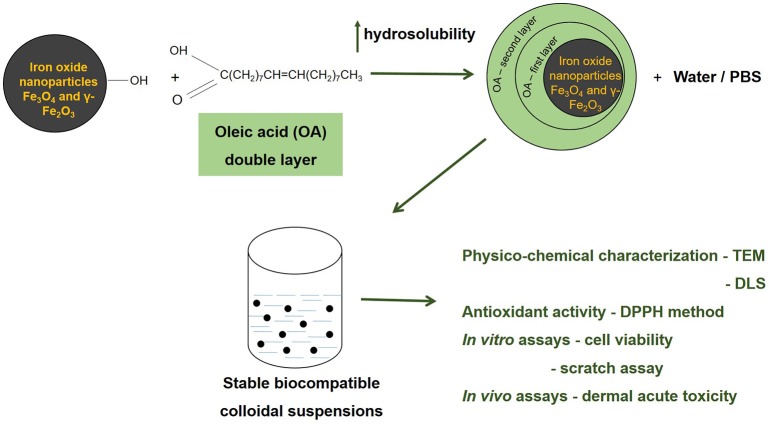
GRAPHICAL ABSTRACT
Figure 1
Figure 1
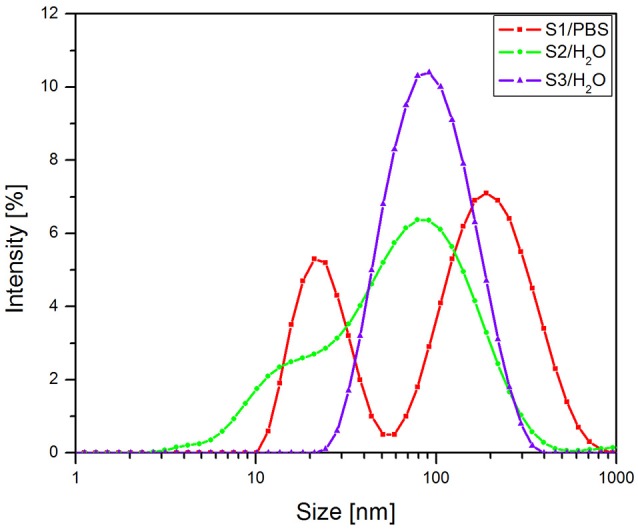
The intensity distribution of particles size (DLS) of colloidal suspensions.
Figure 2
Figure 2
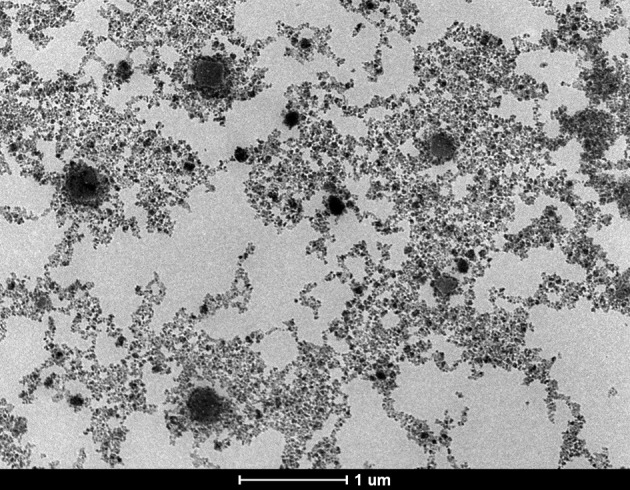
TEM micrograph of the sample S2, general aspect of aggregates in rather low magnification (16,500x).
Figure 3
Figure 3
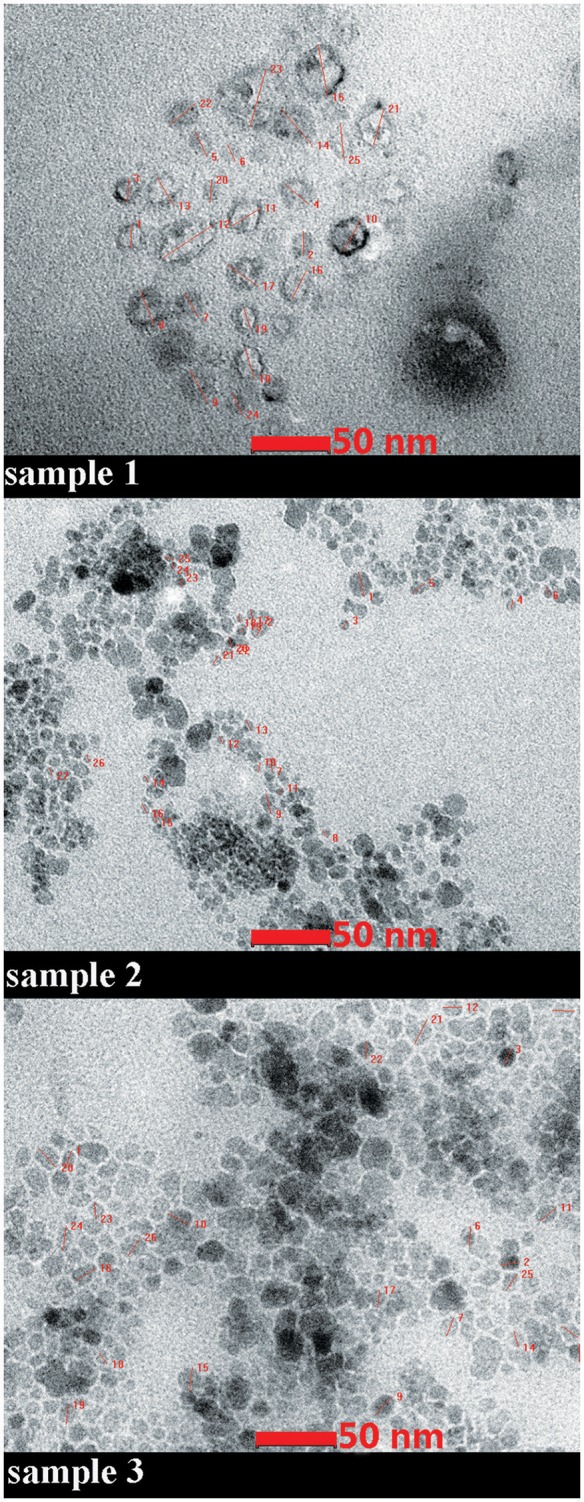
TEM micrograph of the samples. High magnification (220Kx). The details of measurements of nanoparticles size are given in red.
Figure 4
Figure 4
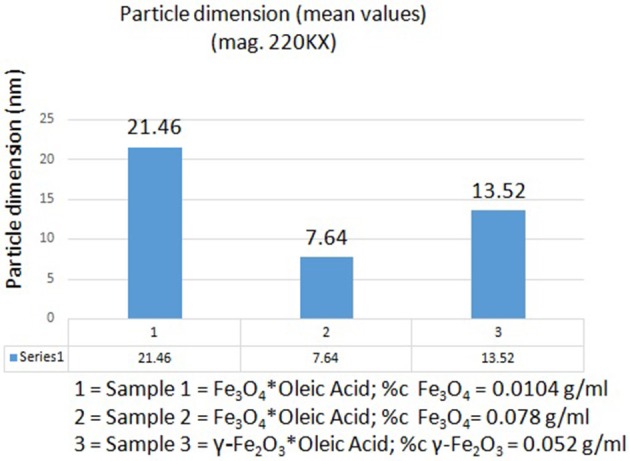
The inverse correlation between the iron oxide concentration in samples and nanoparticle dimensions.
Figure 5
Figure 5
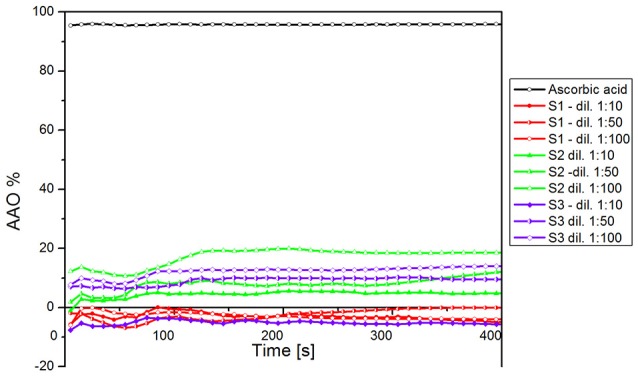
AOA of all three samples of iron oxide colloidal suspensions, including the dilutions.
Figure 6
Figure 6
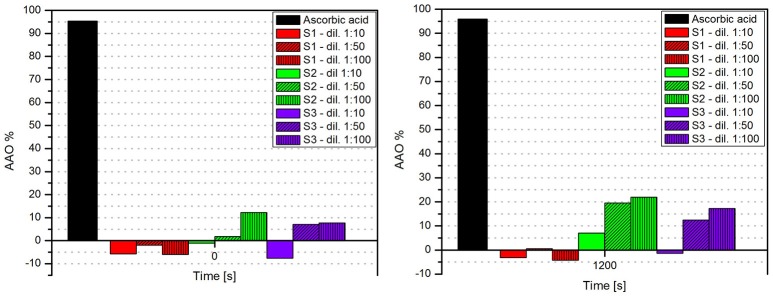
The AOA of the samples at initial (t = 0 s) and at the final (t = 1,200 s) moment.
Figure 7
Figure 7
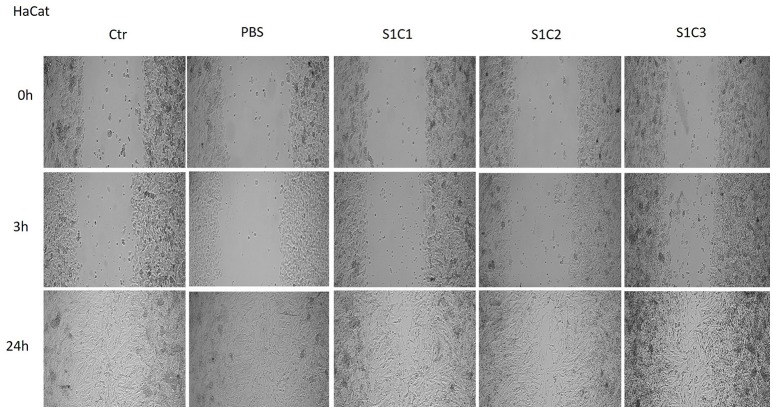
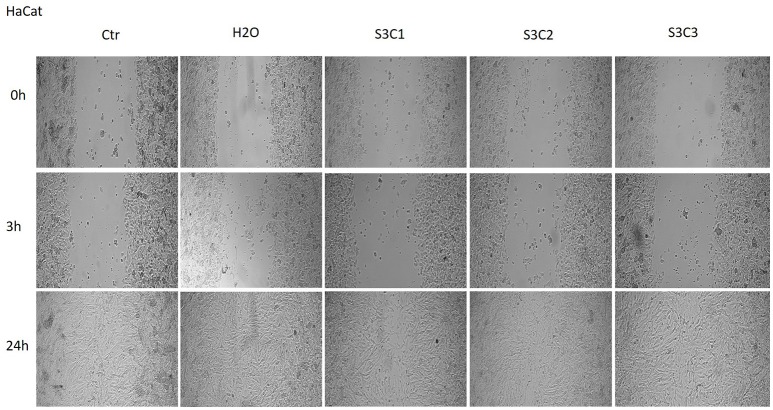
The effect of S1 colloidal suspension on HaCat cells migration and proliferation. The cells were stimulated with different concentrations of the colloidal suspension (C1 = 5, C2 = 10, and C3 = 25 μg·mL−1) and were taken photos at 0, 3, and 24 h post-stimulation.
Figure 8
Figure 8
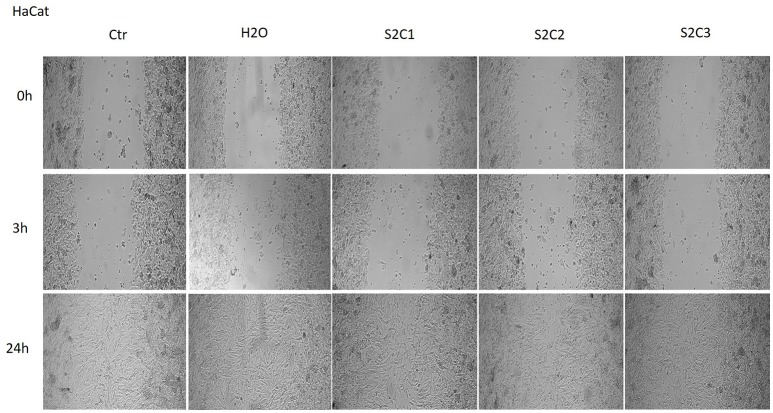
The effect of S2 colloidal suspension on HaCat cells migration and proliferation. The cells were stimulated with different concentrations of the colloidal suspension (C1 = 5, C2 = 10, and C3 = 25 μg·mL−1) and were taken photos at 0, 3, and 24 h post-stimulation.
Figure 9
Figure 9
The effect of S3 colloidal suspension on HaCat cells migration and proliferation. The cells were stimulated with different concentrations of the colloidal suspension (C1 = 5, C2 = 10, and C3 = 25 μg·mL−1) and were taken photos at 0, 3, and 24 h post-stimulation.
Figure 10
Figure 10
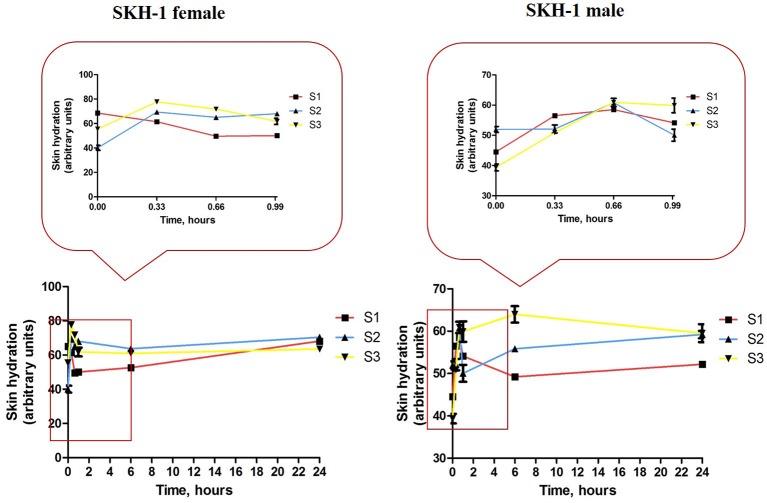
Skin hydration evolution during the first 24 h of experiment. Data are expressed as mean of the values measured at every time point (three successive measurements of the parameter/mouse).
Figure 11
Figure 11
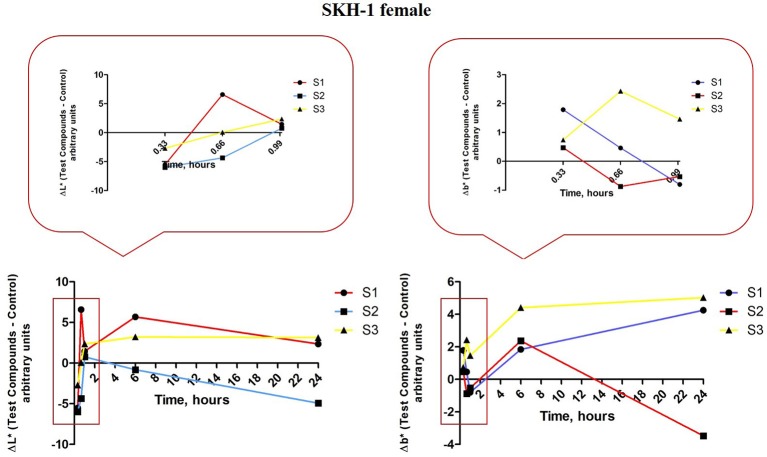
Melanin-related measurements for SKH-1 females. The values were expressed as ΔL* and Δb*, Δ—is the difference between the mean value of the test group obtained for L* and b*, respectively (for each time point) and the mean values for these coordinates in the control group (the values measured before the application of the suspensions).
Figure 12
Figure 12
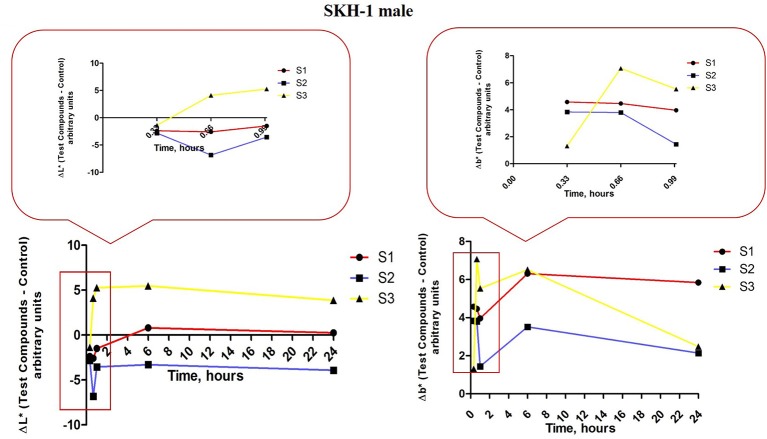
Melanin-related measurements for SKH-1 males. The values were expressed as ΔL* and Δb*, Δ—is the difference between the mean value of the test group obtained for L* and b*, respectively (for each time point) and the mean values for these coordinates in the control group (the values measured before the application of the suspensions).
Figure 13
Figure 13
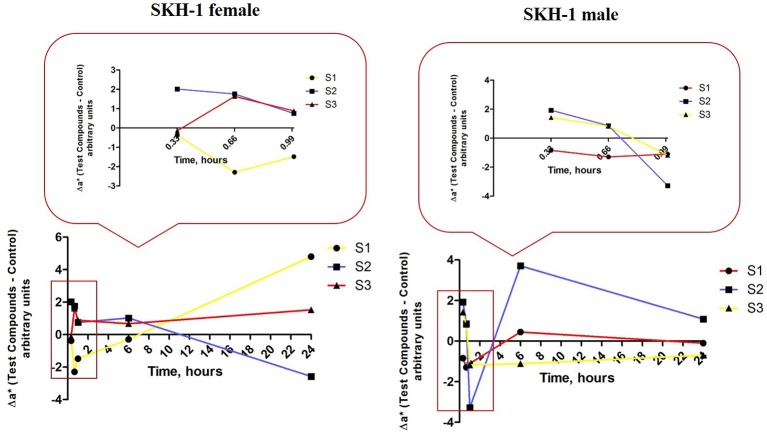
Erythema-related measurements. The values were expressed as Δa*, where Δ—is the difference between the mean value of the test group obtained for a* (for each time point) and the mean value for this coordinate in the control group (the values measured before the application of the suspensions).

References

    1. Alaluf S., Atkins D., Barrett K., Blount M., Carter N., Heath A. (2002). The impact of epidermal melanin on objective measurements of human skin colour. Pigment Cell Res. 15, 119–126. 10.1034/j.1600-0749.2002.1o072.x - DOI - PubMed
    1. Aruna S. T., Mukasyan A. S. (2008). Combustion synthesis and nanomaterials. Curr. Opin. Solid State Mater. Sci. 12, 44–50. 10.1016/j.cossms.2008.12.002 - DOI
    1. Balmuri S. R., Selvaraj U., Kumar V. V., Anthony S. P., Tsatsakis A. M., Golokhvast K. S., et al. (2016). Effect of surfactant in mitigating cadmium oxide nanoparticle toxicity: implications for mitigating cadmium toxicity in environment. Environ. Res. 152, 141–149. 10.1016/j.envres.2016.10.005 - DOI - PubMed
    1. Bhattacharya K., Gogoi B., Buragohain A. K., Deb P. (2014). Fe2O3/C nanocomposites having distinctive antioxidant activity and hemolysis prevention efficiency. Mater. Sci. Eng. C 42, 595–600. 10.1016/j.msec.2014.05.062 - DOI - PubMed
    1. Bica D., Vekas L., Avdeev M. V., Marinica O., Socoliuc V., Balasoiu M., et al. (2007). Sterically stabilized water based magnetic fluids: synthesis, structure, and properties. J. Magn. Magn. Mater. 311, 17–21. 10.1016/j.jmmm.2006.11.158 - DOI

LinkOut - more resources