Comparison of commonly used ICR stocks and the characterization of Korl:ICR
- PMID: 28400834
- PMCID: PMC5385282
- DOI: 10.5625/lar.2017.33.1.8
Comparison of commonly used ICR stocks and the characterization of Korl:ICR
Abstract
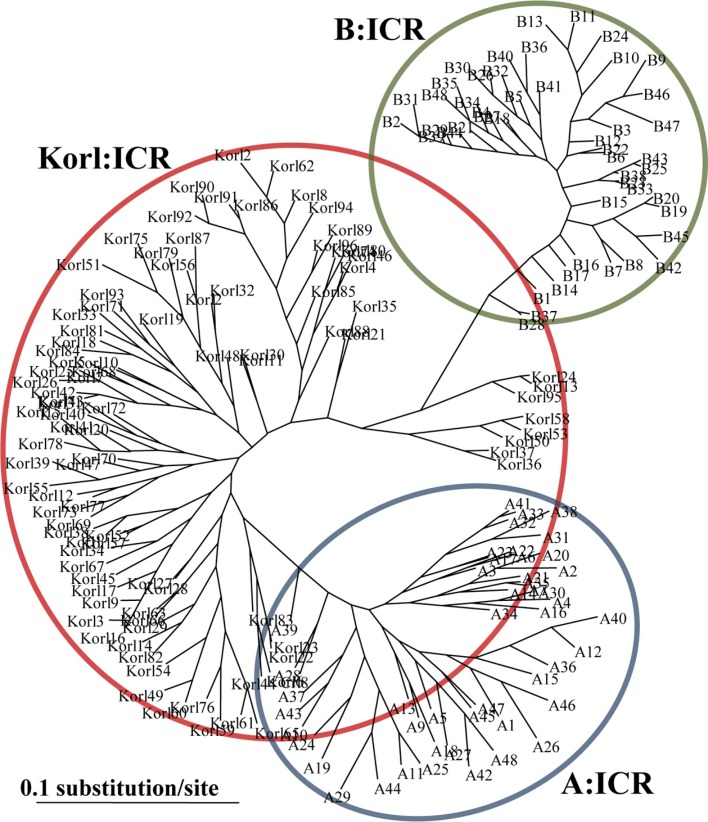
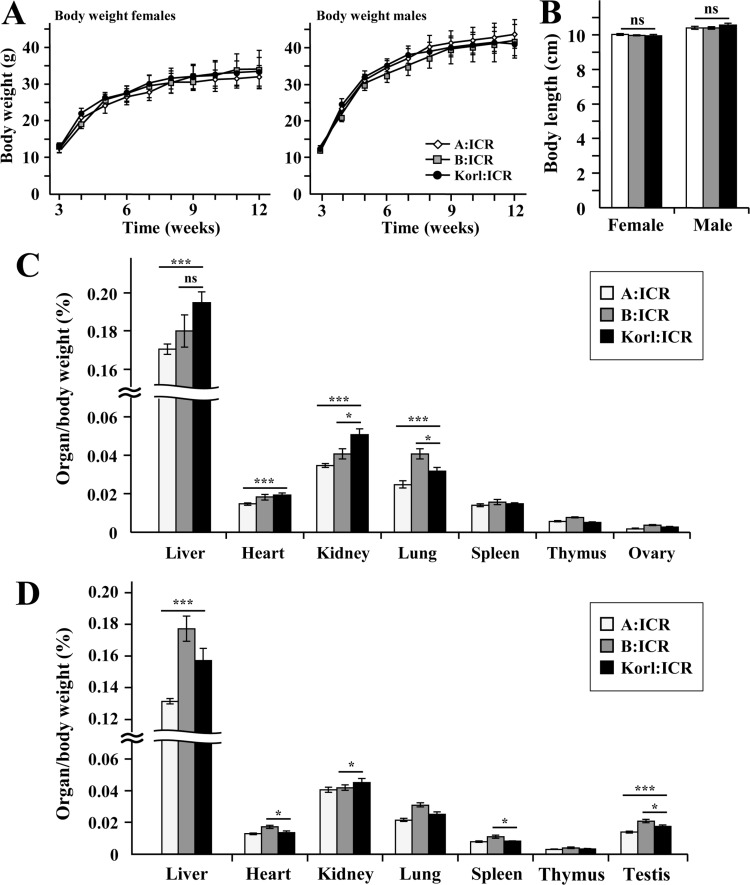
Mouse is a commonly used animal in life science studies and is classified as outbred if genetically diverse and inbred if genetically homogeneous. Outbred mouse stocks, are used in toxicology, oncology, infection and pharmacology research. The National Institute of Food and Drug Safety Evaluation (NIFDS; former the Korea National Institute of Health) have bred ICR mice for more than 50 years. We investigated to provide users with information and promote accountability to the Korl:ICR. To secure the indigenous data, biological characteristics of Korl:ICR were identified by comparing with other ICR stocks. This domestic ICR stock was denominated as 'Korl:ICR'. Phylogenetic analysis using SNPs indicated that the population stratification of the Korl:ICR was allocated different area with other ICR. In addition, we measured litter size, body weight, body length, various organ weight, hematology and clinical blood chemistry of the Korl:ICR compared to other ICR. Otherwise, there are no significant differences among the biological phenotypes of Korl:ICR and other ICR. These results suggest that as a genetically indigenous source colony, the Korl:ICR is seperated (or independent) stock with other ICR. Also, we confirmed that there is no difference among the Korl:ICR and other ICR on biological phenotypes. Therefore, the Korl:ICR source colony might be a new stock in distinction from other ICR, it is a good milestone in securing ownership of the national laboratory animal resource. The NIFDS expects that the Korl:ICR mice will be useful animal resource for our domestic researchers.
Keywords: Breeder; Korl:ICR stock; Outbred; Rodent.
Conflict of interest statement
Conflict of interests: The authors declare that there is no financial conflict of interests to publish these results.
Figures
References
-
- Cui S, Chesson C, Hope R. Genetic variation within and between strains of outbred Swiss mice. Lab Anim. 1993;27(2):116–123. - PubMed
-
- Rice MC, O'Brien SJ. Genetic variance of laboratory outbred Swiss mice. Nature. 1980;283(5743):157–161. - PubMed
-
- Chia R, Achilli F, Festing MF, Fisher EM. The origins and uses of mouse outbred stocks. Nat Genet. 2005;37(11):1181–1186. - PubMed
-
- Yamada J, Nikaido H, Matsumoto S. Genetic variability within and between outbred Wistar strains of rats. Jikken Dobutsu. 1979;28(2):259–265. - PubMed
-
- Phelan JP. Genetic variability and rodent models of human aging. Exp Gerontol. 1992;27(2):147–159. - PubMed
LinkOut - more resources
Full Text Sources
Other Literature Sources