


Acrolein acts as a neurotoxin in the nigrostriatal dopaminergic system of rat: involvement of α-synuclein aggregation and programmed cell death
- PMID: 28401906
- PMCID: PMC5388849
- DOI: 10.1038/srep45741
Acrolein acts as a neurotoxin in the nigrostriatal dopaminergic system of rat: involvement of α-synuclein aggregation and programmed cell death
Abstract
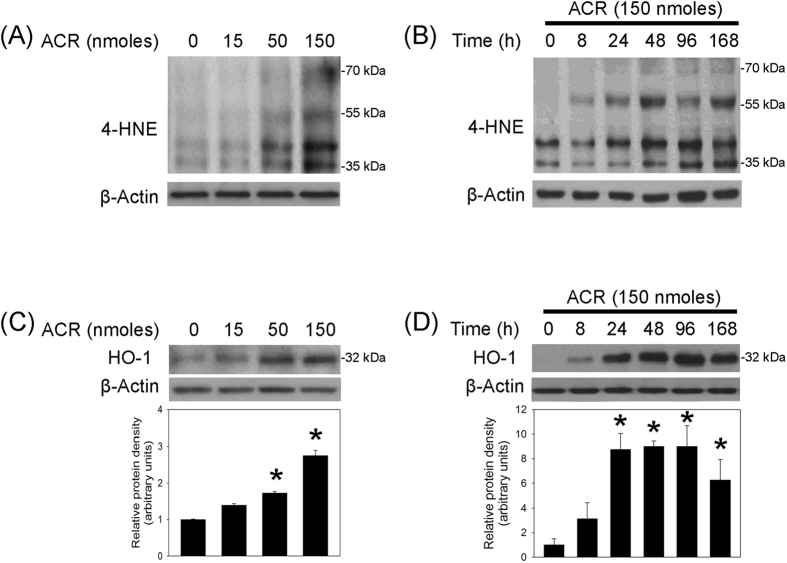
Clinical studies report significant increases in acrolein (an α,β-unsaturated aldehyde) in the substantia nigra (SN) of patients with Parkinson's disease (PD). In the present study, acrolein-induced neurotoxicity in the nigrostriatal dopaminergic system was investigated by local infusion of acrolein (15, 50, 150 nmoles/0.5 μl) in the SN of Sprague-Dawley rats. Acrolein-induced neurodegeneration of nigrostriatal dopaminergic system was delineated by reductions in tyrosine hydroxylase (TH) levels, dopamine transporter levels and TH-positive neurons in the infused SN as well as in striatal dopamine content. At the same time, apomorphine-induced turning behavior was evident in rats subjected to a unilateral infusion of acrolein in SN. Acrolein was pro-oxidative by increasing 4-hydroxy-2-nonenal and heme oxygenase-1 levels. Furthermore, acrolein conjugated with proteins at lysine residue and induced α-synuclein aggregation in the infused SN. Acrolein was pro-inflammatory by activating astrocytes and microglia. In addition, acrolein activated caspase 1 in the infused SN, suggesting acrolein-induced inflammasome formation. The neurotoxic mechanisms underlying acrolein-induced neurotoxicity involved programmed cell death, including apoptosis and necroptosis. Compared with well-known Parkinsonian neurotoxins, including 1-methyl-4-phenyl-1,2,3,6-tetrahydropyridine and rotenone which do not exist in the SN of PD patients, our in vivo study shows that acrolein acts as a Parkinsonian neurotoxin in the nigrostriatal dopaminergic system of rat brain.
Conflict of interest statement
The authors declare no competing financial interests.
Figures



References
-
- Feng Z., Hu W., Hu Y. & Tang M. S. Acrolein is a major cigarette-related lung cancer agent: Preferential binding at p53 mutational hotspots and inhibition of DNA repair. Proceedings of the National Academy of Sciences of the United States of America 103, 15404–15409, doi: 10.1073/pnas.0607031103 (2006). - DOI - PMC - PubMed
-
- Magnusson R., Nilsson C. & Andersson B. Emissions of aldehydes and ketones from a two-stroke engine using ethanol and ethanol-blended gasoline as fuel. Environmental science & technology 36, 1656–1664 (2002). - PubMed
-
- Ho S. S., Yu J. Z., Chu K. W. & Yeung L. L. Carbonyl emissions from commercial cooking sources in Hong Kong. Journal of the Air & Waste Management Association (1995) 56, 1091–1098 (2006). - PubMed
-
- Esterbauer H., Schaur R. J. & Zollner H. Chemistry and biochemistry of 4-hydroxynonenal, malonaldehyde and related aldehydes. Free radical biology & medicine 11, 81–128 (1991). - PubMed
-
- Uchida K. et al. Acrolein is a product of lipid peroxidation reaction. Formation of free acrolein and its conjugate with lysine residues in oxidized low density lipoproteins. The Journal of biological chemistry 273, 16058–16066 (1998). - PubMed
Publication types
MeSH terms
Substances
LinkOut - more resources
Full Text Sources
Other Literature Sources
