


Spontaneous diseases in captive ratites (Struthioniformes) in northwestern Germany: A retrospective study
- PMID: 28403205
- PMCID: PMC5389639
- DOI: 10.1371/journal.pone.0173873
Spontaneous diseases in captive ratites (Struthioniformes) in northwestern Germany: A retrospective study
Abstract
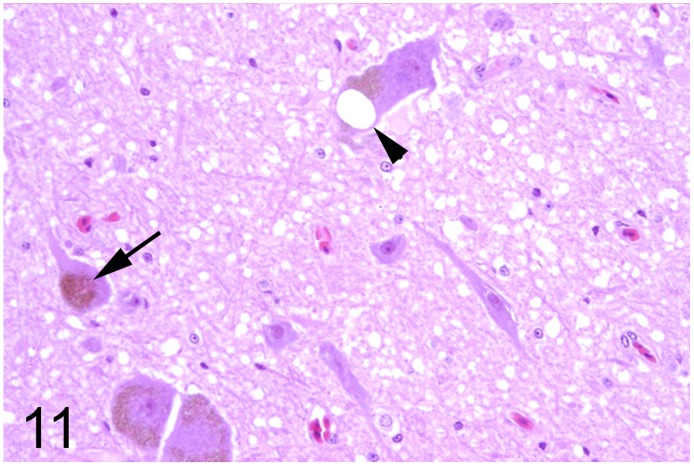
A retrospective study was carried out to define the spectrum of spontaneous diseases in ostriches and few other captive ratites, order Struthioniformes, in northwestern Germany. The investigation included 71 ratites necropsied between 1968 and 2014. They consisted of 54 ostriches, 5 emus, and 12 rheas with 37 adults, 23 juveniles and 11 neonates and embryonated eggs. Necropsy reports were reviewed, histologic preparations were re-examined and additional histochemical and immunohistochemical stains were carried out in selected cases. In many animals more than one morphologic diagnosis attributable to different disease processes was found. In adult animals (n = 37), the most commonly altered organ systems were the musculoskeletal system (49%), the digestive system (46%), and the cardiovascular system (46%) affected by traumatic lesions, inflammatory and degenerative changes, respectively. A spongy degeneration was found in the brain (35%); however, immunohistochemistry and western blotting failed to detect pathological prion protein. In juvenile animals (n = 23), the musculoskeletal (44%) and the digestive system (43%) were mainly affected by traumatic and inflammatory lesions, respectively. In embryonated eggs and neonates (n = 11) the major cause of death was circulatory failure associated with generalized subcutaneous edema as described for improper incubation conditions (64%). Summarized, most of the findings observed in adult and juvenile ratites in northwestern Germany are related to trauma, inflammatory and degenerative disorders, whereas death in embryonated eggs and neonates was most likely related to breeding conditions. A spongy encephalopathy awaits further studies to elucidate cause and pathogenesis.
Conflict of interest statement
Figures








References
-
- IUCN. The IUCN Red List of Threatened Species: International Union for Conservation of Nature and Natural Resources 2016 [cited 09/25/2016]. http://www.iucnredlist.org.
-
- Reiner G. Straußenhaltung in Deutschland—eine Übersicht (Teil I) [In German]: Lohmann Information; 2000. www.lohmann-information.com/archive_year_2000.html.
-
- Wöhr AC, Schulz A, Erhard MH. Tierschutzaspekte bei der Haltung von Zuchtstraußen in Deutschland [in German]. DTW Deutsche tierarztliche Wochenschrift. 2005;112(3):87–91. - PubMed
-
- Korbel R, Schubert M, Erhard M, Wöhr C, Bergmann S, Rückschloss S, et al. Betrachtungen und Empfehlungen zur artgemäßen und tierschutzgerechten Haltung von Straußenvögeln in Deutschland [in German]. Tierärztliche Praxis (G). 2015;43(4):232–44. - PubMed
-
- Anonymous. Vom Geschäft mit der afrikanischen "Primaballerina": Welt; 2013. https://www.welt.de/newsticker/news3/article113478763/Vom-Geschaeft-mit-....
MeSH terms
LinkOut - more resources
Full Text Sources
Other Literature Sources
