


Correlates of Electronic Cigarettes Use Before and During Pregnancy
- PMID: 28403454
- PMCID: PMC5896457
- DOI: 10.1093/ntr/ntw225
Correlates of Electronic Cigarettes Use Before and During Pregnancy
Abstract
Introduction: Electronic cigarette use is rapidly gaining in popularity. However, little is known about correlates and reasons for electronic cigarette use by women of reproductive age, a group for which the safety and efficacy of electronic cigarette use is of particular interest.
Methods: As part of a clinical trial for smoking cessation, we surveyed pregnant smokers about their lifetime use of electronic cigarettes, previous use of any adjunctive treatments for smoking cessation, and use of electronic cigarettes during pregnancy. We examined associations between electronic cigarette use and participant characteristics.
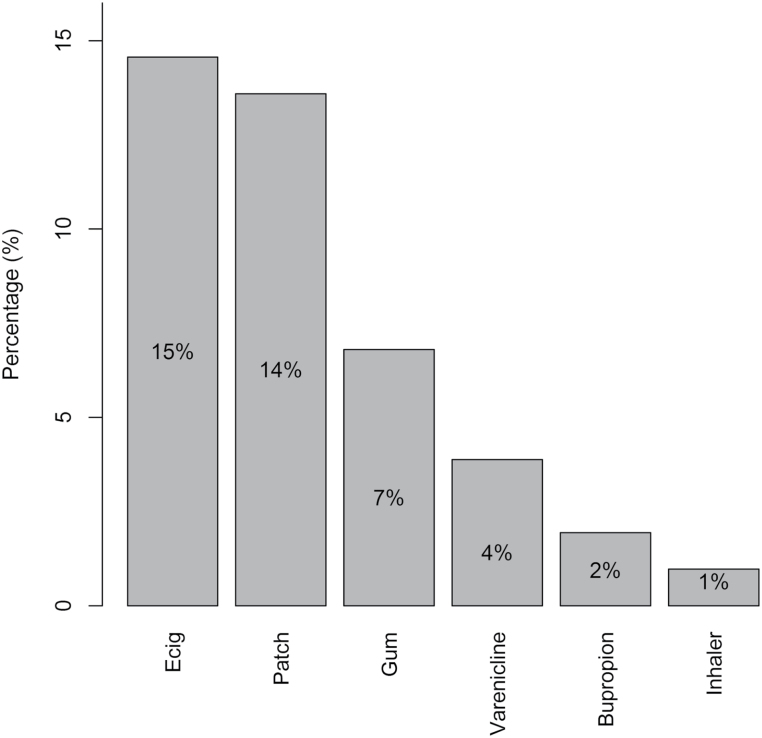
Results: Fifty-three percent (55/103) of participants had previously tried electronic cigarettes. Ever users smoked more cigarettes per day before pregnancy (p = .049), had a greater number of previous quit attempts (p = .033), and were more likely to identify as being Hispanic or non-Hispanic white than never users (p = .027). Fifteen percent of participants (15/103) reported previous use of electronic cigarettes for smoking cessation, which was more common than the use of any specific FDA-approved smoking cessation medication. Fourteen percent of participants (14/103) reported electronic cigarette use during pregnancy, most commonly to quit smoking. A history of substance abuse (p = .043) and more previous quit attempts (p = .018) were associated with electronic cigarette use during pregnancy.
Conclusions: Use of electronic cigarettes to quit smoking may be common in women of reproductive age, including those who are pregnant. More research is needed to determine the risks and benefits of electronic cigarette use in this population of smokers.
Implications: This study shows that electronic cigarettes are used by women of reproductive age, including pregnant smokers. The implications of this finding are that there is an urgent need to examine the risks and benefits of electronic cigarette use, especially by pregnant women. The study also shows that electronic cigarettes are commonly used as a smoking cessation aid in women of reproductive age. The greater likelihood of electronic cigarette use compared to proven adjunctive smoking treatments suggests that electronic cigarettes should be examined as a potential aid to cessation in this population.
© The Author 2017. Published by Oxford University Press on behalf of the Society for Research on Nicotine and Tobacco. All rights reserved. For permissions, please e-mail: journals.permissions@oup.com.
Figures
References
-
- Regan AK, Promoff G, Dube SR, Arrazola R. Electronic nicotine delivery systems: adult use and awareness of the ‘e-cigarette’ in the USA. Tob Control. 2013;22(1):19–23. - PubMed
MeSH terms
Grants and funding
LinkOut - more resources
Full Text Sources
Other Literature Sources
Medical
Research Materials
