


Beliefs and practices during pregnancy, post-partum and in the first days of an infant's life in rural Cambodia
- PMID: 28403813
- PMCID: PMC5389162
- DOI: 10.1186/s12884-017-1305-9
Beliefs and practices during pregnancy, post-partum and in the first days of an infant's life in rural Cambodia
Abstract
Background: The aim of this study was to record the beliefs, practices during pregnancy, post-partum and in the first few days of an infant's life, held by a cross section of the community in rural Cambodia to determine beneficial community interventions to improve early neonatal health.
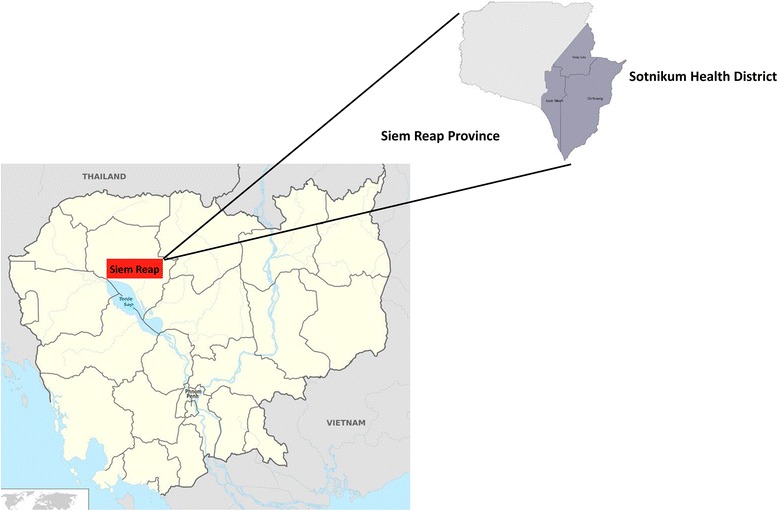
Methods: Qualitative study design with data generated from semi structured interviews (SSI) and focus group discussions (FGD). Data were analysed by thematic content analysis, with an a priori coding structure developed using available relevant literature. Further reading of the transcripts permitted additional coding to be performed in vivo. This study was conducted in two locations, firstly the Angkor Hospital for Children and secondarily in five villages in Sotnikum, Siem Reap Province, Cambodia.
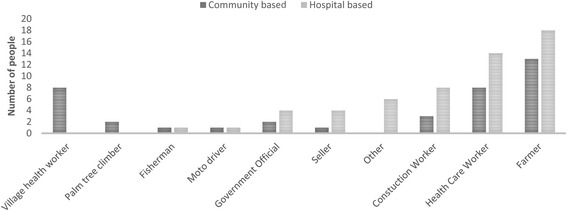
Results: A total of 20 participants underwent a SSIs (15 in hospital and five in the community) and six (three in hospital and three in the community; a total of 58 participants) FGDs were conducted. Harmful practices that occurred in the past (for example: discarding colostrum and putting mud on the umbilical stump) were not described as being practiced. Village elders did not enforce traditional views. Parents could describe signs of illness and felt responsible to seek care for their child even if other family members disagreed, however participants were unaware of the signs or danger of neonatal jaundice. Cost of transportation was the major barrier to healthcare that was identified.
Conclusions: In the population examined, traditional practices in late pregnancy and the post-partum period were no longer commonly performed. However, jaundice, a potentially serious neonatal condition, was not recognised. Community neonatal interventions should be tailored to the populations existing practice and knowledge.
Keywords: Beliefs; Cambodia; Healthcare; Neonatal; Postpartum; Pregnancy; Qualitative.
Figures
References
-
- WHO. Accountability for maternal, newborn and child survival: the 2013 Update. WHO press; 2013.
-
- Progress Towards Millennium Development Goal 4: key facts and figures. September, 2013 [http://www.childinfo.org/mortality.html]
-
- Levels and trends in child mortality. Estimates developed by the UN Inter-agency Group for Child Mortality Estimation. Report 2013
Publication types
MeSH terms
Grants and funding
LinkOut - more resources
Full Text Sources
Other Literature Sources
Medical
Miscellaneous
