


Save the pig tail
- PMID: 28405411
- PMCID: PMC5375127
- DOI: 10.1186/2055-5660-1-2
Save the pig tail
Abstract
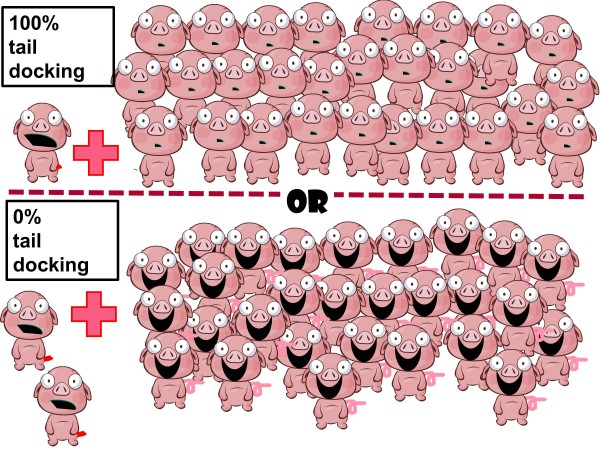
Tail biting is a common problem in modern pig production and has a negative impact on both animal welfare and economic result of the farm. Tail biting risk is increased by management and housing practices that fail to meet the basic needs of pigs. Tail docking is commonly used to reduce the risk of tail biting, but tail docking in itself is a welfare problem, as it causes pain to the pigs, and facilitates suboptimal production methods from a welfare point-of-view. When evaluating the cost and benefit of tail docking, it is important to consider negative impacts of both tail docking and tail biting. It is also essential to realize that even though 100% of the pigs are normally docked, only a minority will end up bitten, even in the worst case. In addition, data suggests that tail biting can be managed to an acceptable level even without tail docking, by correcting the production system to better meet the basic needs of the pigs.
Keywords: Pig; Risk factors; Tail biting; Tail docking.
Figures
References
-
- Bracke MBM, De Lauwere CC, Wind SMM, Zonderland JJ. Attitudes of Dutch Pig Farmers Towards Tail Biting and Tail Docking. J Agr Anv Ethics. 2013;4:847–868. doi: 10.1007/s10806-012-9410-2. - DOI
-
- Valros A, Ahlström S, Rintala H, Häkkinen T, Saloniemi H. The prevalence of tail damage in slaughter pigs in Finland and associations to carcass condemnations. Acta Agric Scand Section A Anim Sci. 2004;54:213–219.
-
- Sutherland MA, Tucker CB. The long and short of it: A review of tail docking in farm animals. Appl Anim Behav Sci. 2011;135:179–191. doi: 10.1016/j.applanim.2011.10.015. - DOI
Publication types
LinkOut - more resources
Full Text Sources
Other Literature Sources
