


Antimicrobial use in Swedish farrow-to-finish pig herds is related to farmer characteristics
- PMID: 28405444
- PMCID: PMC5382483
- DOI: 10.1186/s40813-016-0035-0
Antimicrobial use in Swedish farrow-to-finish pig herds is related to farmer characteristics
Abstract
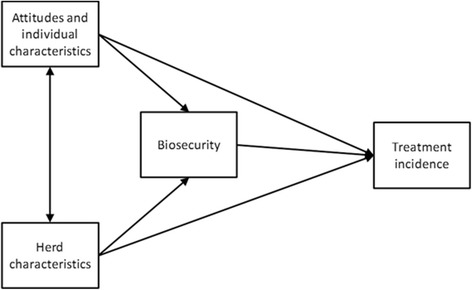
Background: Antimicrobial resistance is an increasing problem and reducing AM use is critical in limiting its severity. The underlying causes of antimicrobial use at pig farm level must be understood to select effective reduction measures. We previously showed that antimicrobial use on Swedish pig farms is comparatively low but varies between farms, although few farms are high users. In the present survey of a convenience sample of 60 farrow-to-finish herds in Sweden, we investigated farmers' attitudes to antimicrobials and the influence of information provided by veterinarians about antimicrobial resistance. Farm characteristics were also recorded. We had previously quantified antimicrobial use for different age categories of pigs during one year, as well as external and internal biosecurity. Risk factors based on hypothetical causal associations between these and calculated treatment incidence (TI) for the different age categories were assessed here in a linear regression model.
Results: There were no significant associations between biosecurity and TI for any pig age category. Increasing farmer age was associated with higher TI for suckling piglets and fatteners. For suckling piglets, the age group with the highest frequency of treatment, TI was also significantly associated with farmer and education of the staff, where female farmers, and university educated staff was associated with a higher TI. Larger farms were associated with a higher TI in fatteners.
Conclusions: In the investigated Swedish pig farms, factors that influenced antimicrobial usage were more related to characteristics of the individual farmer and his/her staff than to biosecurity level, other management factors or farmers' attitudes to antimicrobials.
Keywords: Antimicrobial; Biosecurity; Farmer attitudes; Pig.
Figures
References
-
- Carlsson U, Wallgren P, Renström LHM, Lindberg A, Eriksson H, Thorén P, Eliasson-Selling L, Lundeheim N, Nörregard E, Thörn C, Elvander M. Emergence of porcine reproductive and respiratory syndrome in Sweden: detection, response and eradication. Transbound Emerg Dis. 2009;56:121–131. doi: 10.1111/j.1865-1682.2008.01065.x. - DOI - PubMed
LinkOut - more resources
Full Text Sources
Other Literature Sources
