


Low serum magnesium levels are associated with increased risk of fractures: a long-term prospective cohort study
- PMID: 28405867
- PMCID: PMC5570773
- DOI: 10.1007/s10654-017-0242-2
Low serum magnesium levels are associated with increased risk of fractures: a long-term prospective cohort study
Abstract
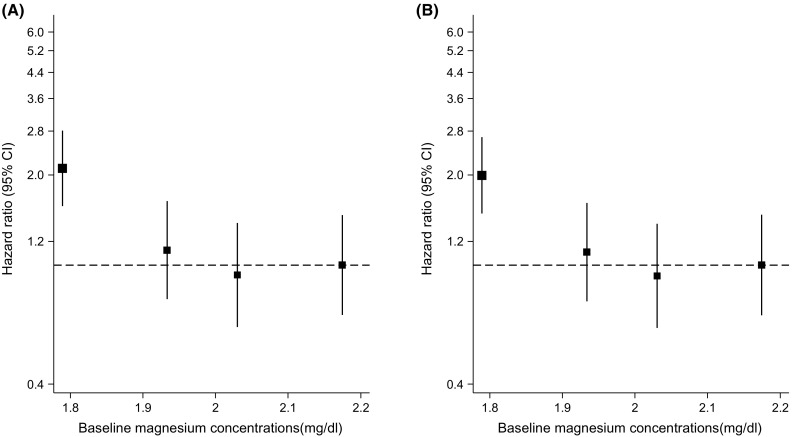
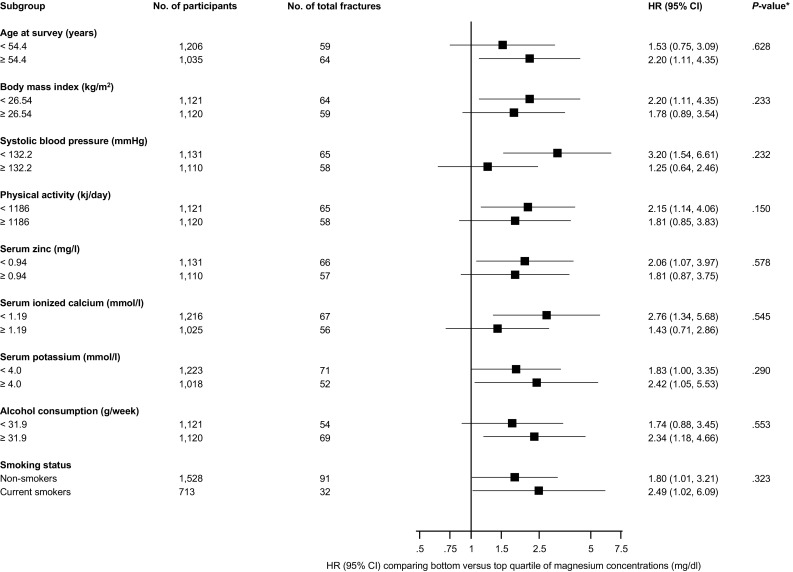
Magnesium, which is an essential trace element that plays a key role in several cellular processes, is a major component of bone; however, its relationship with risk of major bone fractures is uncertain. We aimed to investigate the association of baseline serum magnesium concentrations with risk of incident fractures. We analyzed data on 2245 men aged 42-61 years in the Kuopio Ischemic Heart Disease prospective cohort study, with the assessment of serum magnesium measurements and dietary intakes made at baseline. Hazard ratios [95% confidence intervals (CI)] for incident total (femoral, humeral, and forearm) and femoral fractures were assessed. During a median follow-up of 25.6 years, 123 total fractures were recorded. Serum magnesium was non-linearly associated with risk of total fractures. In age-adjusted Cox regression analysis, the hazard ratio (HR) (95% CIs) for total fractures in a comparison of the bottom quartile versus top quartile of magnesium concentrations was 2.10 (1.30-3.41), which persisted on adjustment for several established risk factors 1.99 (1.23-3.24). The association remained consistent on further adjustment for renal function, socioeconomic status, total energy intake, and several trace elements 1.80 (1.10-2.94). The corresponding adjusted HRs for femoral fractures were 2.56 (1.38-4.76), 2.43 (1.30-4.53) and 2.13 (1.13-3.99) respectively. There was no evidence of an association of dietary magnesium intake with risk of any fractures. In middle-aged Caucasian men, low serum magnesium is strongly and independently associated with an increased risk of fractures. Further research is needed to assess the potential relevance of serum magnesium in the prevention of fractures.
Keywords: Cohort study; Fracture; Magnesium; Risk factor.
Conflict of interest statement
The authors declare they have no conflicts of interest.
Figures
References
-
- Martini LA. Magnesium supplementation and bone turnover. Nutr Rev. 1999;57(7):227–229. - PubMed
Publication types
MeSH terms
Substances
LinkOut - more resources
Full Text Sources
Other Literature Sources
Medical
