Review
. 2017 Apr 12;21(4):421-432.
doi: 10.1016/j.chom.2017.03.011.

The Landscape Ecology and Microbiota of the Human Nose, Mouth, and Throat

Affiliations
Review

The Landscape Ecology and Microbiota of the Human Nose, Mouth, and Throat

Diana M Proctor et al. Cell Host Microbe. .

Abstract

Landscape ecology examines the relationships between the spatial arrangement of different landforms and the processes that give rise to spatial and temporal patterns in local community structure. The spatial ecology of the microbial communities that inhabit the human body-in particular, those of the nose, mouth, and throat-deserves greater attention. Important questions include what defines the size of a population (i.e., "patch") in a given body site, what defines the boundaries of distinct patches within a single body site, and where and over what spatial scales within a body site are gradients detected. This Review looks at the landscape ecology of the upper respiratory tract and mouth and seeks greater clarity about the physiological factors-whether immunological, chemical, or physical-that govern microbial community composition and function and the ecological traits that underlie health and disease.

Keywords: biogeography; dental plaque; gradient; landscape ecology; microbiome; microbiota; nares; spatial ecology; subgingival; supragingival.


Figures

Figure 1
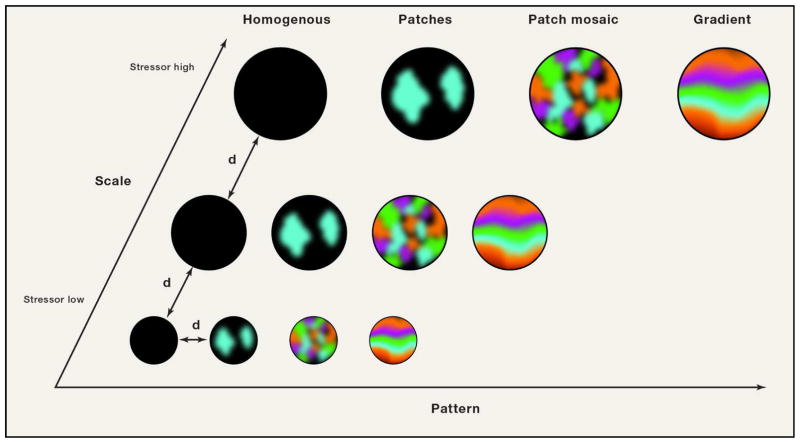
Figure 1. Relationship between spatial scales, spatial patterns, and dispersal distance
As the scale of observation increases from a small spatial area to a larger area, patterns can be detected across the landscape. A homogenous pattern reflects a set of unoccupied patches or, alternatively, a set of patches entirely occupied by a single species. Fragmented patchiness on the other hand reflects the occurrence of spatially segregated patches or patch types at various sites across the landscape, while a patch mosaic consists of a set of patch types in which patch types do not vary in a discernable pattern with respect to each other at increasing spatial scales of observation. A gradient is observed when a pattern can be detected when comparing patch types or mosaics at increasing spatial scales. The variable “d” indicates the dispersal distance, which can be defined as the distance between patch types (large circles) or the distance microbes traverse when dispersing across the landscape or across sites within a patch type. Adapted from Wiens, J.A. (1995). Habitat fragmentation: island v landscape perspectives on bird conservation. Ibis 137, S97–S104.
Figure 2
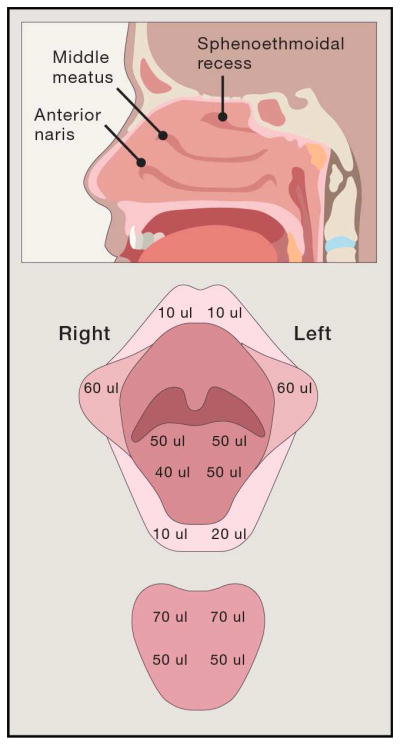
Figure 2. Examples of spatial heterogeneity in the oral and nasal cavity landforms likely to influence spatial patterning of microbial communities
A) Topography of the anterior nares. Sweat glands, sebaceous glands and nasal hair puncture the epithelial surface of the anterior nares leading to upwelling from the dermal layers at focal points throughout the tissue. The roots of individual hair follicles represent a unique habitat that is not found elsewhere in the nasal cavity. B) Spatial organization of the nasal mucosal surfaces. Inspired air is warmed as it moves across the inferior, middle and superior turbinates. The maxillary sinuses drain into the middle meatus, and the ethmoidal sinuses drains into the sphenoethmoidal recess, which presumably creates local patches reflective of the sinus source pool. C) Topography of the nasal mucosa. Cilia interact with the aqueous phase of nasal mucus, moving the mucus blanket across the mucosal surface, which consists of antimicrobials and mucins not present in the anterior nares. D) Tooth microenvironments. The junctional epithelium is the most permeable tissue of the gingival epithelium allowing immune cells and gingival crevicular fluid to leak out of the subgingival crevice into the oral cavity. It is non-keratinized stratified squamous epithelial tissue that surrounds each tooth.
Figure 3
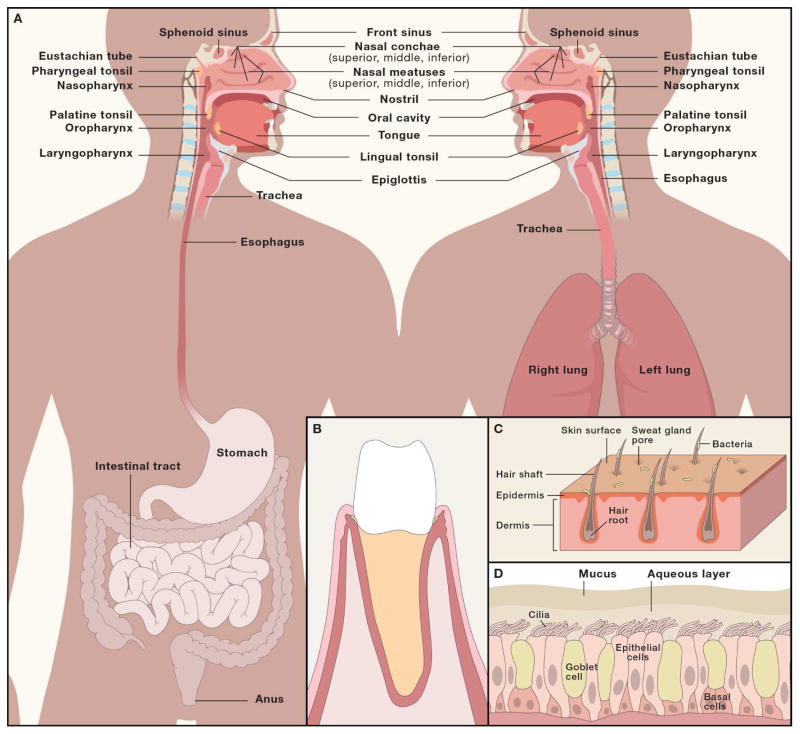
Figure 3. Understanding dispersal across gross anatomic sites
A) The nasal sinuses drain to the turbinates and similarly receive periodic influxes of mucus. B)The Eustachian tube may be a route for the dispersal of organisms between the nasal cavity, nasopharynx and the middle ear and vice versa. C) The nasal and oral cavities both drain to the pharynx and may serve as sources of colonists to the trachea and subsequently to the lungs. Alternatively, each may seed the stomach and ultimately the intestinal tract via the esophagus.

References

    1. Aas JA, Paster BJ, Stokes LN, Olsen I, Dewhirst FE. Defining the normal bacterial flora of the oral cavity. J Clin Microbiol. 2005;43:5721–5732. - PMC - PubMed
    1. Abraham CM, al-Hashimi I, Haghighat N. Evaluation of the levels of oral Candida in patients with Sjogren’s syndrome. Oral Surg Oral Med Oral Pathol Oral Radiol Endod. 1998;86:65–68. - PubMed
    1. Abreu NA, Nagalingam NA, Song Y, Roediger FC, Pletcher SD, Goldberg AN, Lynch SV. Sinus microbiome diversity depletion and Corynebacterium tuberculostearicum enrichment mediates rhinosinusitis. Sci Transl Med. 2012;4:151ra124. - PMC - PubMed
    1. Almstahl IA, Wikstrom M, Stenberg I, Jakobsson A, Fagerberg-Mohlin B. Oral microbiota associated with hyposalivation of different origins. Oral Microbiol Immunol. 2003;18:1–8. - PubMed
    1. Aufdemorte TB, Cameron IL. The relation of keratinization to bacterial colonization on the baboon tongue as demonstrated by scanning electron microscopy. J Dent Res. 1981;60:1008–1014. - PubMed

LinkOut - more resources