Spermidine coupled with exercise rescues skeletal muscle atrophy from D-gal-induced aging rats through enhanced autophagy and reduced apoptosis via AMPK-FOXO3a signal pathway
- PMID: 28407698
- PMCID: PMC5392263
- DOI: 10.18632/oncotarget.15728
Spermidine coupled with exercise rescues skeletal muscle atrophy from D-gal-induced aging rats through enhanced autophagy and reduced apoptosis via AMPK-FOXO3a signal pathway
Abstract
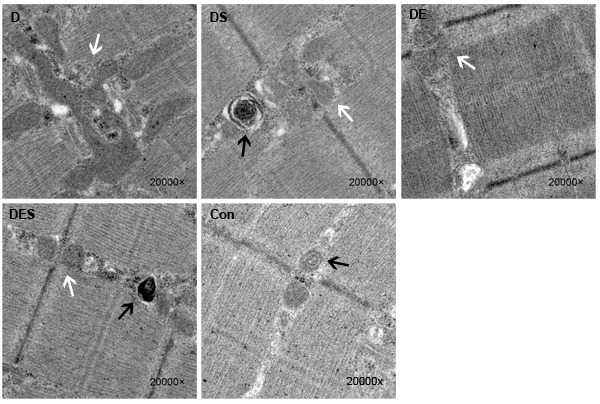
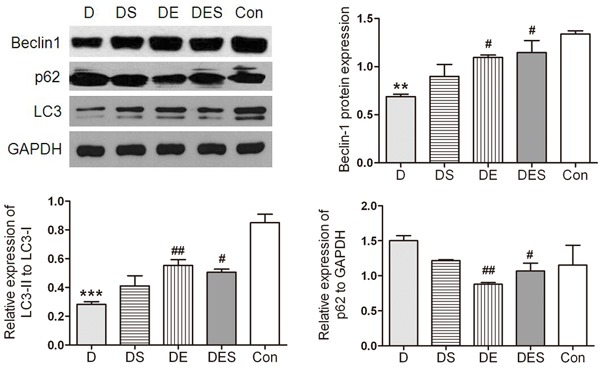
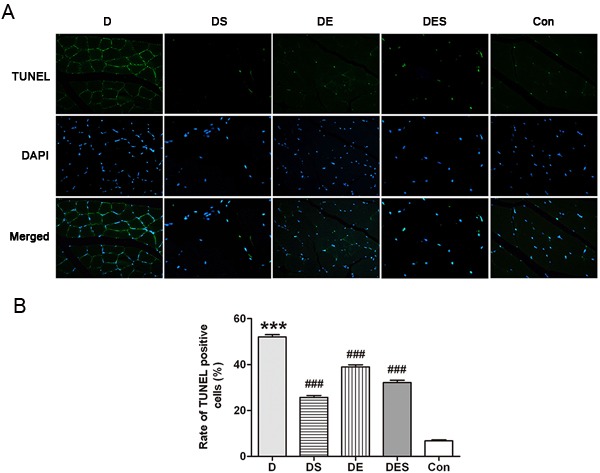
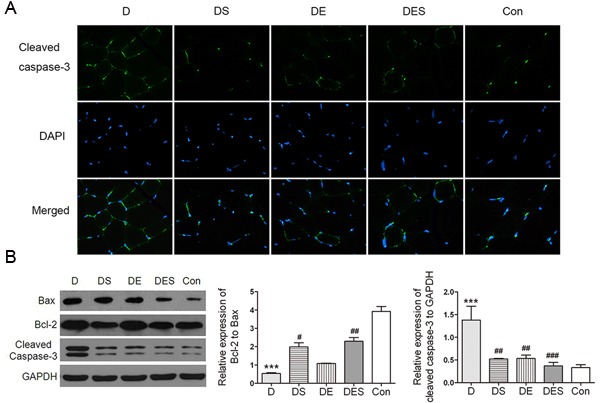
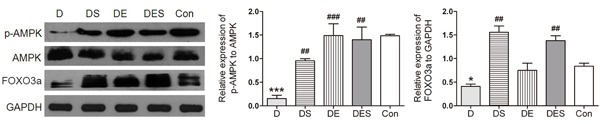
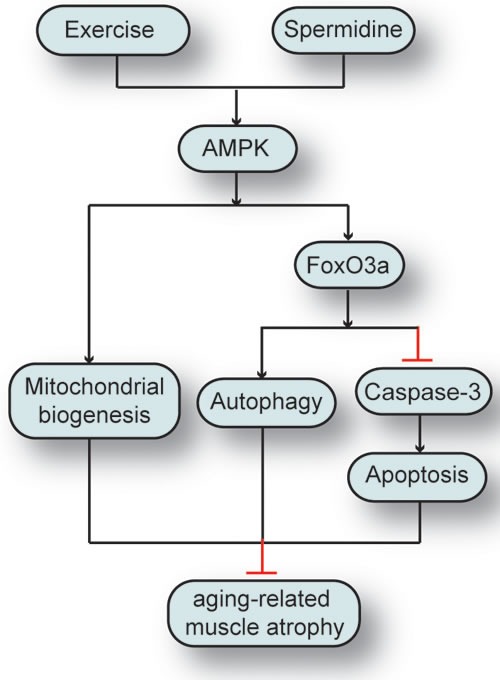
The quality control of skeletal muscle is a continuous requirement throughout the lifetime, although its functions and quality present as a declining trend during aging process. Dysfunctional or deficient autophagy and excessive apoptosis may contribute to the atrophy of senescent skeletal muscle. Spermidine, as a natural polyamine, can be involved in important cellular functions for lifespan extension and stress resistance in several model organisms through activating autophagy. Similarly, cellular autophagic responses to exercise have also been extensively investigated. In the present study, in order to confirm the mitigation or amelioration of skeletal muscle atrophy in aging rats through spermidine coupled with exercise intervention and explore corresponding mechanisms, the rat model with aging-related atrophy of skeletal muscle was established by intraperitoneal injection of D-galactose (D-gal) (200 mg/kg∙d), and model rats were subjected to the intervention with spermidine (5 mg/kg∙d)) or swimming (60 min/d, 5 d/wk) or combination for 42 days. Spermidine coupled with exercise could attenuate D-gal-induced aging-related atrophy of skeletal muscle through induced autophagy and reduced apoptosis with characteristics of more autophagosomes, activated mitophagy, enhanced mitochondrial quality, alleviated cell shrinkage, and less swollen mitochondria under transmission scanning microscopic observation. Meanwhile, spermidine coupled with exercise could induce autophagy through activating AMPK-FOXO3a signal pathway with characterization of increased Beclin1 and LC3-II/LC3-I ratio, up-regulated anti-apoptotic Bcl-2, down-regulated pro-apoptotic Bax and caspase-3, as well as activated AMPK and FOXO3a. Therefore, spermidine combined with exercise can execute the prevention or treatment of D-gal-induced aging-related skeletal muscle atrophy through enhanced autophagy and reduced apoptosis mediated by AMPK-FOXO3a signal pathway.
Keywords: AMPK-FOXO3a signal pathway; D-galactose; Gerotarget; autophagy; exercise; spermindine.
Conflict of interest statement
All authors have declared no any conflicts of interest.
Figures
References
-
- Ziaaldini MM, Koltai E, Csende Z, Goto S, Boldogh I, Taylor AW, Radak Z. Exercise training increases anabolic and attenuates catabolic and apoptotic processes in aged skeletal muscle of male rats. Exp Gerontol. 2015;67:9–14. - PubMed
-
- Fan J, Kou X, Jia S, Yang X, Yang Y, Chen N. Autophagy as a Potential Target for Sarcopenia. J Cell Physiol. 2016;231:1450–9. - PubMed
-
- Kumar A, Prakash A, Dogra S. Naringin alleviates cognitive impairment, mitochondrial dysfunction and oxidative stress induced by D-galactose in mice. Food Chem Toxicol. 2010;48:626–32. - PubMed
-
- Cui X, Zuo P, Zhang Q, Li X, Hu Y, Long J, Packer L, Liu J. Chronic systemic D-galactose exposure induces memory loss, neurodegeneration, and oxidative damage in mice: protective effects of R-alpha-lipoic acid. J Neurosci Res. 2006;83:1584–90. - PubMed
-
- Kong WJ, Wang Y, Wang Q, Hu YJ, Han YC, Liu J. The relation between D-galactose injection and mitochondrial DNA 4834 bp deletion mutation. Exp Gerontol. 2006;41:628–34. - PubMed
MeSH terms
Substances
LinkOut - more resources
Full Text Sources
Other Literature Sources
Medical
Research Materials