Review
. 2017 Apr 14;356(6334):eaaf7230.
doi: 10.1126/science.aaf7230.

Transition metal-catalyzed alkyl-alkyl bond formation: Another dimension in cross-coupling chemistry

Affiliations
Review

Transition metal-catalyzed alkyl-alkyl bond formation: Another dimension in cross-coupling chemistry

Junwon Choi et al. Science. .

Abstract

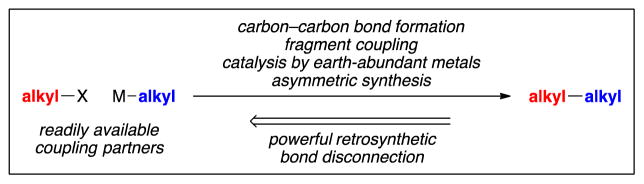
Because the backbone of most organic molecules is composed primarily of carbon-carbon bonds, the development of efficient methods for their construction is one of the central challenges of organic synthesis. Transition metal-catalyzed cross-coupling reactions between organic electrophiles and nucleophiles serve as particularly powerful tools for achieving carbon-carbon bond formation. Until recently, the vast majority of cross-coupling processes had used either aryl or alkenyl electrophiles as one of the coupling partners. In the past 15 years, versatile new methods have been developed that effect cross-couplings of an array of alkyl electrophiles, thereby greatly expanding the diversity of target molecules that are readily accessible. The ability to couple alkyl electrophiles opens the door to a stereochemical dimension-specifically, enantioconvergent couplings of racemic electrophiles-that substantially enhances the already remarkable utility of cross-coupling processes.


Figures

Fig. 1
Fig. 1
Transition-metal-catalyzed cross-coupling to form carbon–carbon bonds. A: General scheme. B: Application of a Suzuki cross-coupling to form a Csp2–Csp2 bond in an industrial synthesis of Boscalid.
Fig. 2
Fig. 2
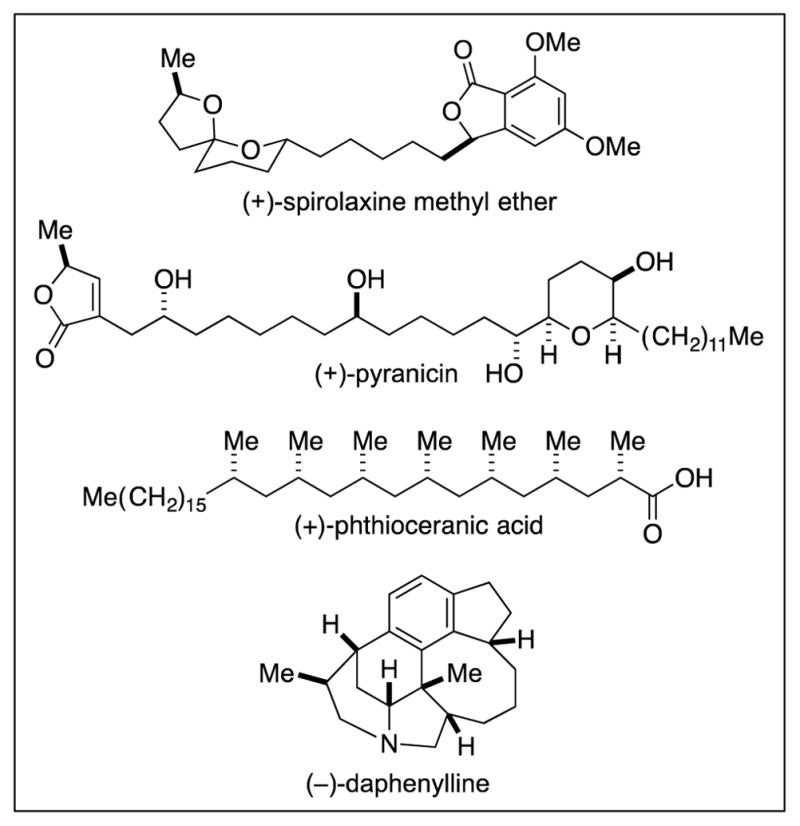
Bioactive compounds that include an array of alkyl–alkyl bonds.
Fig. 3
Fig. 3
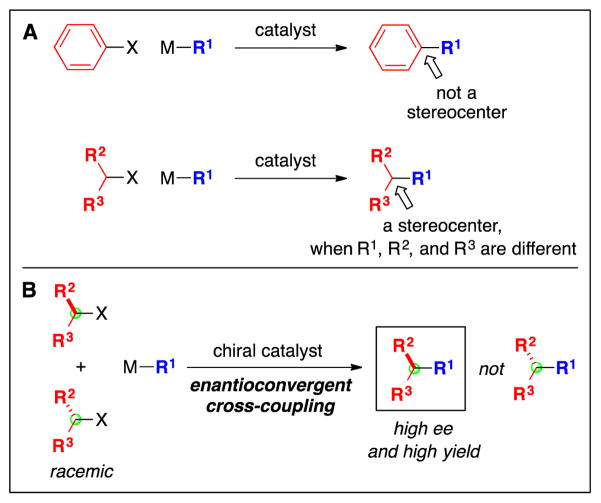
Stereochemistry as an added dimension in cross-coupling reactions of alkyl electrophiles. A: Aryl electrophiles versus alkyl electrophiles. B: Use of a chiral catalyst to control stereochemistry: enantioconvergent cross-couplings of racemic alkyl electrophiles.
Fig. 4
Fig. 4
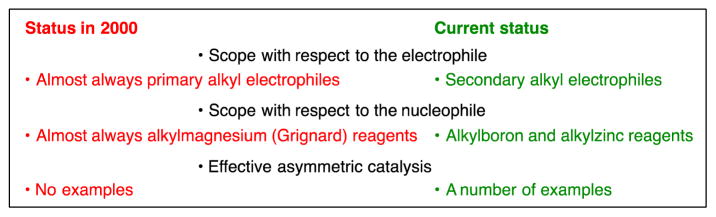
Recent progress in transition-metal-catalyzed alkyl–alkyl coupling.
Fig. 5
Fig. 5
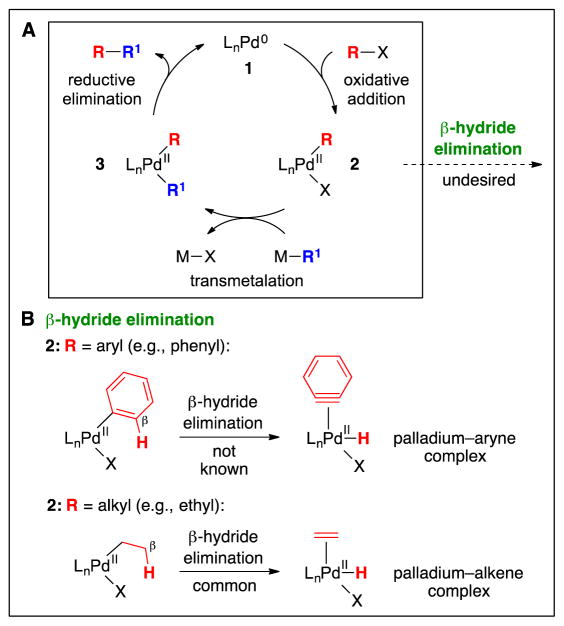
Mechanistic aspects of metal-catalyzed cross-couplings, illustrated for palladium. A: An outline of a catalytic cycle. B: β-Hydride elimination as a side reaction.
Fig. 6
Fig. 6
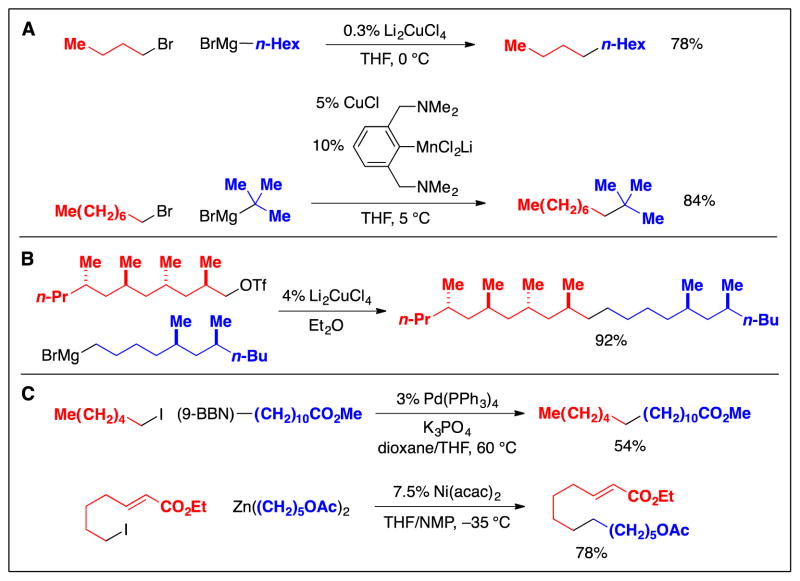
Cross-couplings of primary alkyl electrophiles: Early (pre-2000) methods. A: Examples. B: An application in the total synthesis of a natural product. C: Use of nucleophiles that have improved functional-group compatibility.
Fig. 7
Fig. 7
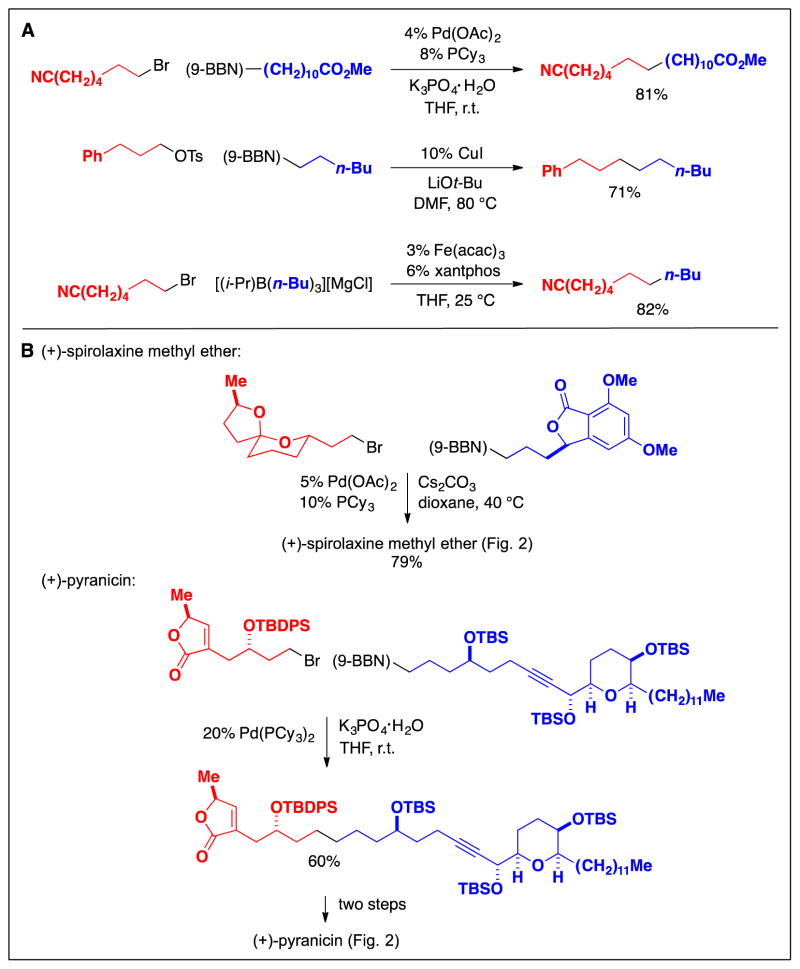
Cross-couplings of primary alkyl electrophiles: Recent (post-2000) methods that use alkylboron reagents as nucleophiles. A: Examples. B: Applications in the total synthesis of natural products.
Fig. 8
Fig. 8
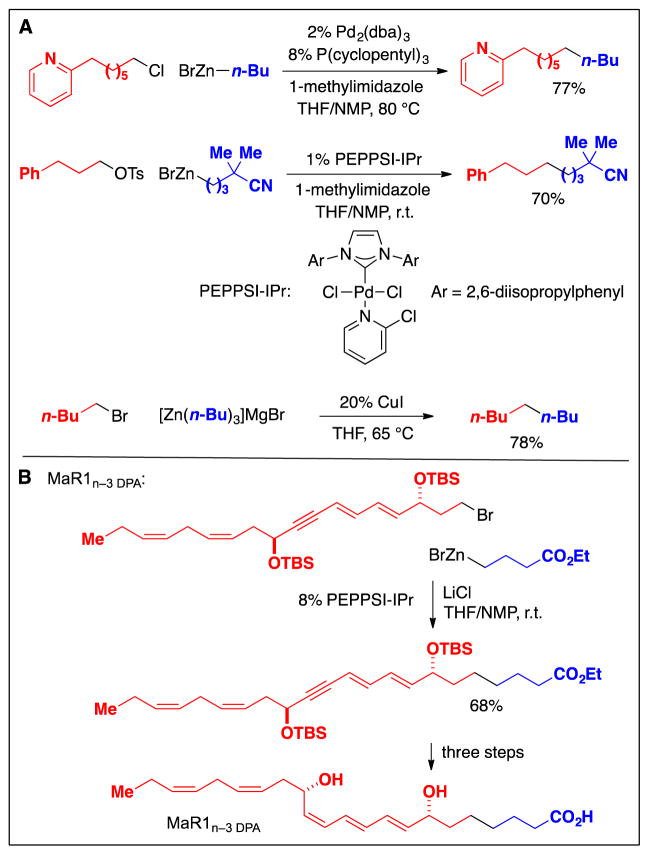
Cross-couplings of primary alkyl electrophiles: Recent (post-2000) methods that use alkylzinc reagents as nucleophiles. A: Examples. B: An application in the total synthesis of a natural product.
Fig. 9
Fig. 9
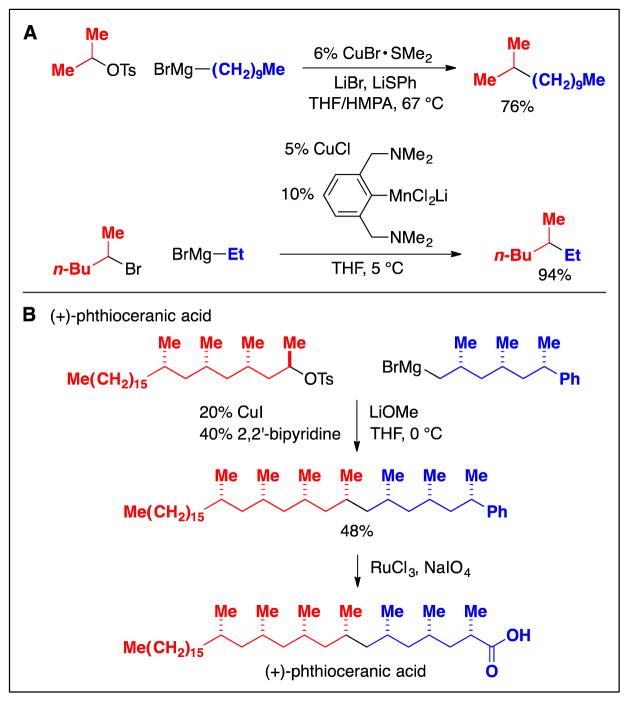
Cross-couplings of secondary alkyl electrophiles: Early (pre-2000) methods. A: Examples. B: An application in the total synthesis of a natural product.
Fig. 10
Fig. 10
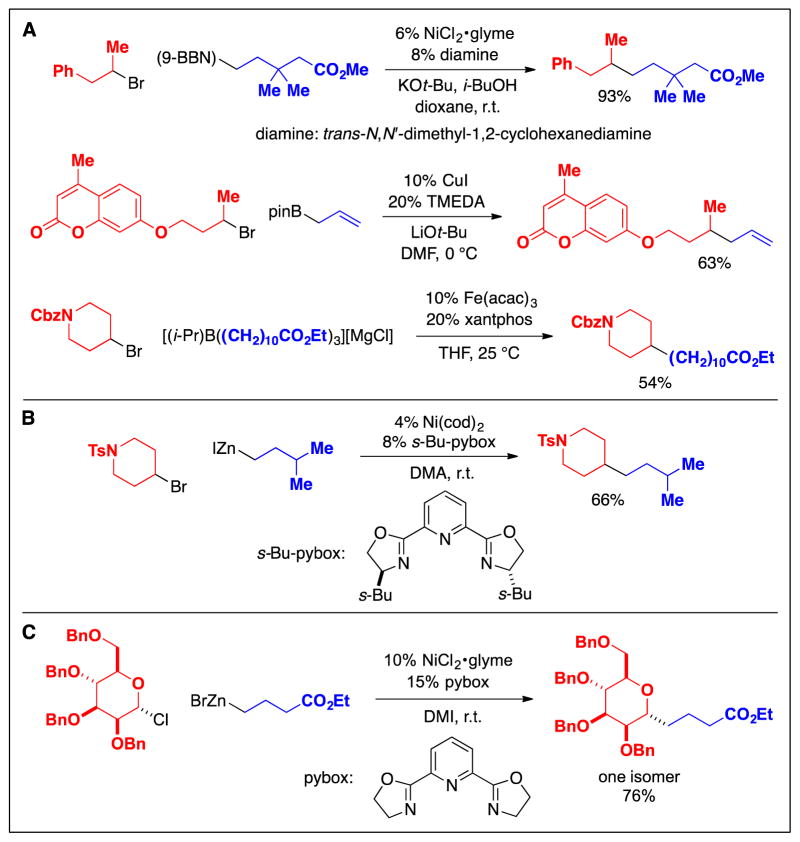
Cross-couplings of secondary alkyl electrophiles: Recent (post-2000) methods that use nucleophiles that have improved functional-group compatibility. A: Alkylboron reagents. B: Alkylzinc reagents. C: An application in synthesis.
Fig. 11
Fig. 11
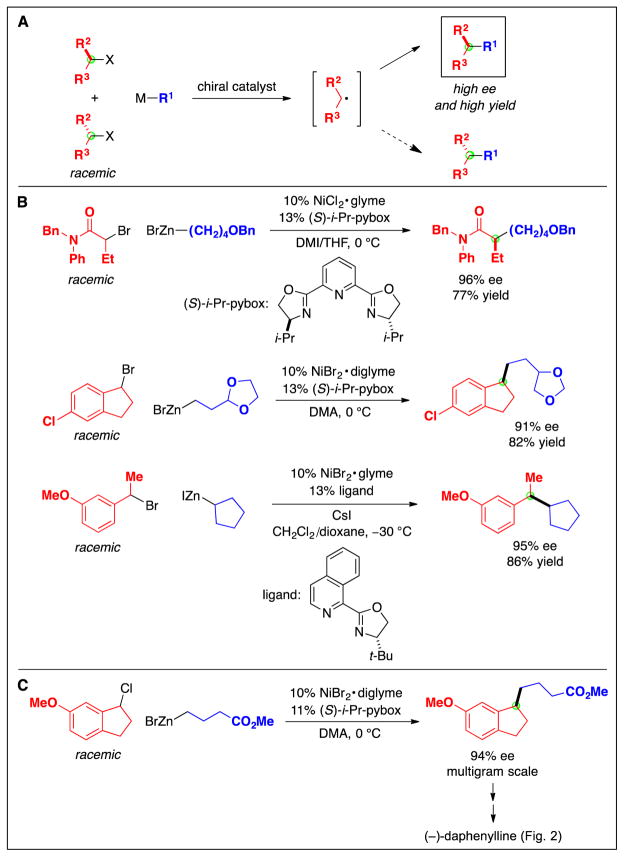
Catalytic asymmetric carbon–carbon bond formation. A: Enantioconvergent cross-coupling via a radical intermediate. B: Methods for activated electrophiles. C: An application in the total synthesis of a natural product.
Fig. 12
Fig. 12
Enantioconvergent cross-couplings of unactivated alkyl electrophiles, directed by the indicated functional groups.
Fig. 13
Fig. 13
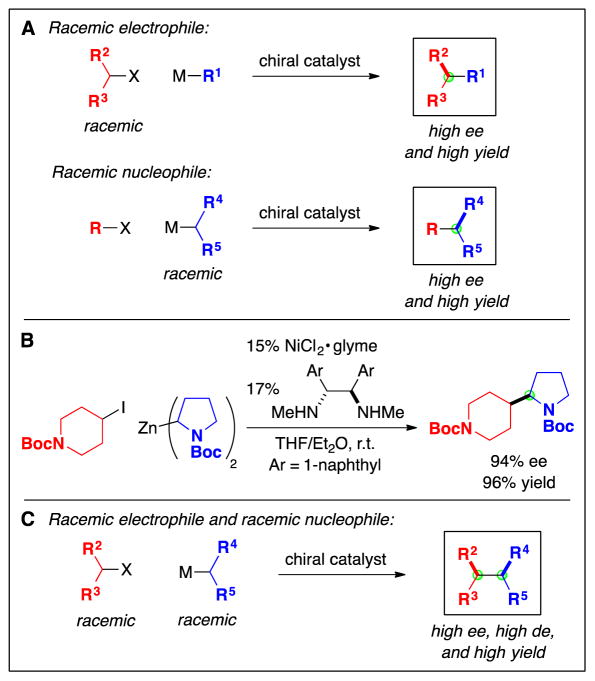
Enantioconvergent alkyl–alkyl cross-couplings. A: Use of a racemic electrophile or a racemic nucleophile. B: Enantioconvergent nickel-catalyzed coupling of a racemic alkylzinc reagent. C: Doubly stereoconvergent coupling of a racemic electrophile and a racemic nucleophile.
Fig. 14
Fig. 14
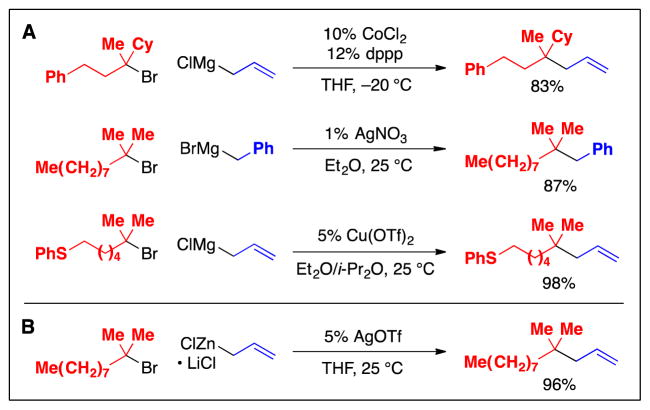
Cross-couplings of tertiary alkyl electrophiles. A: Early methods. B: Recent method that uses a nucleophile that has improved functional-group compatibility.
Fig. 15
Fig. 15
Alkyl–alkyl cross-coupling.

References

    1. Grela K, editor. Olefin Metathesis: Theory and Practice. John Wiley & Sons; Hoboken, NJ: 2014.
    1. de Meijere A, Bräse S, Oestreich M, editors. Metal-Catalyzed Cross-Coupling Reactions and More. Wiley–VCH; Weinheim, Germany: 2014.
    1. Corey EJ, Cheng X-M. The Logic of Chemical Synthesis. John Wiley & Sons; New York, NY: 1995.
    1. Denmark SE, Sweis RF. In: Metal-Catalyzed Cross-Coupling Reactions. de Meijere A, Diederich F, editors. Wiley–VCH; Weinheim, Germany: 2004. p. 191.
    1. In the case of cross-couplings that generate biaryl compounds, the opportunities for enantioselective catalysis are limited. For a review of methods that control axial chirality, see: Loxq P, Manoury E, Poli R, Deydier E, Labande A. Coord Chem Rev. 2016;308:131–190.

Publication types